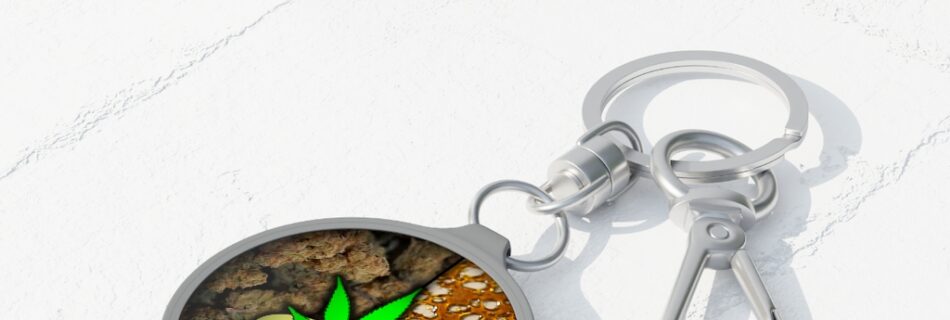
Logo Key Ring
-
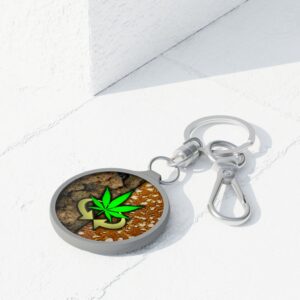
WC Logo Keyring
$21.00 Select options This product has multiple variants. The options may be chosen on the product page
#WorldArtDay @WeedConnection
Human Rights & Healing Arts for a Culture of Peace
Every year on April 15th, we celebrate World Art Day, a global recognition of the profound impact that art has on society, culture, and humanity. This year’s theme, “Human Rights & Healing Arts for a Culture of Peace,” highlights the role of artistic expression in promoting justice, healing, and unity.
From murals that amplify the voices of the oppressed to music that soothes the soul, art has always been a powerful force for change. In 2025, we honor the artists, creators, and visionaries who use their talents to inspire peace, advocate for human rights, and bring healing to individuals and communities worldwide.
Art as a Voice for Human Rights
Art has long been a tool for resistance, awareness, and advocacy. Throughout history, painters, poets, filmmakers, and musicians have used their craft to shed light on injustice, challenge oppressive systems, and demand change. Whether through protest posters, street performances, or digital art campaigns, creative expression remains at the heart of human rights movements.
🎨 Art and Human Rights Movements
🖌️ Diego Rivera’s murals depicted the struggles of the working class.
📸 Photography of the Civil Rights Movement revealed the realities of segregation and police brutality.
🎶 Songs of freedom from artists like Bob Marley and Nina Simone became anthems for justice.
🎭 Street theater and graffiti continue to challenge social injustices today.
In an era of global crises, digital art and social media have become modern canvases for activism, allowing artists to spark conversations and mobilize movements across borders.
The Healing Power of Art
Art is not just about activism; it is also about healing. Whether through painting, music, dance, or storytelling, creative expression helps individuals process trauma, cope with adversity, and find a sense of peace. Studies have shown that engaging in artistic activities can reduce stress, improve mental health, and foster emotional resilience.
✨ Ways Art Promotes Healing:
🖌️ Art therapy helps trauma survivors express emotions beyond words.
🎶 Music therapy reduces anxiety and enhances well-being.
🎭 Drama and storytelling empower individuals to share their experiences.
📖 Creative writing and poetry offer a safe space for self-reflection.
In communities affected by conflict, natural disasters, or displacement, art initiatives provide a path to healing and rebuilding. Murals in refugee camps, dance programs for war survivors, and collaborative art projects in marginalized communities all prove that creativity is a universal language of hope.
Building a Culture of Peace Through the Arts
A world where art is accessible, valued, and encouraged is a world where peace and empathy can thrive. Art fosters understanding between cultures, breaks down barriers, and reminds us of our shared humanity.
🕊️ How We Can Promote Peace Through Art:
🎨 Support artists who use their work to advocate for human rights.
📚 Engage in cultural exchanges to appreciate diverse artistic traditions.
🎭 Encourage artistic programs in schools and communities.
🖼️ Use creativity to start conversations about peace and justice.
Celebrate World Art Day: Create, Inspire, and Heal
This World Art Day, take a moment to reflect on the power of art in shaping a more just and compassionate world. Whether you create, appreciate, or support the arts, your participation contributes to a global culture of peace, healing, and human rights advocacy.
🌍 How to Celebrate:
🖌️ Paint, draw, or sculpt something that represents peace and unity.
📖 Read books or poetry about art and activism.
🎶 Listen to music that has influenced social change.
🎭 Attend an art exhibition, theater performance, or cultural event.
📢 Share art that promotes human rights on social media.
Art is more than just beauty—it is a movement, a voice, and a source of healing. Let’s honor its power and embrace its potential to build a better world.
🎨✨ Happy World Art Day! 🕊️🌍
NORML News

Weekly Stories, Studies, Surveys, Poll Results, Laws, etc.
Study: Medical Cannabis Provides “Meaningful Improvements” in Patients’ Health-Related Quality of Life
Sydney, Australia: The use of physician-authorized medical cannabis products is associated with “statistically significant and clinically meaningful improvements” in patients’ health, according to observational study data published in the journal PLOS One.
Researchers assessed the efficacy of cannabis oil extracts containing standardized ratios of THC and CBD in more than 2,000 patients over one year. (Under Australian law, physicians may authorize cannabis products to patients unresponsive to conventional prescription treatments.)
Consistent with prior studies, patients reported sustained improvements following cannabis therapy.
“Statistically significant and clinically meaningful improvements were observed in HRQL [health-related quality of life], fatigue, pain, and sleep for people with chronic health conditions,” investigators concluded. “Similar improvements were found in pain outcomes for participants with chronic pain; sleep disturbance for participants with insomnia; depression scores for patients with depression; and anxiety scores in patients with anxiety. … The findings from this study contribute to the emerging evidence-base to inform decision making both in clinical practice and at policy level.”
Similarly designed studies involving patients enrolled in the United Kingdom’s medical marijuana access program have shown cannabis products to be safe and effective for those suffering from cancer-related pain, anxiety, fibromyalgia, inflammatory bowel disease, post-traumatic stress, depression, migraine, multiple sclerosis, osteoarthritis, hypermobility disorders, and inflammatory arthritis, among other conditions.
Full text of the study, “Improvements in health-related quality of life are maintained long-term in patients prescribed medicinal cannabis in Australia: The QUEST Initiative 12-month follow up observational study,” appears in PLOS One.
Survey: Adults Frequently Acknowledge Using Cannabis Products for Sleep
Chicago, IL: Some one-in-six adults say that they use cannabis as a sleep aid, according to survey data compiled by Harris polling on behalf of Green Thumb Industries.
Pollsters surveyed over 2,000 respondents. Sixteen percent of respondents acknowledged inhaling or ingesting cannabis “to help [them] sleep.” Another ten percent of respondents said they used commercially available CBD products as sleep aids.
The survey’s findings are consistent with those of several others concluding that adults frequently use cannabis to mitigate sleep disturbances, including insomnia, and enhance sleep quality.
Data published in the journal Complementary Therapies in Medicine reports that the enactment of adult-use marijuana legalization laws is associated with significant reductions in the sales of over-the-counter sleep aids. Findings published in 2023 in the Journal of the American Nutrition Association reported that the daily administration of low doses of CBD (15 mg) improves sleep quality as effectively as melatonin.
Full survey data is available from Green Thumb Industries.
Michigan: Supreme Court Rules That Smell of Marijuana Is Insufficient Cause for a Vehicle Search
Lansing, MI: Judges on the Michigan Supreme Court have ruled that police officers may not conduct warrantless searches of motor vehicles based solely upon the odor of marijuana emanating from the vehicle.
Judges opined that because the use of cannabis is now state-legal under certain circumstances, “the smell of marijuana, standing alone, no longer constitutes probable cause sufficient to support a search for contraband.”
They concluded, “Instead of a rule that the smell of marijuana alone may be sufficient to support a finding of probable cause, the appropriate rule is that the smell of marijuana is one factor that may play a role in the probable-cause determination.”
Courts in other states where cannabis is legal for either medical or adult-use purposes – including Delaware, Maryland, Minnesota, Pennsylvania, and Vermont – have similarly determined that the odor of marijuana, absent evidence of a crime, does not provide probable cause to justify a warrantless search of a motor vehicle.
In Illinois, the Supreme Court has issued inconsistent decisions on the matter – finding that the odor of burnt cannabis is insufficient cause for a motor vehicle search, but that the “odor of raw cannabis” is sufficient.
The case is People v. Armstrong.
Pennsylvania: Supreme Court Rules That Worker Compensation Plans Must Reimburse Costs Related to the Use of CBD Products
Harrisburg, PA: Costs associated with purchasing commercially available CBD-infused oil products are eligible for reimbursement under the state’s worker compensation laws, according to a ruling by the Pennsylvania Supreme Court.
Judges determined that the products meet the definition of “medicines and supplies” under the state’s workplace compensation act.
They acknowledged that products do not have to be regulated by the US Food and Drug Administration to be eligible for reimbursement. “Any item that is part of a health care provider’s treatment plan falls within the purview of the broad-encompassing phrase ‘medicines and supplies’ as provided in Section 306(f.1)(1)(i) of the WCA [workers’ compensation act],” judges affirmed.
In 2023, a Pennsylvania appellate court similarly ruled that out-of-pocket expenses related to the use of medical cannabis are also eligible for reimbursement under the state’s worker compensation law.
Connecticut, New Hampshire, New Jersey, New Mexico, and New York explicitly allow for employees to have their medical cannabis expenses reimbursed. By contrast, seven states prohibit workers’ compensation insurance from reimbursing medical marijuana-related costs: Maine, Massachusetts, Minnesota, Florida, North Dakota, Ohio, and Washington. Other states are silent on the issue.
In 2022, justices on the US Supreme Court declined to weigh in on the issue of whether employees can be reimbursed for their medical marijuana-related expenses.
NORML’s Deputy Director Paul Armentano has advocated for clarity on the issue, opining: “Most patients, most physicians, and most state laws view cannabis as a legitimate therapeutic option. Therefore, the millions of Americans who rely upon medical cannabis products ought to be afforded the same entitlements as those who use other conventional medications and therapies. Those privileges should include insurance-provided reimbursement for medical cannabis treatment.”
The case is Mark Schmidt v. Schmidt, Kirifides, Rassias and Rio.
Maryland: Lawmakers Approve Marijuana Sales Tax Hike
Annapolis, MD: Lawmakers on Monday sent a budget bill (House Bill 352) to Democratic Gov. Wes Moore which includes a tax hike on the retail sale of adult-use cannabis products.
The bill raises the cannabis sales tax from 9 percent to 12 percent, effective for the fiscal year 2026 and every year thereafter. Lawmakers had initially sought to increase the special cannabis sales tax to 15 percent.
Maryland lawmakers began the session facing a $3 billion structural deficit.
NORML generated hundreds of communications to Maryland lawmakers opposing the tax hike, opining that artificially raising the price of adult-use cannabis products will hurt both consumers and licensed businesses.
Lawmakers in California, Michigan, and New Jersey are also considering raising taxes on state-legal marijuana products. In Ohio, Republican Gov. Mike DeWine has called for doubling the state’s sales tax on adult-use cannabis products. House leaders have rejected that plan, though Senate leaders have indicated their willingness to consider it.
Investment Opportunity
#FullMoon #Sesh @WeedConnection
Pink Moon: April’s Full Moon and Its Spiritual Significance
As the nights grow warmer and spring begins to bloom, April’s Pink Moon graces the sky, bringing with it a sense of renewal, transformation, and growth. This year, the Pink Moon will reach its peak illumination on April 23, 2025, casting a soft glow over the Earth and symbolizing the changing of seasons.
But despite its name, the Pink Moon won’t actually appear pink. So, where does the name come from, and what does this full moon mean spiritually and astrologically? Let’s explore.
Why Is It Called the Pink Moon?
The Pink Moon gets its name from Phlox subulata, also known as creeping phlox or moss pink, a vibrant wildflower that blooms in early spring across North America. Indigenous tribes and early settlers used nature’s cycles to track time, and this full moon marked the arrival of new life, warmer days, and an abundance of flowers.
Other names for the April full moon include:
🌿 Sprouting Grass Moon – Honoring the first signs of new plant growth
🦆 Egg Moon – Recognizing the return of birds and nesting season
🐟 Fish Moon – Signaling the time when fish begin migrating upstream
The Spiritual Meaning of the Pink Moon
The Pink Moon is often associated with renewal, transformation, and self-growth. As nature awakens from its winter slumber, we, too, are encouraged to embrace change, shed old habits, and step into new beginnings. This is a powerful time for setting intentions, releasing what no longer serves you, and welcoming fresh opportunities into your life.
🌕 What the Pink Moon Represents:
✨ Letting go of the past and making space for new possibilities
✨ Reconnecting with nature and personal growth
✨ Embracing change with an open heart and mind
✨ Finding balance between action and reflection
Astrological Energy of the April Full Moon
Each full moon aligns with a zodiac sign, influencing its energetic impact. In 2025, the Pink Moon falls in Scorpio, a sign known for its intensity, transformation, and deep emotional healing. This alignment urges us to face our fears, trust our intuition, and embrace personal evolution.
🔮 What to Expect Under the Scorpio Pink Moon:
🔥 Intense emotions and deep introspection
💫 A chance to break free from old patterns
🌿 Heightened intuition and spiritual awareness
⚡ Strong motivation to pursue personal goals
How to Harness the Energy of the Pink Moon
Whether you’re drawn to the mystical energy of the full moon or simply enjoy its beauty, here are some ways to celebrate and connect with its power:
🌸 Set New Intentions – Write down your goals and dreams for the season ahead.
🔥 Release Negativity – Let go of fears, doubts, and anything holding you back.
🕯️ Meditate Under the Moon – Reflect on your personal growth and embrace new beginnings.
🔮 Perform a Moon Ritual – Light a candle, charge your crystals, or practice gratitude.
🌿 Spend Time in Nature – Walk among blooming flowers and appreciate the fresh energy of spring.
Embrace the Magic of the Pink Moon
The Pink Moon is a reminder that life is a cycle of endings and new beginnings. Whether you’re looking for a fresh start, clarity, or a deeper spiritual connection, this full moon offers a beautiful moment to pause, reflect, and move forward with purpose.
So, step outside, gaze at the glowing moon, and embrace the renewal, hope, and transformation that it brings. 🌕✨
NORML News
Weekly Stories, Studies, Surveys, Poll Results, Laws, etc.
Study: Vaporized Cannabis Provides “Significant Improvements” for Multiple Sclerosis Patients
Athens, Greece: Vaporized cannabis containing standardized percentages of CBD and THC is associated with sustained improvements in patients with multiple sclerosis (MS), according to longitudinal data published in the Journal of Clinical Medicine.
Greek researchers assessed the efficacy of a vaporized cannabis formulation containing 13 percent CBD and 9 percent THC in a cohort of 69 MS patients. Study participants’ symptoms — including bladder dysfunction, muscle spasticity, and disability progression rate – were assessed at baseline, at three months, and six months.
“Significant improvement was observed across all outcome assessments” following patients’ adjunctive use of cannabis, researchers reported.
“This study represents an initial step toward understanding the real-world application of vaporized THC: CBD formulations in MS management,” the study’s authors concluded. “The findings … highlight the potential benefits of CBD 13 [percent] | THC 9 [percent] vaporized formulations in managing MS symptoms, particularly when integrated into the existing treatment framework of DMTs [disease modifying therapies] and other MS symptomatic therapies.”
In 2010, British health officials granted regulatory approval to an oromucosal spray (nabiximols) containing standardized percentages of CBD and THC for the treatment of MS. That product is now available by prescription in various countries – including Canada, Germany, Israel, Japan, and Spain – but remains unavailable in the United States.
Full text of the study, “Evaluating vaporized cannabinoid therapy in multiple sclerosis: Findings from a prospective single-center clinical study,” appears in the Journal of Clinical Medicine.
Systematic Review: Cannabis Extracts Safe and Effective in Pediatric Patients With Autism
São Paulo, Brazil: The use of cannabis extracts containing standardized percentages of CBD and THC safely mitigates autism symptoms in children, according to a systematic review of trial data published in the journal Cureus.
Brazilian researchers reviewed findings from seven studies (three randomized clinical trials and four observational studies) involving 494 younger patients with autism spectrum disorder. Study participants consumed extracts dominant in cannabidiol.
Researchers reported, “CBD-rich formulations may hold promise for managing certain ASD symptoms. Improvements were noted in anxiety, sleep quality, social effects, and behavior, although these findings varied across studies. Importantly, adverse events were generally mild and occurred at similar rates in cannabinoid and placebo groups, supporting the intervention’s safety profile.”
The study’s authors concluded, “More rigorous, well-designed RCTs [randomized controlled trials] are necessary to confirm these results and establish clear treatment guidelines for cannabinoid use in ASD.”
Full text of the study, “Efficacy and safety of cannabinoids for autism spectrum disorder: An updated systematic review,” appears in Cureus.
Federal: President Trump Taps Former Fox News Reporter for Drug Czar Position
Washington, DC: President Donald Trump has chosen conservative journalist Sara Carter to serve as the director of the White House Office of National Drug Control Policy. Carter is a former Fox News contributor with no formal drug policy, public health, or law enforcement background.
As a reporter, Carter has investigated the role of foreign drug trafficking organizations in the illicit marijuana trade. Privately, she has expressed support for patients’ use of medical cannabis and once acknowledged: “I don’t have any problem if [cannabis] is legalized and monitored. … I’m not saying we’ve got to make it illegal.”
Carter awaits confirmation from members of the US Senate.
Congress created the Office of National Drug Control Policy in 1988 to “implement and evaluate drug control policies to reduce the use, manufacturing, and trafficking of illicit drugs.” By statute, the agency’s director “shall ensure that no federal funds appropriated to the [agency] shall be expended for any study or contract relating to the legalization (for a medical use or any other use) of a substance listed in schedule I … and take such actions as necessary to oppose any attempt to legalize the use of a substance (in any form) that— (A) is listed in schedule I; and (B) has not been approved for use for medical purposes by the Food and Drug Administration.”
The director serves as an advisor to the President “regarding changes in the organization, management, budgeting, and personnel of Federal Agencies that could affect the nation’s anti-drug efforts.” It oversees an approximately $44 billion budget.
Former ONDCP directors include former military general Barry McCaffrey, who encouraged screenwriters to embed government-approved anti-drug storylines in popular television shows, and John Walters, who alleged: “Finding somebody in jail for possession of marijuana is like finding a unicorn. It doesn’t exist.”
Additional Office of National Drug Control Policy information is available from The White House.
Brazil: Supreme Court Affirms Adults Can Possess, Grow Marijuana for Personal Use
Brasilia, Brazil: Brazilians may possess up to 40 grams of cannabis and home-cultivate up to six marijuana plants without the threat of arrest or incarceration, according to a determination by members of the Supreme Federal Court.
The decision affirms and clarifies an earlier decision depenalizing low-level marijuana possession. The use of cannabis in public remains subject to administrative penalties. Cannabis trafficking remains punishable by criminal penalties.
An estimated 25 percent of Brazilian prisoners are serving time for minor drug possession offenses.
In 2018, South Africa’s highest court similarly determined that the use of marijuana by adults in private is constitutionally protected behavior. Lawmakers eventually signed legislation into law in 2024, codifying the personal use of marijuana by adults.

#WorldHealthDay @WeedConnection
Healthy Beginnings, Hopeful Futures
Every year on April 7th, the world comes together to celebrate World Health Day, an initiative led by the World Health Organization (WHO) to raise awareness about pressing global health issues. This year’s theme, “Healthy Beginnings, Hopeful Futures,” highlights the importance of laying a strong foundation for lifelong well-being.
The Power of Early Health Interventions
Health is a lifelong journey, and the choices we make from an early age shape our future. Ensuring access to proper nutrition, healthcare, and education in childhood sets the stage for a healthier adulthood. Studies show that early interventions—such as prenatal care, childhood vaccinations, and access to clean water—significantly reduce the risk of chronic diseases later in life.
A healthy beginning isn’t just about physical well-being; mental health plays a crucial role too. Teaching emotional resilience, fostering supportive environments, and addressing mental health from an early age create stronger, more hopeful futures for individuals and communities alike.
Bridging Health Gaps for a Better Tomorrow
Despite advancements in healthcare, millions around the world still lack access to basic medical services. Socioeconomic factors, geographic location, and systemic inequalities continue to widen health gaps. This World Health Day, we must advocate for policies that ensure universal healthcare access, equitable nutrition, and mental health resources for all.
Governments, healthcare providers, and communities must work together to provide:
✅ Maternal and child healthcare to ensure safe pregnancies and healthy newborns
✅ Early disease prevention through vaccinations, screenings, and nutrition programs
✅ Mental health support to foster resilience and emotional well-being from an early age
✅ Health education to empower individuals to make informed choices
Your Role in Creating a Healthier Future
While large-scale policies and programs are vital, individual efforts also play a significant role in shaping a healthier world. Here are some ways you can contribute:
🌱 Prioritize preventive care – Schedule regular check-ups and encourage loved ones to do the same.
🥦 Support healthy habits – Eat nutritious foods, exercise regularly, and stay hydrated.
🧠 Promote mental well-being – Check in on friends and family, encourage open conversations, and reduce stigma around mental health.
🤝 Advocate for change – Support initiatives that improve healthcare access and equity in your community.
A Future of Health and Hope
By investing in healthy beginnings, we create hopeful futures—not just for individuals, but for entire communities and generations to come. This World Health Day, let’s commit to making health a priority, advocating for those in need, and ensuring that everyone, regardless of background, has the opportunity to thrive.
Your health matters. The health of our world matters. Let’s build a future where everyone has the chance to live a healthy, fulfilling life.
Happy World Health Day! 🌍💙
Advertise @WeedConnection