

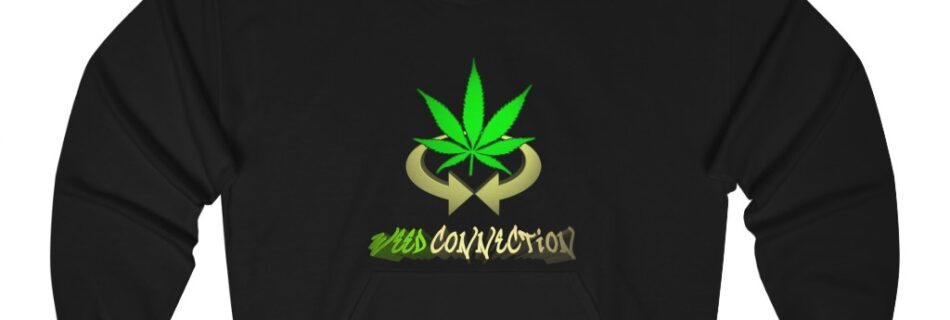
Logo Hoody
-
Weed Connection Hoody
$69.00 Select options This product has multiple variants. The options may be chosen on the product page
Click for Variant Colors

NORML News

Weekly Stories, Studies, Surveys, Poll Results, Laws, etc.
Analysis: Steep Declines in Teen Marijuana Use in States With Regulated Cannabis Markets
Washington, DC: Marijuana use by teens has fallen sharply in the majority of states that have legalized the adult-use market, according to an analysis of state and federal survey data by the Marijuana Policy Project.
MPP’s analysis acknowledges steady declines in self-reported marijuana use by young people in 19 of 21 states for which data is available. Federally funded survey data shows similar nationwide declines in teen marijuana use over the past decade.
“Over a decade into state-level cannabis legalization, the data is unequivocal: Legalization does not increase youth cannabis use. In fact, evidence suggests the opposite,” said Karen O’Keefe, Director of State Policies at the Marijuana Policy Project. “By transitioning cannabis sales from the illicit market to a regulated system with age-restricted access, we’ve seen a decrease in youth cannabis use.”
Last month, national data provided by the University of Michigan’s Monitoring the Future study reported that marijuana use by teens fell to historic lows in 2024. Specifically, it determined that the percentage of 8th graders, 10th graders, and 12 graders who reported having ever consumed cannabis declined 32 percent, 37 percent, and 23 percent since 2014.
A syndicated op-ed authored by NORML’s Deputy Director Paul Armentano highlights the long-term decline in teen marijuana use, stating: “Those wedded to the status quo of cannabis criminalization have long warned that legalizing the marijuana market will result in increased adolescent use. But ten years following the first states’ decisions to legalize and regulate adult-use cannabis sales, data conclusively shows that this fear was unfounded.”
Full text of the report, “Adult legalization corresponds with drop in teen marijuana use,” is available from MPP.
Federal Court: Farm Bill Doesn’t Preempt States From Restricting Retail Sales of Intoxicating Hemp-Derived Products
Richmond, VA: State lawmakers can adopt regulations limiting the public’s access to certain hemp-derived products in more stringent ways than those enacted by the federal Farm Bill, according to a decision by the United States Court of Appeals for the Fourth Circuit.
Plaintiffs challenged a Virginia state law (SB 903) limiting the amount of THC that can be included in hemp products or industrial hemp extracts to no more than two milligrams per package. They argued that provisions in the Farm Bill do not permit state governments “to define what constitutes hemp or restrict any THC product that is not also outlawed by federal law.”
Judges rejected their argument, opining that the federal law provides states with the “primary regulatory authority over the production of hemp” and that it “expressly permit[s] states to regulate the production of hemp more stringently than federal law.”
They wrote: “Congress was clear. Despite the 2018 Farm Bill, the states retain a significant role in the regulation of hemp. … If anything, the 2018 Farm Bill expressly sanctions state regulation.”
Judges cautioned that state governments may “not … prohibit the interstate transportation or shipment of hemp that complies with federal law.” But they opined that Virginia’s hemp law imposes no such prohibition. “Federally licensed producers and growers are protected from criminal liability in transporting federally compliant hemp through Virginia,” they determined.
“When the actual language of the statutes is considered, SB 903 is not in direct conflict with the purpose of the Farm Bill. Nor does it pose an obstacle to its purposes,” judges concluded.
“This decision is a huge win for common sense and Virginia’s families,” said Attorney General Jason Miyares. “Harmful counterfeit THC products marketed to children will not be tolerated in the Commonwealth. The safety and wellbeing of our kids must always come first.”
In recent years, unregulated manufacturers have engaged in synthesizing hemp-derived CBD into a variety of novel intoxicating products, including delta-8-THC, HHC, and THC-O. This synthetic conversion process often involves the use of potentially dangerous household products. Lab analyses of unregulated products containing delta-8 and similar compounds have consistently found them to contain lower levels of cannabinoids than what is advertised on the products’ labels. Some products also possess heavy metal contaminants and unlabeled cutting agents. Other novel compounds, like THC-O, have not been tested for safety in human trials.
The case is Northern Virginia Hemp and Agriculture, LLC v. Virginia.
Study: Orally Administered CBD Significantly Reduces Pain, Other Symptoms in Patients with Nail-Patella Syndrome
Paris, France: Patients suffering from nail-patella syndrome-induced pain report significant improvements in their health-related quality of life following CBD therapy, according to data published in the journal Nature: Scientific Reports. Nail-patella syndrome (NPS) is a rare genetic disease characterized by skeletal malformation and chronic pain.
French researchers assessed the safety and efficacy of CBD treatment in a cohort of 28 patients diagnosed with NPS. Study participants ingested pharmaceutical-grade synthetic CBD for three months.
Investigators reported: “Treatment (median dose of 900 mg/day) was associated with a significant reduction in pain intensity (mean score of 7.04 at initiation versus 4.04 at three months. … Health-related quality of life and other NPS-associated symptoms also improved in most patients. CBD treatment was well-tolerated and no elevations in liver enzyme levels were reported.”
The study’s authors concluded: “Oral treatment with synthetic CBD was associated with a significant reduction in pain in most of the patients with NPS included in our study and led to improvements in most of the NPS-associated symptoms analyzed. Hence, synthetic oral CBD appears to be a safe and effective treatment option for NPS-associated pain and may be an alternative to conventional analgesics for managing chronic pain in this pathology.”
Full text of the study, “Evidence for therapeutic use of cannabidiol for nail-patella syndrome-induced pain in a real-world pilot study,” appears in Nature: Scientific Reports.
Virginia: GOP Governor Reiterates Opposition To Regulating Retail Marijuana Sales in State of the Commonwealth Address
Richmond, VA: Republican Gov. Glenn Youngkin remains unwilling to consider legislative efforts to regulate adult-use marijuana sales.
Speaking to lawmakers on Monday during his State of the Commonwealth address, the Governor said, “Everyone knows where I stand on establishing a retail marijuana market.” He then encouraged legislators to work together on “other issues where we can find common ground.” Last year, he vetoed legislation that sought to establish regulations licensing marijuana retailers.
In his remarks, Gov. Youngkin alleged that jurisdictions with regulated adult-use markets have experienced “significant negative impacts” on mental health and adolescents’ safety. In fact, federally funded survey data reports that teens’ use of marijuana is at historic lows. Further, studies from both the United States and Canada have failed to identify a relationship between marijuana legalization and increased incidences of psychiatric illnesses among either high-risk individuals or the general population.
JM Pedini, NORML’s Development Director and Executive Director of Virginia NORML, pushed back on Gov. Youngkin’s claims. “What’s actually ‘bad for youth’ is leaving the control of Virginia’s marijuana market to illicit operators,” Pedini said. “Data gleaned from decades of real-world regulatory experience with cannabis in the US clearly shows that states which take marijuana off the street corner and place it behind an age-verified counter see a drop in youth use.”
In 2021, Virginia lawmakers enacted legislation legalizing the use, possession, and personal cultivation of marijuana by adults. That legislation called upon lawmakers to authorize licensed cannabis sales by January 1, 2024. However, when Republicans gained control of the House and Governorship in 2022, they failed to advance legislation to do so.
Since being elected Governor in 2021, Youngkin has steadfastly refused to consider the issue.

Investment Opportunity

NORML News
Weekly Stories, Studies, Surveys, Poll Results, Laws, etc.
Analysis: Employees No More Likely To Consume Cannabis During Work Hours Following Legalization
Toronto, Canada: Marijuana legalization is not associated with an uptick in the percentage of employees consuming cannabis either during or prior to work, according to data provided in a briefing paper by the non-profit research organization Institute for Work & Health.
Researchers with the group assessed workers’ attitudes and behaviors toward cannabis following Canada’s adoption of adult-use marijuana legalization. (The Canadian government legalized retail cannabis sales for those 18 or older in 2018.) Investigators reported “no change in workers’ consumption of cannabis before or at work” during the years surveyed.
Consistent with prior studies, researchers acknowledged that those who reported consuming cannabis products while away from their jobs possessed no greater risk of occupational injury than those who abstained. By contrast, employees who reported using cannabis during work hours possessed a nearly two-fold increased risk of accident compared to those who did not.
“These findings underscore the importance of distinguishing cannabis use at work from cannabis off work,” the paper’s authors concluded. “Rather than considering any cannabis use as an occupational safety risk, workplaces need to reframe their focus to use that is likely to lead to impairment at work and craft policies that center on preventing and managing impairment, as well as fitness for duty.”
Most workplace drug testing policies rely on urinalysis screening, which detects the presence of the inert metabolite carboxy-THC. This metabolite remains present in urine for days, weeks, or even months after past use – long after any psychoactive effects of the drug have worn off.
By contrast, blood tests detect the presence of THC, cannabis’ primary psychoactive agent. However, THC is also fat-soluble. As a result, it may also remain detectable for several days following past exposure.
NORML has repeatedly argued that employers should not presume that the detection of either THC or its primary metabolite is evidence of impairment. Rather, NORML has called for the expanded use of performance-based tests, like DRUID or Predictive Safety’s AlertMeter.
Lawmakers in several states – including California and New York – have recently amended their employment laws so that most public employers may no longer terminate workers solely based on a positive drug test for the presence of THC metabolites.
The full text of the briefing paper, “Cannabis use by workers before and after legalization in Canada,” is available online.
Clinical Trial: Cannabis Smoking Doesn’t Interfere With Emotional Regulation
Corvallis, OR: Subjects do not exhibit short-term changes in their ability to regulate emotions following the inhalation of cannabis cigarettes containing greater than 20 percent THC, according to clinical data published in the journal Human Psychopharmacology: Clinical & Experimental.
Investigators affiliated with Oregon State University and Washington State University assessed the impact of cannabis smoking on emotional regulation in a cohort of 12 young adults. Participants in the study were experienced cannabis consumers who provided their own cannabis. Researchers assessed participants’ mood and their ability to regulate their emotions during periods of sobriety and while under the influence of cannabis.
Contrary to researchers’ hypothesis, subjects performed no differently on a battery of emotion regulation tasks following the inhalation of high-potency cannabis than they did while sober. “There was no evidence that acute high-potency cannabis use affected participants’ implicit or explicit emotion regulation,” the investigators reported.
Study subjects did report improvements in their mood and a decrease in anxiety following the use of cannabis.
The study’s authors concluded: “The current pilot study assessed whether being under the influence of high- potency cannabis flower affects emotion regulation among a sample of young adults who use cannabis regularly. While participants reported a more positive mood and decreases in anxiety while intoxicated, there was no evidence to suggest that intoxication from high-potency cannabis flower affected emotion regulation. Future research with larger samples might consider adopting … alternative measures of emotion regulation to assess the acute effects of high-potency cannabis use on emotion regulation and other health outcomes.”
Full text of the study, “A naturalistic examination of the acute effects of high potency cannabis on emotion regulation among young adults: A pilot study,” appears in Human Psychopharmacology: Clinical & Experimental.
Study: No Changes in Driving Performance Following Use of CBD
Granada, Spain: Subjects exhibit no significant changes in their driving performance following the use of CBD, according to clinical trial data published in the journal Addiction.
A team of Spanish investigators assessed participants’ simulated driving performance after inhaling CBD or a placebo.
Subjects displayed “no statistically significant changes in overall driving performance score” after vaporizing products containing either 15 percent or 30 percent CBD. Further, researchers identified “no statistically significant differences in secondary outcomes, such as the standard deviation of lateral lane position, distance travelled outside the lane, reaction time, or collisions.” Subjects’ visual functions were also largely unaffected following CBD administration.
The study’s authors concluded: “The results of this study suggest that vaporized CBD seems to be a safe substance for visual function and vision-dependent tasks such as driving. Further studies are needed to ascertain if higher doses of CBD could pose a risk.”
A 2022 Swiss study similarly reported that the oral administration of up to 1500 mg of CBD does not induce changes in simulated driving performance. Another study also reported that subjects who inhale high-CBD/low-THC botanical cannabis do not experience any decrease in their driving abilities.
Full text of the study, “Visual function and vehicle driving performance under the effects of cannabidiol: A randomized cross-over experiment,” appears in Addiction.

Advertise @WeedConnection
Creator @RussellRope
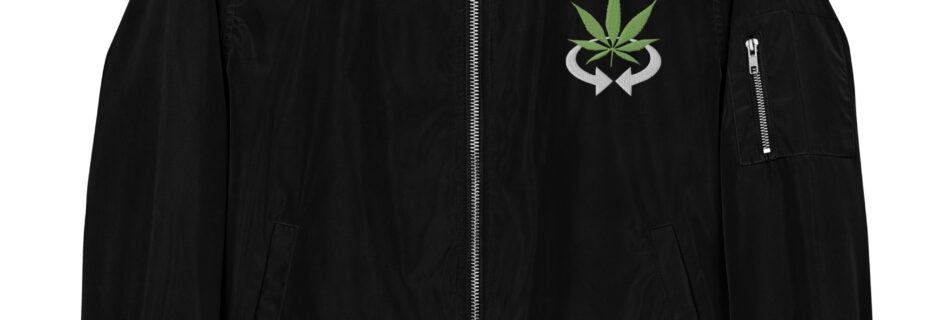
Bomber Jacket
-

WC Bomber Jacket
$99.00 Select options This product has multiple variants. The options may be chosen on the product page
Investment Opportunity