Hempy Sunday Funday


February 16, 2026
Power, policy, and perspective—America’s leadership has never been as disconnected from cannabis as history is often taught.
President’s Day is usually wrapped in cherry trees, marble monuments, and sanitized legends. But the real history of American leadership is far more grounded—literally. From hemp fields and paper mills to pain remedies and candid modern admissions, cannabis has moved through the lives of U.S. Presidents and Founding Fathers since the country’s beginning.
Not as rebellion.
Not as scandal.
As agriculture, medicine, curiosity, and—eventually—honest reflection.
This isn’t about glorifying use. It’s about correcting the record.
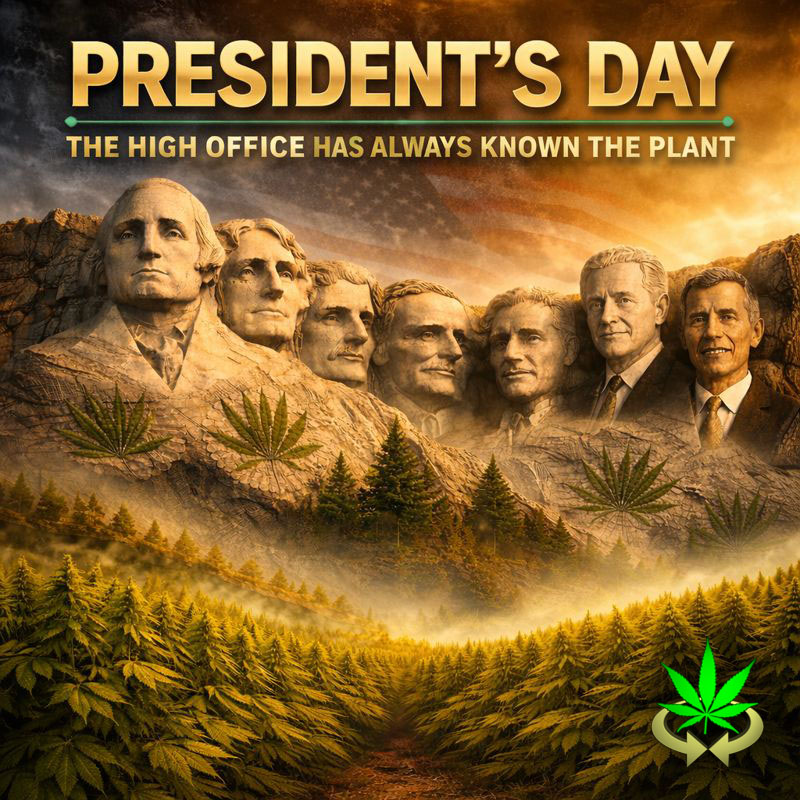
George Washington didn’t just tolerate hemp—he cultivated it. At Mount Vernon, Washington grew cannabis as a strategic crop for rope, sails, and textiles. His personal farm journals include notes about separating male and female plants, indicating hands-on agricultural knowledge. In Washington’s America, cannabis wasn’t political. It was practical.
Thomas Jefferson followed suit at Monticello, advocating for hemp as a domestic alternative to imported materials. Jefferson used hemp paper, promoted self-sufficiency, and lived in a time when cannabis tinctures were common in medical practice. The plant represented independence, not controversy.
James Madison and James Monroe governed during an era where hemp was embedded in infrastructure. Cannabis supported naval power, commerce, and medicine. There was no stigma—only utility. Laws criminalizing the plant wouldn’t appear for another century.
And while not a President, Benjamin Franklin belongs in this conversation. Franklin ran one of America’s earliest paper mills, using hemp to print pamphlets and books. Cannabis helped carry revolutionary ideas through ink and paper. Free speech, quite literally, rode on hemp.
During the 19th century, cannabis extracts were standard medicine.
Andrew Jackson, Zachary Taylor, Franklin Pierce, and Abraham Lincoln all lived in a United States where cannabis tinctures were legally prescribed for pain, anxiety, sleep, and inflammation. Patent medicines frequently contained cannabis. Hemp rope, clothing, and paper were part of daily life.
Lincoln—often mythologized into purity—grew up in a frontier culture where hemp farming was routine. There is no evidence of criminalization, moral panic, or political outrage around cannabis during his lifetime. That reaction came later, driven by fear, not fact.
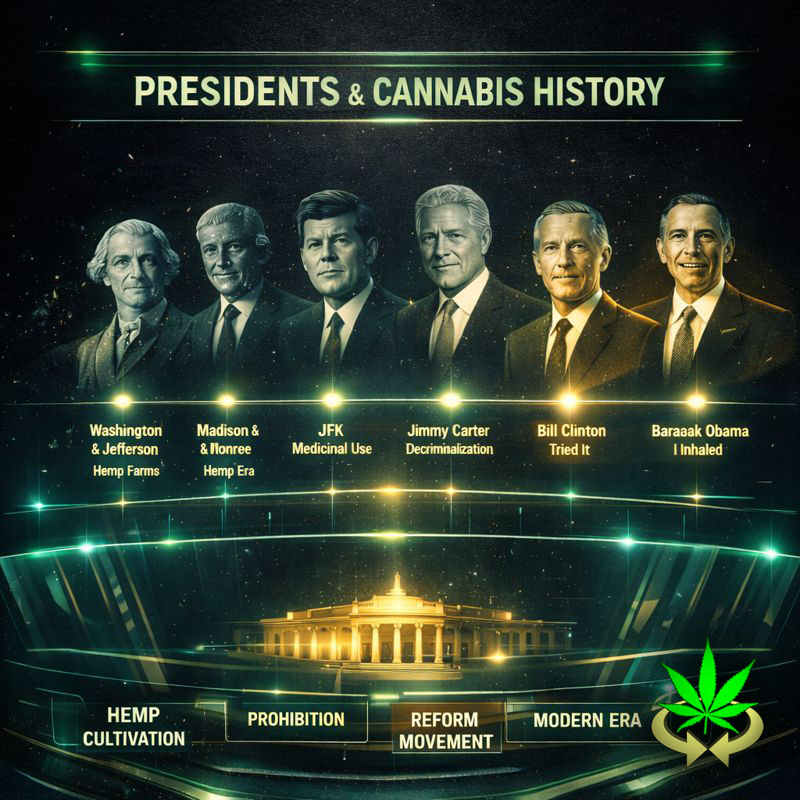
By the 20th century, cannabis had been politicized. Presidents didn’t suddenly stop encountering it— they stopped talking about it.
That changed with Bill Clinton, who publicly admitted experimenting with marijuana. His infamous “didn’t inhale” comment became a cultural punchline, but the admission itself mattered. It cracked a door that had been sealed shut.
George W. Bush acknowledged past marijuana use in interviews, choosing discretion over detail. The admission reflected reality without inviting political warfare—an unspoken normalization behind closed doors.
Then came Barack Obama, who spoke openly about cannabis use in his youth in both interviews and his memoirs. Obama framed it as a common experience, not a defining flaw. As President, he presided over the most significant shift toward state-level legalization in U.S. history, acknowledging that cannabis policy had failed communities and logic alike.
Cannabis didn’t suddenly appear—it was always here. What changed was who felt safe telling the truth.
Cannabis didn’t weaken leadership. Silence did.
Presidents navigated war, economy, and culture while living in a nation where cannabis was once normal, then demonized, and now rediscovered. The arc isn’t about indulgence—it’s about realism.
If cannabis has been part of American leadership since the beginning, what exactly are we still pretending not to know?
The plant didn’t change. The story did. And now that story is finally catching up with itself.
#PresidentsDay
#WeedConnection
#CannabisHistory
#HempHeritage
#HigherOffice
#CannabisCulture
“Honesty is the first chapter in the book of wisdom.” — Thomas Jefferson
“Facts are stubborn things.” — John Adams
“Progress is impossible without change.” — George Bernard Shaw
President’s Day isn’t about pretending leaders were perfect. It’s about understanding they were human—working, thinking, healing, and evolving in the same world we inherited.
Cannabis was there then.
It’s here now.
And the future looks a lot more honest 🌿🇺🇸
Stillness with gravitational pull
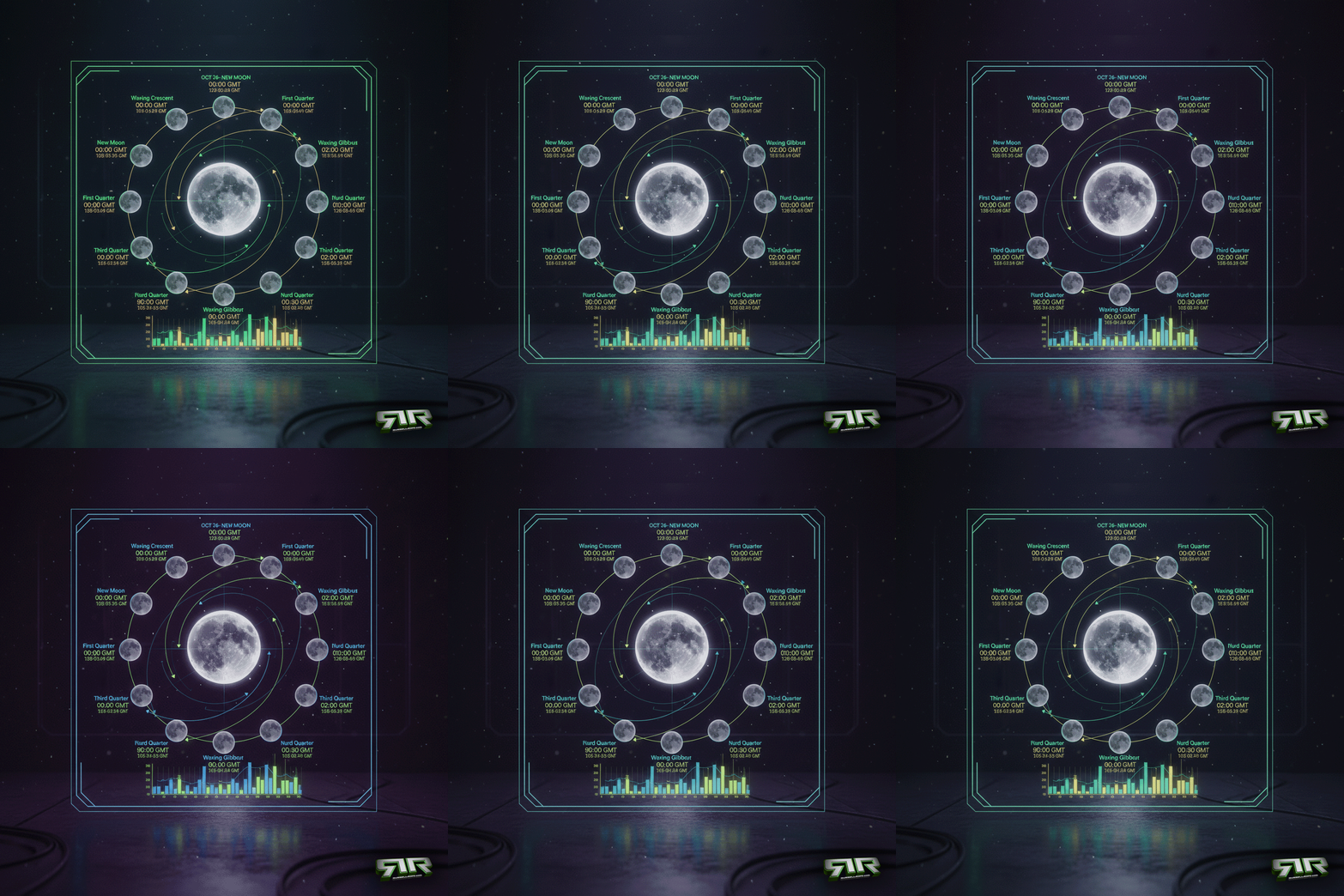
The Snow Moon arrives during the heart of winter, reflecting both environmental reality and internal rhythm. Named for heavy snowfall patterns, it symbolizes endurance, clarity, and the quiet power of pause.
This lunar moment invites stillness without weakness. It’s about conserving energy, refining direction, and letting silence sharpen focus before movement resumes.
Cold clarity. Silent strength.

Winter’s peak invites reflection rather than reaction, reminding us that pauses are part of progress.
Where could less motion bring more clarity?
Stillness sharpens awareness when movement slows.

#SnowMoon #FullMoon #LunarCycle #NightSky
Famous Quotes
“The moon is a loyal companion.” — Tahereh Mafi
“Silence is a source of great strength.” — Lao Tzu
“What you seek is seeking you.” — Rumi
Stillness is not idle. It’s strategic.

Honoring freedom as principle, not performance
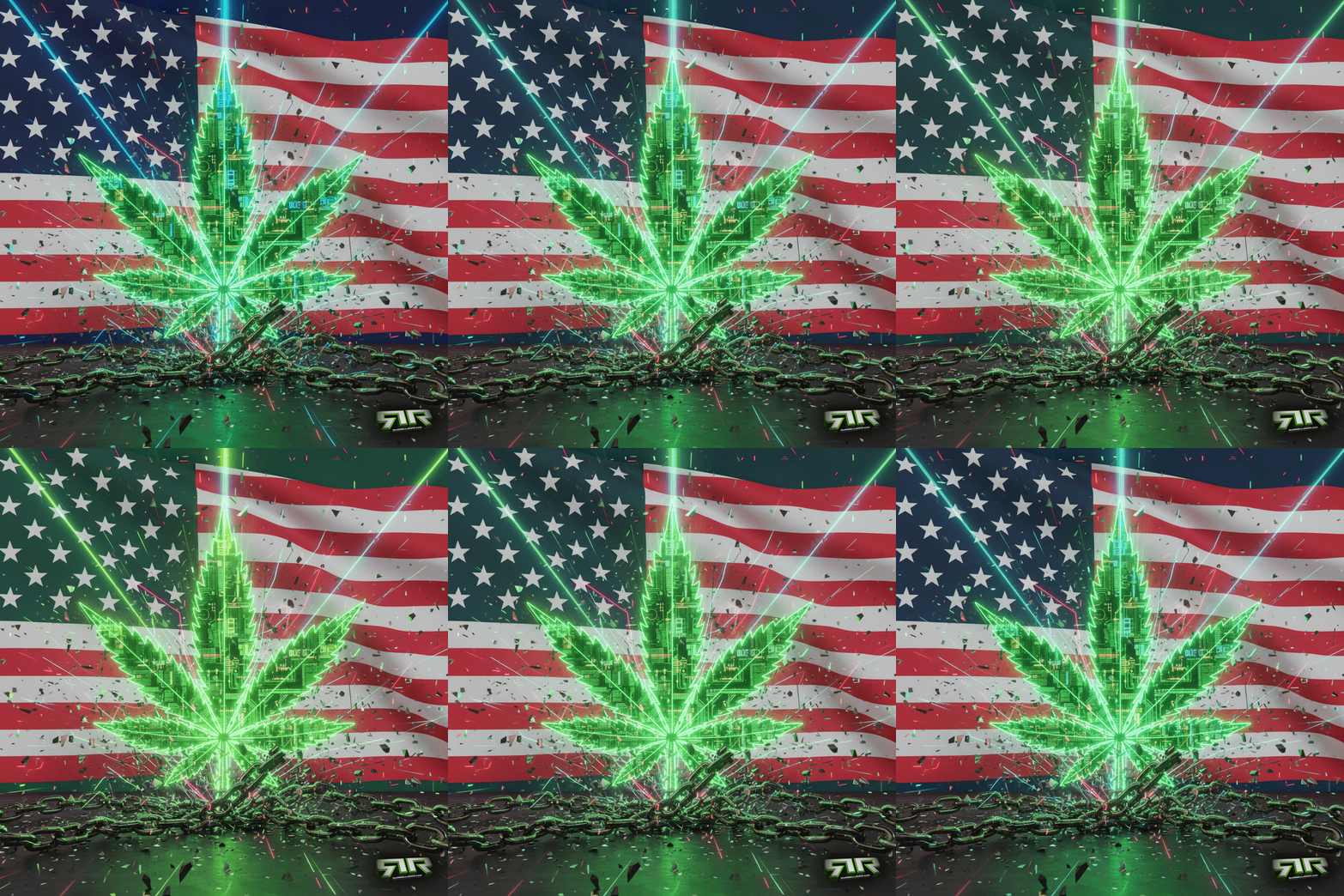
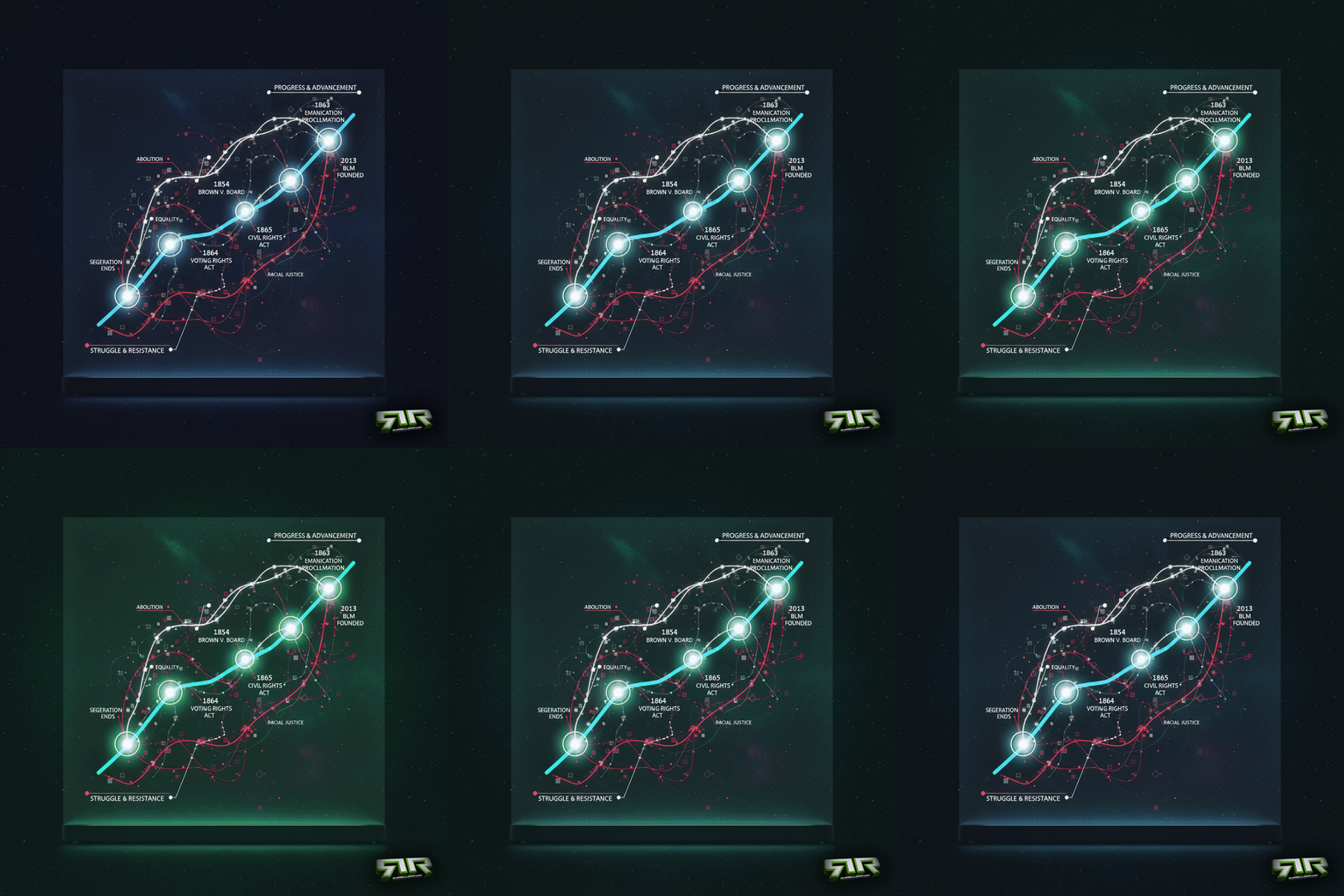
National Freedom Day marks the signing of a resolution that formally ended slavery in the United States, but its relevance goes far beyond history. Freedom is not static — it’s protected, tested, and expanded by action.
This day reflects on liberty as both a right and a responsibility. It’s about understanding how freedom is preserved through law, accountability, courage, and the willingness to challenge systems that drift from justice.
Grounded. Powerful. Truth-forward.
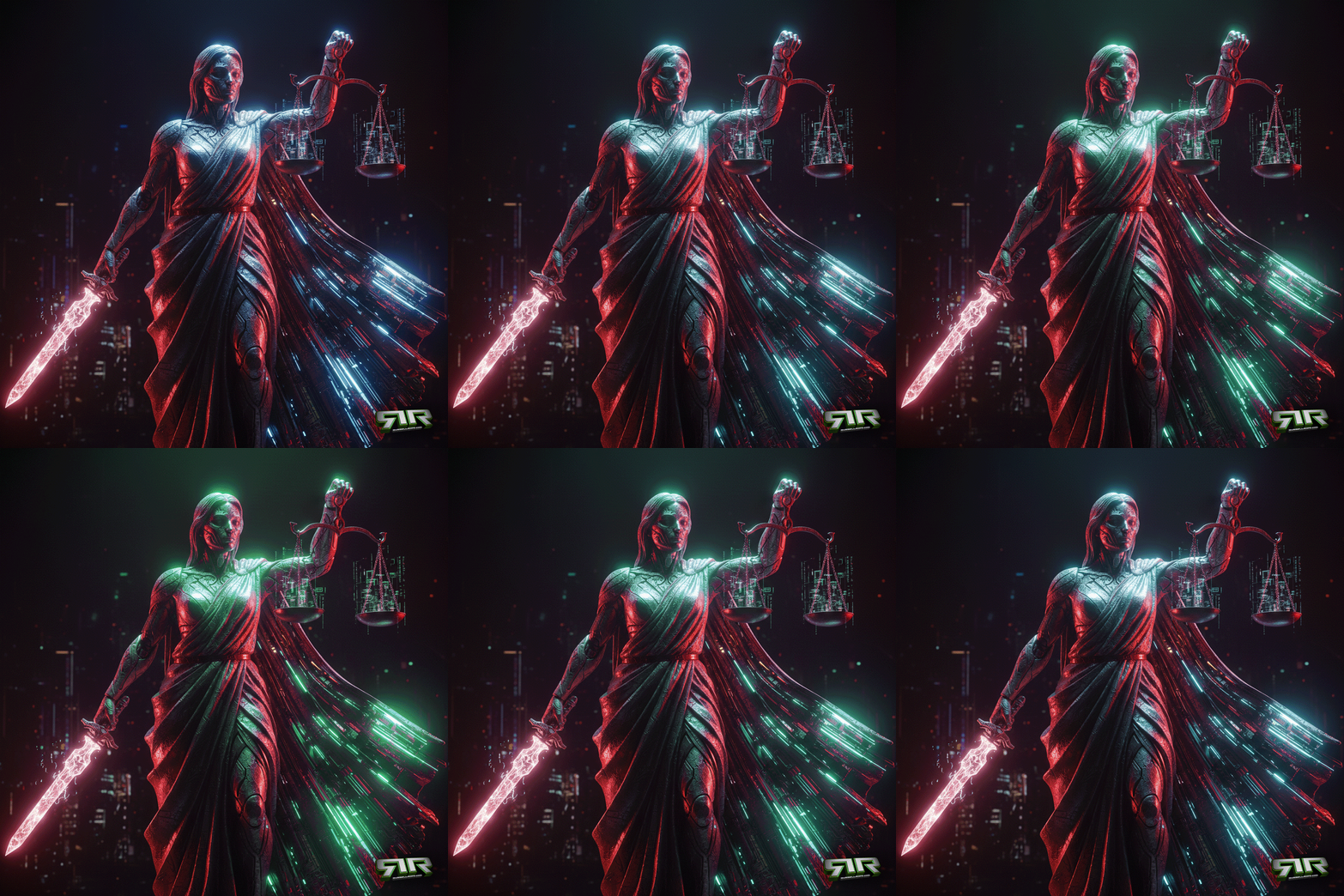
Freedom holds weight when it’s examined honestly, not celebrated casually, and understood as something that requires upkeep.
What does freedom require from you right now?
The strength of a free society shows in how seriously its people protect it.
#NationalFreedomDay #FreedomMatters #CivilRights #Justice
Famous Quotes
“Freedom is never given; it is won.” — A. Philip Randolph
“Injustice anywhere is a threat to justice everywhere.” — Martin Luther King Jr.
“Liberty lies in the rights of that person whose views you find most objectionable.” — H. L. Mencken
Freedom isn’t loud. It’s enforced.