#SocialMedia @WeedConnection

Share This


:: FYi FB/iG Terminated WC Accts Again ::
:: No Just Cause FB iS Run By Sociopaths ::
:: They iNvested iN Criminal Competition ::
:: See Fed RiCO Lawsuit @ SCOTUS @ RR
::. . . .:: Join Us For A Hollyweed Sesh ::
:: Subscribe, Follow, Like, Add, Share ::
@WeedCONNECTiON

#SocialMedia @WeedConnection

SOCIAL:
twitter.com/weedconnection
instagram.com/weedconnection
facebook.com/weedconnection
myspace.com/weedconnection420
youtube.com/weedconnection420

BUSINESS:
weedconnection.com
weedconnection.com/advertise

CREATOR:
@RussellRope @ russellrope.com/blog

#Support Your #OG(s)
#LinkUP @WeedConnection

@WeedConnection .com


Email:

#FreeTheOG
#FreeTheWeed
Fund WC++

Read RR True Story
Connect | ADVERTISE | Work | Submit
Subscribe | Follow | Share | Like | Support

WeedConnection @ Twitter @WeedConnection @ Facebook @WeedConnection @ LinkedIn @WeedConnection @ Foursquare @WeedConnection @ Spotify @WeedConnection @ YouTube @WeedConnection @ Yelp @WeedConnection @ Google+ @WeedConnection @ instaGram

weedconnection.com


#NORML #News @WeedConnection

Share This

Study: Adult-Use Marijuana Legalization Associated with Reduction in Medicaid Prescriptions

Ithaca, NY: The enactment of adult-use marijuana legalization laws is associated with reduced demand for certain prescription drugs, according to data published in the journal Health Economics.

A pair of researchers affiliated with Cornell University and Indiana University assessed trends in Medicaid prescriptions in all 50 states during the years 2011 to 2019. They identified "significant reductions in the volume of prescriptions within the drug classes that align with the medical indications for pain, depression, anxiety, sleep, psychosis, and seizures" in those states that had enacted legalization versus those that did not.

"These results have important implications," the study's lead author said. "The reductions in drug utilization that we find could lead to significant cost savings for state Medicaid programs. The results also indicate an opportunity to reduce the harm that can come with the dangerous side effects associated with some prescription drugs."

Prior ecological studies have similarly identified an association between the adoption of medical cannabis access laws and reduced Medicaid prescription drug spending.

"Our results suggest substitution away from prescription drugs and potential cost savings for state Medicaid programs," the study's authors concluded. "This study adds to the growing body of literature surrounding the effects of RCLs [recreational cannabis laws] on pharmaceutical utilization."

Full text of the study, "Recreational cannabis legalization associated with prescription drug utilization among Medicaid enrollees," appears in Health Economics.

Poll: Two-Thirds of Americans Say Marijuana Should Be Legal for Adults

Washington, DC: Two-thirds of Americans say that the adult use of marijuana ought to be legal under federal law as well as under the laws of their home states, according to nationwide survey data compiled by CBS News and YouGov.com.

Support for federal legalization was strongest (73 percent) among those respondents between the ages of 30 and 44; however, majorities in all age groups - including those ages 65 and older - supported a change in federal policy. Democrats (79 percent) and Independents (67 percent) were strong supporters of legalization, but Republicans (49 percent) were not.

Twenty-four percent of respondents acknowledged that they consumed cannabis either regularly or occasionally. Sixty-three percent said that they had never tried marijuana.

Poll: Democrats, Younger Voters Say Federal Lawmakers Should Prioritize Cannabis Legalization

Washington, DC: The majority of Democrats, African Americans, and younger voters believe that federal action on cannabis should be among Congress' "top" or more "important" legislative priorities, according to national polling data providing by Morning Consult and Politico.

When surveyed on the question of what issues ought to be prioritized by Congress, 63 percent of Black voters said that "passing a bill to legalize marijuana" should be either a "top" or "important priority." The majority of voters ages 18 to 34 (53 percent), and Democrats (52 percent) also expressed support for prioritizing legalization.

By contrast, only 29 percent of Republican voters expressed a similar attitude.

Overall, 41 percent of voters said that federal lawmakers ought to prioritize legalizing cannabis.

Legislation (The MORE Act) to remove cannabis from the US Controlled Substances Act and to explicitly permit financial institutions to service state-licensed cannabis businesses (The SAFE Banking Act) have been passed by the Democrat-led House in recent months, but neither effort has ever been advanced in the US Senate. Senate Majority leader Chuck Schumer (D-NY) has repeatedly promised to introduce his own comprehensive reform legislation, but he has yet to do so.

During his Presidential campaign, Joe Biden repeatedly pledged that he would take steps to end federal marijuana prohibition and that he would move to expunge the records of those with marijuana convictions. However, the White House has yet to take any executive action following through on those campaign promises. According to recent polling compiled by YouGov.com, nearly 60 percent of Americans doubt the President intends to make any effort to advance marijuana-specific issues in 2022.

The Morning Consult/Politico polling data is available online.

Survey: 53 Percent of US Adults Have Tried Cannabis

Washington, DC: Most Americans over 18 years of age acknowledge having consumed cannabis, according to survey data compiled by the analytics firm New Frontier Data.

Fifty-three percent of respondents admitted having tried cannabis - a percentage that is consistent with those reported in prior national surveys.

Sixty percent of active consumers were between 18 and 44 years of age. They were most likely to report consuming cannabis for the purposes of relaxation, reducing anxiety, and managing pain. Consistent with prior surveys, consumers were most likely to indulge in herbal formulations of cannabis.

Detailed survey findings appear in the report, Cannabis Consumers in America: Dynamics Shaping Normalization in 2022, available from New Frontier Data.

Survey: One in Five Medicare Recipients Acknowledge Consuming Cannabis for Symptom Relief

Washington, DC: Twenty-one percent of Medicare recipients report consuming cannabis for therapeutic purposes, according to survey data compiled by the group MedicarePlans.com.

Survey respondents were most likely to report using cannabis products to address symptoms of anxiety, chronic pain, depression, glaucoma, and HIV/AIDS.

Two-thirds of respondents either "strongly agree" or "agree" that Medicare should cover the costs associated with medical cannabis products. Among those who opposed the idea, over a third said that their opposition was based upon concerns that doing so would drive up the cost of cannabis products.

About one-half of seniors consuming medical cannabis said that they spent $200 or less per month on marijuana-related products. Thirty-six percent of respondents reported spending between $200 and $500 per month.

In recent years, self-reported cannabis use among those ages 65 and older has increased significantly, particularly among those residing in legal states. Studies of older populations consistently report that seniors experience improvements in their health-related quality of life after initiating cannabis therapy.

Full results of the survey are online. Additional information is available from NORML's fact sheet, 'Cannabis Use by Older Adult Populations.'

#NORML #News @WeedConnection

WeedConnection @ Twitter @WeedConnection @ Facebook @WeedConnection @ LinkedIn @WeedConnection @ Foursquare @WeedConnection @ Spotify @WeedConnection @ YouTube

#FollowFriday @RussellRope #OG @WeedConnection

Share This

* New Show NQ @TheTrueOGReport *
* READ & Click & READ & Click *

:: Creator @ WC @ RR Productions ::
:: Follow @RussellRope For Updates ::

#OG @RussellRope #Creator @WeedConnection

:: Join The Revolution ::
:: Read & Take Action ::
:: True OG Stories @ RR ::
:: SUPREME #LegalTrillOG ::

----------------------------------

:: Media Marketing Services @ RRP ::

:: Connect | ADVERTISE | Work | Submit ::

:: Subscribe | Follow | Share | Like | Support ::

:: #FreeTheWeed @WeedConnection ::

WeedConnection @ Twitter @WeedConnection @ Facebook @WeedConnection @ LinkedIn @WeedConnection @ Foursquare @WeedConnection @ Spotify @WeedConnection @ YouTube @WeedConnection @ Yelp @WeedConnection @ Google+ @WeedConnection @ instaGram

weedconnection.com

#NORML #News @WeedConnection

Share This

Analysis: Adult-Use Cannabis Sales Generated Nearly $4 Billion in Tax Revenues in 2021

Washington, DC: Tax revenues derived from the licensed retail sale of state-legal, adult-use cannabis products grew by more than 30 percent between 2020 and 2021, totaling over $3.7 billion last year - according to an analysis provided by the Marijuana Policy Project.

MPP's figures do not include revenues derived from the sales of medical cannabis products and/or the collection of state-imposed regulatory fees.

Toi Hutchinson, president of MPP, said that the data provides "further evidence that ending cannabis prohibition offers tremendous financial benefits for state governments."

Adult-use sales generated the greatest amount of revenue in California ($1.3 billion), followed by Washington, Illinois, and Colorado.

Since 2014, retail sales of adult-use cannabis products have generated $11.2 billion dollars.

Full text of the report, "Cannabis Tax Revenues in States That Regulate Cannabis for Adult Use," is available online.

Study: Pain Patients Dramatically Reduce Opioid Intake Following Use of Various Cannabis Preparations

Potsdam, Germany: Chronic pain patients provided with cannabis-based interventions significantly reduce their daily intake of prescription opioids, according to longitudinal data published in the German medical journal Schmerz.

A team of German investigators assessed opioid use trends in a cohort of 178 chronic pain patients who were provided with either whole-plant cannabis extracts, nabiximols (a cannabis plant-derived oromucosal spray), or dronabinol (synthetic THC capsules) for an average period of 366 days. The majority of participants in the trial (65 percent) were older than 65 years of age.

Consistent with dozens of prior studies, patients significantly reduced their daily opioid intake over the course of the trial.

Investigators failed to identify any significant side effects due to the cannabis-based interventions.

Authors reported: "Patients daily opioid dosages were "significantly reduced in course of time by ... 50 percent. This reduction was independent on CAM [medical cannabinoids] dosage, age and gender."

They concluded: "Patients with chronic pain profit from long-term CAM which safely and significantly lower the consumption of co-medicated opioids, even at low dosages. ... Older patients benefit from CAM, and adverse effects do not limit the (chronic) use and prescription of CAM in the elderly."

Those who consume cannabis medicinally are most likely to report doing so to address chronic pain symptoms. Studies further report that pain patients typically reduce or eliminate their use of opioids following their initiation of cannabis therapy.

Full text of the study, "Cannabinoids reduce opioid use in older patients with pain: A retrospective three-year analysis of data from a general practice," appears in Schmerz.

Poll: Over Half of US Adults Have Tried Cannabis

Washington, DC: More than half of Americans ages 18 and older acknowledge having consumed cannabis, according to nationwide survey data provided by YouGov.com.

Fifty-two percent of respondents admitted having tried marijuana during their lifetimes, including 63 percent of those between the ages of 45 and 64.

By contrast, those respondents between the ages of 18 and 29 years old were among those least likely to report having had prior experience with cannabis (37 percent).

Consistent with prior surveys, smoking was the most common way adults consumed cannabis.

Two-thirds of those with a history of cannabis use said that their experiences were "very or somewhat positive."

The data is consistent with 2021 survey data provided by Gallup reporting that an estimated 50 percent of US adults have consumed cannabis at some point in their lives.

Additional polling information is available from YouGov.com.

Study: Adult-Use Marijuana Laws Associated with Reduction in Foster Care Admissions

Oxford, MS: Adult-use marijuana legalization laws are correlated with a reduction in foster care placements, according to data published in the journal Economic Inquiry.

A pair of economists with the University of Mississippi assessed foster care admission trends in states pre and post-legalization.

Authors reported: "Legalization may impact foster-care admissions directly by changing the welfare of children or indirectly by changing policies and attitudes towards marijuana use in the home. Direct effects may arise because marijuana use itself causes behaviors that affect child welfare, or because it changes the likelihood of using other drugs."

They added, "We also find that placements due to physical abuse, parental neglect, and parental incarceration decrease after legalization, providing evidence that legalization reduces substantive threats to child welfare, although the precise mechanism behind these effects is unclear."

Authors concluded: "We estimate that legalization decreases foster-care placements by at least 10 percent, with larger effects in years after legalization, and for admissions for reasons of parental drug and alcohol abuse, physical abuse, neglect, and parental incarceration. Our findings imply that legalization may have important consequences for child welfare, and that substitution toward marijuana from other substances can be an important part of how legalization affects admissions."

Full text of the study, "Recreational marijuana legalization and admissions to the foster care system," appears in Economic Inquiry.

Survey: Most Oncology Trainees Say They're "Insufficiently Informed" About Cannabis

Boston, MA: The majority of oncologists in training acknowledge knowing little about the use of cannabis in cancer care treatment, according to national survey data published in the journal JCO Oncology Practice.

A team of researchers affiliated with Harvard Medical School surveyed 462 oncology trainees from 25 states. Consistent with prior surveys of health professionals, most respondents (76 percent) said that they had received no "formal training regarding medical cannabis." Most respondents also said that they "considered themselves insufficiently informed to make cannabis-related medical recommendations."

Cancer is a qualifying condition in every state where medical cannabis access is provided, and the use of synthetic THC has been FDA-approved as an anti-nausea agent and as an appetite stimulant for cancer patients for several decades.

Survey data finds that an estimated one-in-eight cancer patients consume cannabis for symptom management and that nearly ten percent of cancer survivors identify as current marijuana users.

Full text of the study, "Oncology fellows' clinical discussions, perceived knowledge, and formal training regarding medical cannabis use: A national survey study," appears in JCO Oncology Practice.

#NORML #News @WeedConnection

WeedConnection @ Twitter @WeedConnection @ Facebook @WeedConnection @ LinkedIn @WeedConnection @ Foursquare @WeedConnection @ Spotify @WeedConnection @ YouTube

#SocialMedia @WeedConnection

Share This


:: FYi FB/iG Terminated WC Accts Again ::
:: No Just Cause FB iS Run By Sociopaths ::
:: They iNvested iN Criminal Competition ::
:: See Fed RiCO Lawsuit @ SCOTUS @ RR ::
. . . .

:: Join Us For A Hollyweed Sesh ::
:: Subscribe, Follow, Like, Add, Share ::

@WeedCONNECTiON

#SocialMedia @WeedConnection

SOCIAL:
twitter.com/weedconnection
instagram.com/weedconnection
facebook.com/weedconnection
myspace.com/weedconnection420
youtube.com/weedconnection420

BUSINESS:
weedconnection.com
weedconnection.com/advertise

CREATOR:
@RussellRope @ russellrope.com/blog

#Support Your #OG(s)
#LinkUP @WeedConnection

@WeedConnection .com


Email:

#FreeTheOG
#FreeTheWeed
Fund WC++

Read RR True Story
Connect | ADVERTISE | Work | Submit
Subscribe | Follow | Share | Like | Support

WeedConnection @ Twitter @WeedConnection @ Facebook @WeedConnection @ LinkedIn @WeedConnection @ Foursquare @WeedConnection @ Spotify @WeedConnection @ YouTube @WeedConnection @ Yelp @WeedConnection @ Google+ @WeedConnection @ instaGram

weedconnection.com


#iNTERNATiONAL #DiRECTORY @WeedConnection

Share This

New directory with maps etc. in development....
LiMiTed oFFeR: dOuBLe DuRAtiON oF NeW LiSTiNGs (wHiLe sTiLL iN DeV mOde)
oR 10% DiScOuNt :: Select You Plan @ [click here]

Ask about our current promotion, which is a free listing with purchase of any other service @WeedConnection. Recently started rebuilding our global database and added a new/temp delivery section to our directory. Send us an email to submit any current information. Click here for listing and advertising information. The directory is a huge project that requires maintenance. We still have big plans for future development and production. Join(t) the team as a regional manager, college intern, street team member, or click here for a list of other open positions. Support, subscribe, follow, share, like, and mention growing cannabis business @WeedConnection


#iNTERNATiONAL #Directory

WeedConnection @ Twitter @WeedConnection @ Facebook @WeedConnection @ LinkedIn @WeedConnection @ Foursquare @WeedConnection @ Spotify @WeedConnection @ YouTube @WeedConnection @ Yelp @WeedConnection @ Google+ @WeedConnection @ instaGram

weedconnection.com

#NORML #News @WeedConnection

Share This

Congressional Chamber Advances Bill Allowing Scientists to Access State-Legal Marijuana Products in Clinical Trials

Washington, DC: Members of the US House of Representatives have approved legislation, HR 5657: The Medical Marijuana Research Act, facilitating clinical cannabis research by establishing a process whereby authorized scientists may access flowers and other products manufactured in accordance with state-approved marijuana programs.

The bill also expedites the timeline during which federal officials must either approve or reject applicants seeking licensure to conduct clinical trials using cannabis products, and it also seeks to increase the total number of federally licensed marijuana growers. For decades, scientists wishing to work with marijuana have complained that it often takes years before their research protocols are approved by the US Drug Enforcement Administration, and that the quality of cannabis provided by the University of Mississippi's cultivation program is of inferior quality and that it is not representative of the products available in legal state markets.

NORML's Deputy Director Paul Armentano said: "These common-sense regulatory changes are necessary and long overdue. Currently, the limited variety of cannabis cultivars accessible to federally licensed researchers does not represent the type or quality of cannabis products currently available in legal, statewide markets. The reality that nearly one-half of US adults have legal access to these multitude of cannabis products, but our nation's top scientists do not, is the height of absurdity and it is an indictment of the current system."

House members voted 343 to 75 in favor of the bill. All members voting against the bill were Republicans.

House lawmakers previously passed a version of the Act in 2020 in the final days of the 116th Congress. The bill was never taken up in the Senate.

Last month, Senate lawmakers unanimously approved separate legislation, Senate Bill 253: The Cannabidiol and Marihuana Research Expansion Act, which also seeks to streamline the federal approval process. However, this proposal continues to limit scientists' access only to marijuana products produced by those possessing a federal license.

Representative Earl Blumenauer, a co-sponsor of HR 5657, said: "The cannabis laws in this country are broken, including those that deal with the medical research of marijuana. ... I am prepared to work with my friends in the Senate to reconcile differences between this legislation and the Senate-passed Cannabidiol and Marihuana Research Expansion Act."

Under current regulations, the DEA is primarily tasked with reviewing and licensing marijuana cultivators, as well as granting Schedule I licenses to scientists wishing to study cannabis in clinical settings. In 2016, the agency announced that it would expand the pool of federally licensed growers beyond just the University of Mississippi (which was initially granted a federal cannabis cultivation license in 1968). In May, the agency for the first time ever announced that it had reached agreements with a handful of third-party applicants to allow them to grow cannabis for use in federally approved clinical trials.

NORML has long advocated for amending federal regulations so that federally-licensed scientists can directly access and assess the wide variety of retail cannabis products available in medical-use and adult-use state markets.

"Rather than compelling scientists to access marijuana products of questionable quality that are manufactured by a limited number of federally licensed producers, NORML believes that federal regulators should allow investigators to access the cannabis that is currently being produced by the multitude of state-sanctioned producers and retailers throughout the country," NORML's Deputy Director Paul Armentano said. "Doing so will not only facilitate and expedite clinical cannabis research in the United States, but it will also bring about a long overdue end to decades of DEA stonewalling and interference with respect to the advancement of our scientific understanding of the cannabis plant."

Analysis: Statewide Legalization Laws Not Associated with Any Uptick in Marijuana-Related Treatment Admissions

Farmington, CT: The enactment of laws legalizing adult-use marijuana possession and sales is not associated with any increase in the proportion of marijuana-related substance use treatment admissions, according to data published in The American Journal of Addictions.

A pair of researchers affiliated with the University of Connecticut and with the Veterans Administration New England Mental Illness, Research, Education, and Clinical Center assessed marijuana-use related admission trends in legal states and in states where marijuana remained criminalized.

Authors determined, "[O]ur findings failed to find evidence that legalization of commercial marijuana was associated with any significant change in entry into marijuana‐related treatment services or that greater numbers of years of marijuana legalization was associated with increased admissions to treatment."

They concluded, "It appears that, in the future, the proportion of marijuana‐related treatment service use may remain unchanged even as more states intend to legalize marijuana use fully or partially."

A separate study published in 2021 reported that the enactment of statewide marijuana legalization laws in Colorado and Washington was not associated with any increase in the number of teens or young adults seeking drug abuse treatment for the use of other controlled substances, including opioids, cocaine, or methamphetamine. Data from 2020 reported that the percentage of teens admitted to substance use treatment facilities for cannabis declined significantly in Colorado and Washington following the adoption of adult-use legalization.

Other studies have reported a dramatic and consistent decline in the prevalence of so-called cannabis use disorder over the better part of the past two decades. Self-reported use of marijuana by young people has also declined both nationally and in legal marijuana states.

Full text of the study, "Admissions to substance use treatment facilities for cannabis use disorder: Does legalization matter," appears in The American Journal of Addictions.

Study: Adult-Use Legalization Laws Associated with Declining Prices for Cannabis Flower

Waterloo, Canada: Cannabis consumers typically pay lower prices for cannabis flower in states with legal marijuana retail markets than they do in jurisdictions without them, according to data published in the journal Cannabis and Cannabinoid Research.

A team of researchers affiliated with the University of Waterloo in Canada and with the RAND Corporation in Santa Monica, California assessed cannabis prices and purchasing trends in states with and without licensed adult-use retailers.

They reported that consumers residing in states with mature retail markets rarely solicited the unregulated market in order to obtain cannabis flower. They also determined that retail prices declined over time in state-legal markets and that the average price of cannabis flower in states with legal retail outlets was lower than it was in states without retailers.

"Consumers paid more for dried flower in illegal, medical, and recreational states without stores, than [they did in] recreational states with stores," authors concluded. They added: "Among recreational states with stores, consumers reported purchasing [approximately] 80 percent of dried flower from legal sources in the past 12 months. Substantial differences were observed across states, with higher levels of legal purchases in states with retail stores compared with those without. For example, in Washington and Colorado, where recreational stores were open in 2014, consumers reported purchasing close to 90 percent of dried flower from legal sources."

Full text of the study, "Prices and purchase sources for dried cannabis flower in the United States, 2019-2020," appears in Cannabis and Cannabinoid Research.

Poll: Plurality of Americans Oppose Workplace Testing for Marijuana in States Where Cannabis Is Legal

Washington, DC: A plurality of Americans oppose workplace policies that permit employers to drug test employees for cannabis in states where its off-the-job use is legal, according to nationwide polling data provided by YouGov.com.

Forty-four percent of respondents said that they opposed "allowing employers to test workers for marijuana in states where [it] is legal." Thirty-six percent of respondents supported the policy and 20 percent were undecided.

In recent months, several states - such as Nevada, New Jersey, New York, and Montana - have enacted legislation limiting employers' ability to either pre-screen applicants for past marijuana exposure or refuse to hire them. New York's policy further limits employers' ability to sanction current employees for their off-hours marijuana use absent evidence of "articulable symptoms of cannabis impairment."

City officials in several metropolitan areas - such as Atlanta, Baltimore, Philadelphia, and St. Louis - have also recently adopted local laws prohibiting marijuana-specific pre-employment and random drug screenings for public employees in non-safety sensitive positions.

Urinalysis, the primary form of workplace drug testing, detects the presence of inactive marijuana byproducts that may be present for as many as 100 days post-abstinence. The detection of these products only indicates that a particular substance is present in the test subject's body. It does not indicate either recency of use or impairment.

According to data provided in March by the US Bureau of Labor Statistics, the percentage of private worksites engaged in drug screening has fallen by nearly half since the mid-1990s. Industries related to transportation, utilities, construction, and manufacturing are among those most likely to engage in drug screening.

Arizona: Appellate Court Rules Prenatal Cannabis Exposure Does Not Constitute Child Neglect

Phoenix, AZ: Judges on the Arizona Court of Appeals have determined that child welfare officials acted inappropriately when they placed a woman on state registry for using medical cannabis while pregnant.

Justices unanimously ruled that the prenatal exposure in this case did not constitute "neglect" because the mother was qualified to access medical cannabis under the law.

The Court determined: "The evidence shows that [the plaintiff] was certified under AMMA [the Arizona Medical Marijuana Act] to use marijuana medically to treat chronic nausea. The doctor who certified [the plaintiff's] eligibility for using medical marijuana knew that she was pregnant. Because the use of marijuana under AMMA 'must be considered the equivalent of the use of any other medication under the direction of a physician,' A.R.S. § 36-2813(C), the exposure of [the plaintiff's] infant to marijuana resulted from medical treatment and did not constitute neglect under A.R.S. § 8-201(25)(c)."

The Appellate Court's ruling overturns a decision by the state Department of Child Safety's director and a ruling by a trial court judge.

Last month, members of the Alabama Senate approved legislation requiring women of childbearing age to show proof of a negative pregnancy test before they could apply to obtain medical cannabis. The bill has not been advanced in the House.

Oklahoma regulators considered imposing a similar requirement on women seeking to obtain medical cannabis, but ultimately repealed the rule.

Data provides inconsistent results with respect to whether or not prenatal cannabis exposure is associated with adverse neonatal outcomes, such as the risk of preterm birth.

The case is Ridgell v Arizona Department of Public Safety.

#NORML #News @WeedConnection

WeedConnection @ Twitter @WeedConnection @ Facebook @WeedConnection @ LinkedIn @WeedConnection @ Foursquare @WeedConnection @ Spotify @WeedConnection @ YouTube

#Cannabis #Media #MarketinG @WeedConnection

Share This

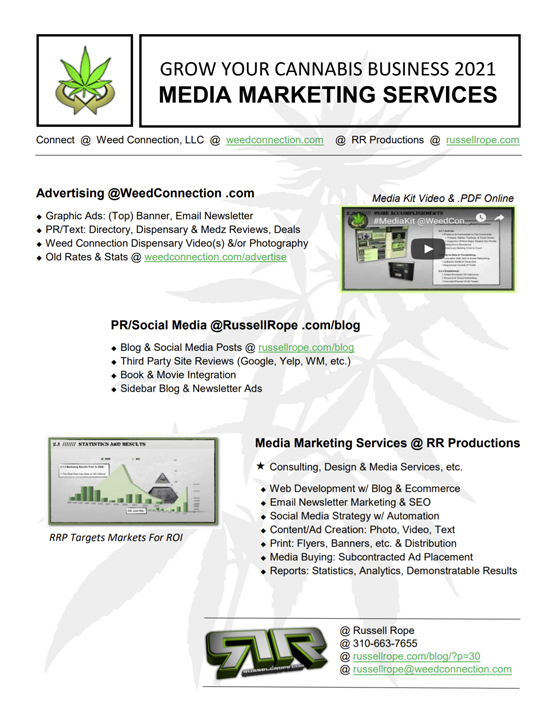
Click Here For The
Cannabis Media Marketing PDF
~~~~~~~~~~~~~~~~~~~~~~~~~
Grow Your Cannabis Business
~~~~~~~~~~~~~~~~~~~~~~~~~~~
Connect | ADVERTISE | Work | Submit
Subscribe | Follow | Share | Like | Support

#FreeTheWeed @WeedConnection
~~~~~~~~~~~~~~~~~~~~~~~~~~~
#FreeTheOG #Fundraiser @ RR
~~~~~~~~~~~~~~~~~~~~~~~~~~~

Media Marketing Services,
& New Deals
@ RRP

#Cannabis #Business @WeedConnection

WeedConnection @ Twitter @WeedConnection @ Facebook @WeedConnection @ LinkedIn @WeedConnection @ Foursquare @WeedConnection @ Spotify @WeedConnection @ YouTube @WeedConnection @ Yelp @WeedConnection @ Google+ @WeedConnection @ instaGram

weedconnection.com