#NORML #News @WeedConnection

Share This

Study: Artisanal CBD-Rich Extracts Show Long-Term Efficacy in Children with Epilepsy

Tel Aviv, Israel: Children with refractory epilepsy respond favorably to long-term treatment with plant-derived CBD extracts, according to data published in Pediatric Neurology.

Israeli researchers assessed the safety and efficacy of artisanal CBD-rich extracts in a cohort of adolescents with treatment-resistant forms of epilepsy. Among patients administered extracts for a period of at least one year, 51 percent experienced a significant decline in seizure frequency. Patients reported only nominal side-effects associated with CBD treatment.

Authors concluded, "Artisanal cannabidiol-enriched cannabis may be an effective and safe long-term treatment for refractory epilepsy."

In 2018, the US Food and Drug Administration granted market approval to Epidiolex, a prescription medicine containing a standardized formulation of plant-derived cannabidiol for the treatment of two rare forms of severe epilepsy: Lennox-Gastaut syndrome and Dravet syndrome. Shortly after approval, the US Drug Enforcement Administration reclassified Epidiolex to Schedule V of the US Controlled Substances Act - the lowest restriction classification available under federal law.

Full text of the study, "The long-term effectiveness and safety of cannabidiol-enriched oil in children with drug-resistant epilepsy," appears in Pediatric Neurology.

Analysis: Incidences of Acute Cannabis-Induced Psychosis Are Uncommon

Lausanne, Switzerland: Cannabis consumption rarely triggers episodes of acute psychosis in those without a pre-existing psychiatric disorder, according to data published in the journal Translational Psychiatry.

An international team of researchers from Australia, Switzerland, and the United Kingdom assessed lifetime occurrences of "cannabis-associated psychotic symptoms" (CAPS) requiring hospitalization in a cohort of 233,000 European marijuana consumers.

Authors reported that less than one-half of one percent of subjects reported ever having had such an experience. Those at higher risk for such incidences included younger aged subjects, as well as those with a prior diagnosis of bipolar, anxiety, or depressive disorder, or psychosis.

"Our findings are in line with the idea of a common (genetic) vulnerability representing risk that is shared across psychiatric disorders," authors determined. They concluded, "Rates of CAPS as observed here are comparable to rates of other drug-induced psychosis, such as alcohol-associated psychosis (around 0.4 – 0.7 percent)."

The study's findings are consistent with those of a separate paper, published in July in the journal Substance Use & Misuse, which reported that medical cannabis patients are at "low" risk for psychiatric hospitalizations resulting from their marijuana use. In that trial, investigators assessed marijuana-related hospitalizations among a cohort of over 23,000 subjects over a median period of 240 days. During that time, only 26 patients were hospitalized explicitly because of "mental or behavioral disorders due to the use of cannabis."

The findings push back against high-profile claims from some cannabis reform opponents that marijuana exposure is a frequent trigger for psychosis and other mental health disorders.

Full text of the study, "Rates and correlates of cannabis-associated psychotic symptoms in over 230,000 people who use cannabis," appears in Translational Psychiatry.

Canada: Nearly One-in-Ten Cannabis Consumers Engage in Home Cultivation

Waterloo, Canada: Approximately ten percent of Canadian cannabis consumers report engaging in home cultivation, according to data published in the journal Addictive Behavior Reports.

Canadian researchers surveyed home cultivation patterns prior to and following the enactment of adult-use legalization in 2018. Under the law, adults in most regions of the country are permitted to grow up to four cannabis plants for their own personal use. (The provinces of Quebec and Manitoba prohibit home cultivation.)

Researchers reported that the percentage of consumers who grew their own cannabis increased from six percent prior to the passage of legalization to nine percent in 2020. Those residing in more rural areas were more likely to home cultivate. Most of those who engaged in home cultivation did not exceed legally imposed plant limits.

"Almost one-in-ten Canadian cannabis consumers reported home cultivation of cannabis in 2020, with modest increases following legalization of non-medical cannabis," authors concluded. "The uptake of home cultivation is associated with province and cultivation policies; specifically, Manitoba and Quebec, the only provinces to prohibit non-medical home cultivation, reported among the lowest rates. Although the current study reported an increase in home cultivation among past 12-month consumers after legalization, it will be important to see whether rates continue to increase, even as access to legal cannabis and the price of legal cannabis decreases."

Data from the United States has estimated that fewer than two percent of cannabis consumers acknowledge engaging in home cultivation, although the actual percentage of home growers has likely increased in recent years as more jurisdictions have adopted marijuana legalization policies.

NORML has long advocated that consumers in legal jurisdictions ought to have the option to home cultivate personal use quantities of cannabis, opining: "The inclusion of legislative provisions protecting the non-commercial home cultivation of cannabis serves as leverage to assure the product available at retail outlets is high quality, safe and affordable. Additionally, permitting home cultivation provides adult consumers with an immediate source of cannabis - providing an alternative to the illicit market. Such a source is necessary because it typically takes state regulators several months, or even years, following the law's enactment to establish licensed retail operators."

Full text of the study, "Home cultivation across Canadian provinces after cannabis legalization," appears in Addictive Behavior Reports.

New York: State Regulators Finalize Home Cultivation Rules for Qualified Patients

New York, NY: Qualified patients and their designated caregivers can begin home cultivating marijuana next month, following the adoption of rules by state regulators.

Under the new rules, patients and caregivers registered with the state may grow specified quantities of marijuana on their own private property. Individual patients are limited to no more than three mature plants and three immature plants. Caregivers with multiple patients are limited to growing no more than six mature plants and six immature plants at any one time.

The new rules will take effect on October 5, 2022. State regulators initially announced their intent to authorize limited home grows nearly one year ago.

Nearly 125,000 New Yorkers are currently registered in the state's medical marijuana access program.

State lawmakers in 2021 approved separate legislation, The Marijuana Regulation and Taxation Act (MRTA), legalizing and regulating marijuana possession and sales for adults. Regulators just recently began accepting applications from those seeking licensure to establish retail cannabis facilities.

Additional information is available from the New York State Office of Cannabis Management.

#NORML #News @WeedConnection

WeedConnection @ Twitter @WeedConnection @ Facebook @WeedConnection @ LinkedIn @WeedConnection @ Foursquare @WeedConnection @ Spotify @WeedConnection @ YouTube

#FollowFriday @RussellRope #OG @WeedConnection

Share This
* New Show NQ @TheTrueOGReport *

* READ & Click & READ & Click *

:: Creator @ WC @ RR Productions ::
:: Follow @RussellRope For Updates ::

#OG @RussellRope #Creator @WeedConnection

:: Join The Revolution ::
:: Read & Take Action ::
:: True OG Stories @ RR ::
:: SUPREME #LegalTrillOG ::

----------------------------------

:: Media Marketing Services @ RRP ::

:: Connect | ADVERTISE | Work | Submit ::

:: Subscribe | Follow | Share | Like | Support ::

:: #FreeTheWeed @WeedConnection ::

WeedConnection @ Twitter @WeedConnection @ Facebook @WeedConnection @ LinkedIn @WeedConnection @ Foursquare @WeedConnection @ Spotify @WeedConnection @ YouTube @WeedConnection @ Yelp @WeedConnection @ Google+ @WeedConnection @ instaGram

weedconnection.com

#NORML #News @WeedConnection

Share This

Study: Autism Patients Show Clinical Improvements Following Use of CBD-Rich Cannabis

Tel Aviv, Israel: The administration of CBD-rich cannabis is associated with clinical improvements in adolescents with autism spectrum disorder (ASD), according to data published in the journal Translational Psychiatry.

Israeli researchers evaluated the efficacy of cannabis treatment in a cohort of 82 young people (ages 5 to 25) with ASD. Subjects in the trial consumed whole-plant cannabis extracts (oils with a CBD:THC ratio of 20 to 1) adjunctively over a period of six months. Investigators used a variety of standardized clinical assessments to evaluate patients’ symptoms prior to and immediately following treatment.

They reported, “Our results revealed significant improvements in [the] overall … scores of the ASD participants who completed the 6-month treatment protocol with CBD-rich cannabis. Overall changes were mostly driven by improvements in social communication skills.

“[T]hese findings suggest that treatment with CBD-rich medicinal cannabis can lead to significant improvements in social communication skills of some ASD individuals, particularly those with more severe initial symptoms,” authors concluded. “These positive findings motivate further double-blind placebo-controlled studies for determining the efficacy of treatment with specific cannabis strains and/or synthetic cannabinoids.​”

The researchers’ findings are consistent with those of numerous other studies demonstrating that the use of either CBD-dominant cannabis or oral extracts is associated with symptom mitigation in adolescents with ASD.

Full text of the study, “Children and adolescents with ASD treated with CBD-rich cannabis exhibit significant improvements, particularly in social symptoms: An open label study,” appears in Translational Psychiatry.

Analysis: Adoption of Adult-Use Legalization Associated with Decrease in State-Level Obesity Rates

Fargo, ND: States that license adult-use marijuana sales may experience a decrease in state-level obesity rates, according to data published in the journal Health Economics.

Researchers affiliated with North Dakota State University compared obesity rates in Washington state following legalization to those of a synthetic control state.

They reported, “Our primary experiment revealed recreational marijuana legalization, which allowed for recreational marijuana dispensaries to open, resulted in decreases in obesity rates for Washington State” as compared to their synthetic control.

Authors concluded, “As more states gravitate to decriminalization, expanded medicinal use, and legalized recreational use of marijuana, our findings provide important insights into contemporary drug policy.”

Case control studies have consistently reported that those with a history of marijuana use are less likely than abstainers to be obese or to suffer from type 2 diabetes. Studies have also previously linked cannabis use to greater rates of physical activity.

Full text of the study, “Assessing the impact of recreational marijuana legalization on obesity,” appears in Health Economics.

Canada: Most Health Care Providers Unfamiliar with Topics Related to Medical Cannabis

Montreal, Canada: Despite the federal government having legalized patients’ access to marijuana two decades ago, most Canadian health care providers acknowledge that they possess little knowledge about medical cannabis and almost none report having received any training about it while in medical school.

Survey data published in the journal BMC Complementary Medicine and Therapies reported that 56 percent of respondents felt either “uncomfortable or ambivalent regarding their knowledge of medical cannabis,” and that only six percent of medical professionals received any formal training about it while attending medical school. (By contrast, 60 percent of respondents said that they had attended either a workshop or a conference on the topic.) Fewer than one-in-three (27 percent) acknowledged being familiar with the regulations surrounding patients’ access to medical cannabis products.

The results are consistent with numerous other surveys from the United States and abroad finding that health professionals seldom receive any formal training about cannabis and that most lack sufficient understanding of the subject.

Authors concluded: “The majority of HCPs [health care practitioners] received little, if any, formal training in cannabinoid-based medicine in medical school or residency, … and nearly one-third were unfamiliar with the requirements for obtaining CMP [cannabis for medical purposes] in Canada. Respondents endorsed discomfort with their knowledge of MC [medical cannabis.] …. These findings suggest that medical training programs must reassess their curricula to enable HCPs to gain the knowledge and comfort required to meet the evolving needs of patients.”

Full text of the study, “Healthcare practitioner perceptions on barriers impacting cannabis prescribing practices,” appears in BMC Complementary Medicine and Therapies.

Analysis: Blacks Disproportionately Drug Tested for Marijuana During Labor

St. Louis, MO: Patients ordered to undergo marijuana-specific drug screening during the labor and delivery process are disproportionately Black and are also likely to be on subsidized health insurance plans, according to data published in the journal Obstetrics & Gynecology.

Researchers affiliated with Washington University in St. Louis assessed drug screening practices in a labor and delivery unit of an urban hospital over a one-year period (January 1, 2020 – December 31, 2020).

Investigators reported that hospital personnel ordered marijuana-related drug tests for 753 patients during this period. (Doctors performed just under 4,000 total deliveries.) Of those tested, over 70 percent were Black. Those tested for marijuana were also more likely to be younger and on public insurance.

Most of those who underwent drug screening tested negative for the presence of cannabis or other controlled substances. Of those who did test positive for cannabis, 90 percent were mandatorily reported to child abuse services.

There were no statistically significant differences in preterm birth rates, Apgar scores, or infant birth weight for patients who underwent urine drug screening for marijuana versus those who did not.

Authors concluded: “Isolated marijuana use was a poor predictor of other substance exposure in our cohort, but a urine drug screening test result positive for marijuana exposed a historically underserved population that is already subject to pervasive systemic racism in the medical field to further stigmatization without changing outcomes. The utility of using isolated marijuana use as a criterion for urine drug screening appears limited in benefit but rife with inequitable potential to harm and should be carefully reconsidered in labor and delivery units for necessity.”

The study’s findings are consistent with those of others reporting that patients of color and their newborns are disproportionately drug screened for cannabis exposure during labor and delivery.

Data assessing the relationship between in utero cannabis exposure and various neonatal outcomes, such as birth weight, is inconsistent. However, longitudinal data indicates that cannabis exposure is rarely independently linked with adverse neurodevelopmental consequences, finding, “Although there is a theoretical potential for cannabis to interfere with neurodevelopment, human data drawn from four prospective cohorts have not identified any long-term or long lasting meaningful differences between children exposed in utero to cannabis and those not.” Nonetheless, in some states, such as in Oklahoma and Alabama, mothers are arrested and criminally prosecuted for the use of cannabis during their pregnancy.

Full text of the study, “Urine drug screening for isolated marijuana use in labor and delivery units,” appears inObstetrics & Gynecology.

#NORML #News @WeedConnection

WeedConnection @ Twitter @WeedConnection @ Facebook @WeedConnection @ LinkedIn @WeedConnection @ Foursquare @WeedConnection @ Spotify @WeedConnection @ YouTube

#iNTERNATiONAL #DiRECTORY @WeedConnection

Share This

New WC Franchise in Development @ RRP OG LLC
All Advertising/Media Services Will Be Honored
10-50% DiScOuNt :: Connect / Select You Plan

. . . .

Ask about our current promotion, which is a free listing with purchase of any other service @WeedConnection. Recently started rebuilding our global database and added a new/temp delivery section to our directory. Send us an email to submit any current information. Click here for listing and advertising information. The directory is a huge project that requires maintenance. We still have big plans for future development and production. Join(t) the team as a regional manager, college intern, street team member, or click here for a list of other open positions. Support, subscribe, follow, share, like, and mention growing cannabis business @WeedConnection


#iNTERNATiONAL #Directory

WeedConnection @ Twitter @WeedConnection @ Facebook @WeedConnection @ LinkedIn @WeedConnection @ Foursquare @WeedConnection @ Spotify @WeedConnection @ YouTube @WeedConnection @ Yelp @WeedConnection @ Google+ @WeedConnection @ instaGram

weedconnection.com

#NORML #News @WeedConnection

Share This

Analysis: Cannabis Legalization Applies “Competitive Pressure” to Pharmaceuticals Market

San Louis Obispo, CA: Cannabis legalization negatively impacts stock market returns for pharmaceutical companies, according to data published in the journal PLOS One.

Researchers affiliated with California Polytechnic State University assessed whether the passage of statewide legalization laws influences pharmaceutical firms’ stock market returns.

Authors reported that legalization is correlated with lower returns. “Returns decreased in response to both medical and recreational legalization, for both generic and brand drug-makers,” they reported. “Investors anticipate a single legalization event to reduce drug-maker annual sales by $3 billion on average.”

They concluded: “Legal cannabis applies competitive pressure to both generic and brand drug markets, across both classes of drug-makers. ... We predict that if the remaining ... states without medical cannabis legalization were to legalize cannabis, spending on conventional pharmaceutical drugs would decrease by almost 11 percent. ... The size of the response we see suggests that investors expect a large substitution away from conventional pharmaceuticals. ... The market’s recognition of cannabis as an alternative to conventional medications documented here underscores the need for additional research into the medical potential of cannabis [and] ... suggests [that] cannabis might be a useful tool for increasing competition in U.S. drug markets.”

Prior studies have consistently shown that those with access to cannabis products typically reduce or eliminate their consumption of pharmaceutical drugs over time, particularly with respect to the use of opioids, benzodiazepines, anxiolytics, and sleep aids.

Specifically, data published earlier this year in the journal Health Economics identified “significant reductions in the volume of prescriptions within the drug classes that align with the medical indications for pain, depression, anxiety, sleep, psychosis, and seizures” in states that had enacted adult-use cannabis legalization. Prior ecological studies have similarly identified an association between the adoption of medical cannabis access laws and reduced Medicaid prescription drug spending.

Full text of the study, “US cannabis laws projected to cost generic and brand pharmaceutical firms billions,” appears in PLOS One.

Case Study: CBD Oil “Should Be Considered as a Treatment Option” for Autism Patients

Toronto, Canada: The administration of plant-derived CBD oil is safe and effective in the treatment of autism-related symptoms and it ought to be considered as a viable treatment option for patients with the disorder, according to the findings of a case study published in the journal Cureus.

A team of Canadian investigators assessed the long-term use of CBD oil containing 20 mg of CBD and less than one mg of THC in a non-verbal pediatric patient with autism spectrum disorder. Prior to initiating CBD treatment, the patient exhibited behavioral symptoms with outbursts of anger and physical aggression (e.g., punching, kicking, biting, head-butting, and scratching).

Following twice-daily CBD treatment, the patient “experienced a reduction in negative behaviors, including violent outbursts, self-injurious behaviors, and sleep disruptions. There was an improvement in social interactions, concentration, and emotional stability.”

Investigators concluded: “In the case study presented, the child patient has shown behavioral and cognitive improvements with no side effects reported. ... With the increasing clinical studies on the use of cannabidiol in treating patients with mood disorders, anxiety, chronic pain conditions, and other behavioral problems, it should be considered as a treatment option in managing symptoms related to autism.”

Full text of the study, “A double-blind, randomized, controlled crossover trial of cannabis in adults with Tourette Syndrome,” appears in Cannabis and Cannabinoid Research.

Clinical Trial: Vaporized Cannabis Shows Limited Efficacy for Various Symptoms of Tourette Syndrome

Toronto, Canada: Vaporized cannabis containing ten percent THC provides symptomatic relief to patients with Tourette Syndrome (TS), according to placebo-controlled data published in the journal Cannabis and Cannabinoid Research.

Canadian researchers assessed the short-term effects of vaporized cannabis of varying potencies versus placebo in nine patients with TS.

They reported that subjects exhibited and perceived modest improvements following the administration of THC-dominant cannabis, but that they failed to demonstrate similar improvements following the use of either lower THC cannabis and/or high-CBD cannabis. Researchers acknowledged, “[G]iven the small sample size, ... it is difficult to draw definitive conclusions about the benefits of THC.”

Prior studies assessing the long-term use of oral THC have documented a reduction in tics in TS patients. The findings of a 2019 study concluded, “Medical cannabis seems to hold promise in the treatment of GTS [Gilles de la Tourette syndrome] as it demonstrated high subjective satisfaction by most patients however not without side effects and should be further investigated as a treatment option for this syndrome.”

Full text of the study, “A double-blind, randomized, controlled crossover trial of cannabis in adults with Tourette Syndrome,” appears in Cannabis and Cannabinoid Research.

Nevada: Supreme Court Rules Employers Can Fire Workers for Off-Duty Cannabis Consumption

Carson City, NV: Employees who consume cannabis off-the-job for non-medical purposes can be fired by their employers for failing a drug test, according to a ruling by the Nevada Supreme Court.

The Court rejected the plaintiff’s argument that his use of cannabis constituted “lawful activity” under the state’s employee protection law. That law makes it unlawful for employers to “[d]ischarge . . . any employee . . . because the employee engage[d] in the lawful use in this state of any product outside the premises of the employer during the employee’s nonworking hours” so long as “that use does not adversely affect the employee’s ability to perform his or her job or the safety of other employees.” In this instance, however, judges opined that the statute refers only to behaviors and/or products defined as legal under both state and federal law.

Nevada law limits employers from sanctioning workers who are enrolled in the state’s medical cannabis access program. In addition, a 2019 law makes it “unlawful for any employer in [Nevada] to fail or refuse to hire a prospective employee because the prospective employee submitted to a screening test and the results of the screening test indicate the presence of marijuana.” However, state law remains silent on the issue of whether employers can take actions against those employees who use cannabis for non-medical purpose while away from the job.

Justices concluded: “If the Legislature meant to require employers to accommodate employees using recreational marijuana outside the workplace but who thereafter test positive at work, it would have done so. It did not.”

By contrast, laws in Connecticut, New Jersey, New York, Montana, and Rhode Island explicitly prohibit employers from firing workers solely on the basis of a positive marijuana test. Last week, California lawmakers advanced similar legislation to Democratic Gov. Gavin Newsom.

The case is Ceballos v. Palace Station Hotel and Casino.

#NORML #News @WeedConnection

WeedConnection @ Twitter @WeedConnection @ Facebook @WeedConnection @ LinkedIn @WeedConnection @ Foursquare @WeedConnection @ Spotify @WeedConnection @ YouTube

#Cannabis #Media #MarketinG @WeedConnection

Share This

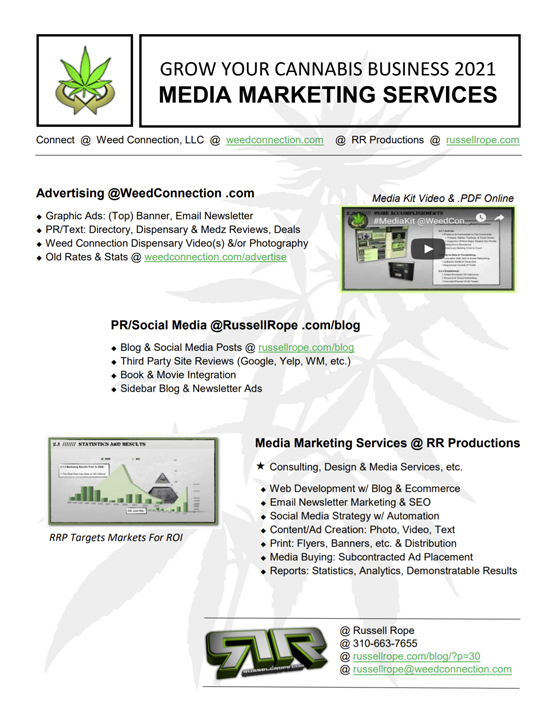
Click Here For The
Cannabis Media Marketing PDF
~~~~~~~~~~~~~~~~~~~~~~~~~
Grow Your Cannabis Business
~~~~~~~~~~~~~~~~~~~~~~~~~~~
Connect | ADVERTISE | Work | Submit
Subscribe | Follow | Share | Like | Support
#FreeTheWeed @WeedConnection
~~~~~~~~~~~~~~~~~~~~~~~~~~~
#FreeTheOG #Fundraiser @ RR
~~~~~~~~~~~~~~~~~~~~~~~~~~~

Media Marketing Services,
& New Deals
@ RRP
 

#Cannabis #Business @WeedConnection

WeedConnection @ Twitter @WeedConnection @ Facebook @WeedConnection @ LinkedIn @WeedConnection @ Foursquare @WeedConnection @ Spotify @WeedConnection @ YouTube @WeedConnection @ Yelp @WeedConnection @ Google+ @WeedConnection @ instaGram

weedconnection.com

#FollowFriday @RussellRope #OG @WeedConnection

Share This
* New Show NQ @TheTrueOGReport *

* READ & Click & READ & Click *

:: Creator @ WC @ RR Productions ::
:: Follow @RussellRope For Updates ::

#OG @RussellRope #Creator @WeedConnection

:: Join The Revolution ::
:: Read & Take Action ::
:: True OG Stories @ RR ::
:: SUPREME #LegalTrillOG ::

----------------------------------

:: Media Marketing Services @ RRP ::

:: Connect | ADVERTISE | Work | Submit ::

:: Subscribe | Follow | Share | Like | Support ::

:: #FreeTheWeed @WeedConnection ::

WeedConnection @ Twitter @WeedConnection @ Facebook @WeedConnection @ LinkedIn @WeedConnection @ Foursquare @WeedConnection @ Spotify @WeedConnection @ YouTube @WeedConnection @ Yelp @WeedConnection @ Google+ @WeedConnection @ instaGram

weedconnection.com

#NORML #News @WeedConnection

Share This

Study: Cannabis Mitigates Pain in Patients with Refractory Gastroparesis, Is Associated with Improvements in In-Hospital Mortality

Valhalla, NY: The use of marijuana significantly reduces abdominal pain in patients with refractory gastroparesis, according to data published in The American Journal of Gastroenterology. (Gastroparesis involves the partial paralysis of the stomach; symptoms include abdominal pain, nausea and vomiting, heartburn, and weight loss.)

Researchers affiliated with New York Medical College and with Westchester Medical Center University Hospital assessed the effects of either plant cannabis or dronabinol (FDA-approved oral THC) on pain in a cohort of 24 patients with treatment-resistant gastroparesis.

While both the administration of oral THC and cannabis was associated with reductions in patients' self-reported pain, whole-plant cannabis was associated with greater improvements.

"Our study shows that cannabinoids may play an important role in the management of gastroparesis-related abdominal pain," authors concluded. "There are currently no treatments shown to be effective for gastroparetic pain in clinical trials, and cannabinoids may serve a niche for this under-treated symptom."

Separate data assessing the relationship between cannabis use and gastroparesis, published in the Journal of Clinical Gastroenterology, further reports that patients who consume cannabis possess "better hospitalization outcomes, including decreased length of stay and improved in-hospital mortality" as compared to those with no history of recent use.

Prior observational studies have similarly reported that marijuana use is associated with a decreased risk of in-hospital mortality among patients suffering from congestive heart failure, cancer, COPD, pancreatitis, HIV, burn-related injuries, traumatic brain injuries, and various other types of severe trauma.

Full text of the study, "Cannabinoids lead to significant improvement in gastroparesis-related abdominal pain," appears in The American Journal of Gastroenterology. Full text of the study, "Trends and socioeconomic health outcomes of cannabis use among patients with gastroparesis: A United States nationwide inpatient sample analysis," appears in the Journal of Clinical Gastroenterology.

Survey: Arthritis Patients Likely to Report Improvements Following CBD Therapy

Great Neck, NY: Arthritis patients frequently report symptom improvements and reductions in their use of prescription medications following the use of CBD products, according to data published in the Journal of Cannabis Research.

A team of investigators affiliated with the Zucker School of Medicine at Hofstra University in New York and with the Banner University Medical Center in Arizona surveyed a convenience sample of patients with either osteoarthritis or rheumatoid arthritis (RA). Most of the participants (70 percent) acknowledged having used CBD products for symptomatic relief.

"The overall cohort reported significant reductions in pain after CBD use, with a 44 percent reduction in numerical pain score and 2.58-point reduction [on a zero-to-ten numerical pain score]," authors reported. "Pairwise comparisons demonstrated that the osteoarthritis group had greater percentage reduction and point reduction compared to RA and other autoimmune arthritis."

Consistent with other studies, authors reported that many patients either reduced or eliminated their use of medications following their use of CBD products. They acknowledged, "Most respondents using CBD for joint pain reported a reduction or cessation of other medications due to CBD use (60.5 percent), including a reduction in anti-inflammatories (31.1 percent), discontinuation of anti-inflammatories (17.8 percent), reduction in acetaminophen (18.2 percent), discontinuation of acetaminophen (17.8 percent), reduction in opioids (8.6 percent), and discontinuation of opioids (18.9 percent)."

Most participants taking CBD products acknowledged experiencing either mild or no adverse effects.

Authors concluded: "In terms of the perceived effects of CBD on pain, physical function, and sleep quality, many patients using CBD reported symptomatic improvements. ... These findings suggest that CBD could be an alternative to opioids for the treatment of arthritic pain. ... Clinicians and patients should be aware of the various alternative therapeutic options available to treat their symptoms of arthritis, especially in light of the increased accessibility to cannabidiol products."

The administration of a topical form of CBD has been previously shown to be effective in patients with thumb basal joint arthritis, according to placebo-controlled trial data. Arthritis patients who consume medical cannabis have similarly reported reductions in their opioid intake and improvements in their quality of life.

Full text of the study, "Cannabidiol as a treatment for arthritis and joint pain: An exploratory cross-sectional study," appears in the Journal of Cannabis Research.

Analysis: Medical Cannabis Access Not Associated with Increases in Problematic Use by Young People

New York, NY: The implementation of state laws legalizing the medical use of cannabis is not associated with increases in rates of problematic marijuana use by either adolescents or by young adults, according to data published in the Community Mental Health Journal.

A pair of researchers affiliated with the Weill Medical College at Cornell University assessed rates of so-called ‘cannabis use disorder' among those ages 15 to 24 in states with and without medical cannabis access laws.

"We found that states that have implemented MML [medical marijuana laws] for more than five years are not significantly associated with smaller or greater 2019 DALYs [disability adjusted life years] for cannabis use disorders in an adolescent and young adult population aged 15 to 19, and 20 to 24 years-old, as compared to states that have not," they concluded. "Our findings suggest that MML may have a negligible effect (if any) on cannabis use disorders in this population group."

Their findings are consistent with those of several other studies that have failed to identify any link between medical cannabis legalization and increased marijuana use among young people.

Full text of the study, "Long-term impact of medical marijuana laws on the burden of cannabis use disorders in US male and female adolescents and young adults," appears in Community Mental Health Journal.

Study: Cannabis Use Associated with Lower BMI Among Those with HIV/HCV

Marseille, France: People co-infected with HIV and hepatitis C who consume cannabis are at a lower risk of being overweight, according to data published in the journal AIDS Education and Prevention.

French investigators assessed the relationship between cannabis use and body mass index (BMI) in a cohort of 992 HIV/HCV patients. Consistent with prior research, they reported that a history of marijuana use was "inversely associated with BMI."

Prior studies involving HIV/HCV subjects have also identified a link between cannabis use and a lower risk of diabetes, fatty liver disease, and early mortality.

Other case control studies have consistently reported that those with a history of marijuana use are less likely than abstainers to be obese or to suffer from type 2 diabetes.

Full text of the study, "Cannabis use as a protective factor against overweight in HIV-hepatitis C virus co-infected people," appears in AIDS Education and Prevention.

#NORML #News @WeedConnection

WeedConnection @ Twitter @WeedConnection @ Facebook @WeedConnection @ LinkedIn @WeedConnection @ Foursquare @WeedConnection @ Spotify @WeedConnection @ YouTube