#International #Business @WeedConnection

Share This

New WC Franchise in Development @ RRP OG LLC
All Advertising/Media Services Will Be Honored
10-50% DiScOuNt :: Connect / Select You Plan

. . . .

Ask about our current promotion, which is a free listing with purchase of any other service @WeedConnection. Recently started rebuilding our global database and added a new/temp delivery section to our directory. Send us an email to submit any current information. Click here for listing and advertising information. The directory is a huge project that requires maintenance. We still have big plans for future development and production. Join(t) the team as a regional manager, college intern, street team member, or click here for a list of other open positions. Support, subscribe, follow, share, like, and mention growing cannabis business @WeedConnection


#iNTERNATiONAL #Directory

WeedConnection @ Twitter @WeedConnection @ Facebook @WeedConnection @ LinkedIn @WeedConnection @ Foursquare @WeedConnection @ Spotify @WeedConnection @ YouTube @WeedConnection @ Yelp @WeedConnection @ Google+ @WeedConnection @ instaGram

weedconnection.com

#NORML #News @WeedConnection

Share This

Analysis: Adult-Use Legalization Associated with Less Alcohol Abuse, No Increase in Psychosis

Minneapolis, MN: Residents of states where cannabis is legal do not possess elevated rates of psychosis, and they are also less likely to exhibit symptoms of alcohol abuse, according to longitudinal data published in the journal Psychological Medicine.

A team of researchers affiliated with the University of Minnesota and the University of Colorado assessed the relationship between adult-use cannabis legalization and psychosocial functioning in a cohort of 240 pairs of identical twins. One twin resided in a jurisdiction where adult-use cannabis sales were legally permitted, while the other lived in a state where marijuana was criminally prohibited.

Investigators reported that legalization was associated with a slight uptick in the frequency with which subjects reported consuming cannabis - a finding consistent with prior studies. However, they also reported that those in legalization states were less likely to engage in behaviors associated with problematic alcohol use. That finding is consistent with prior data indicating the use of cannabis is associated with a decrease in the amount of alcohol consumed by individuals seeking alcohol treatment.

Authors further reported that legalization was not positively correlated with increased incidences of psychosis, substance abuse disorder, or other adverse outcomes.

They concluded: "Recreational cannabis legalization causes increases in mean cannabis frequency and residents of recreational states have fewer recent symptoms of AUD [alcohol use disorder]. Broadly speaking, our co-twin control and differential vulnerability results suggest that the impacts of recreational cannabis legalization on psychiatric and psychosocial outcomes are otherwise minimal. … Both sets of results are reassuring with respect to public health concerns around recreational cannabis legalization."

Although the use of cannabis and other controlled substances tends to be more common among those with psychotic illnesses, studies indicate that lifetime incidences of marijuana-induced psychosis are relatively rare among those who do not already have a prior diagnosis of a psychiatric disease. According to one recently published study, fewer than one-half of one percent of cannabis consumers had ever reported experiencing psychotic symptoms requiring medical intervention - a percentage that is lower than the rate associated with alcohol.

Full text of the study, "Recreational cannabis legalization has had limited effects on a wide range of adult psychiatric and psychosocial outcomes," appears in Psychological Medicine.

Study: Cannabis Use Associated with Improvements in Patients with Inflammatory Bowel Disease

London, United Kingdom: The daily administration of cannabis products is associated with symptom improvements in patients with inflammatory bowel disease, according to observational trial data published in the journal Expert Review of Gastroenterology & Hepatology.

British investigators assessed the safety and efficacy of cannabis products in 76 patients diagnosed with either Crohn's disease or ulcerative colitis. The study subjects were participants in the UK Medical Cannabis Registry and each of them possessed a doctor's authorization to consume cannabis. Study participants consumed either cannabis extracts, THC-dominant flowers, or both for a period of three months.

Authors reported: "Initiation of CBMPs [cannabis-based medicinal products] was associated with an improvement in HRQoL [health-related quality of life] in the short term, with statistically significant improvements in IBD-specific and general HRQoL outcomes at 1 and 3 months after initiating treatment. Participants who previously consumed cannabis had greater improvements in HRQoL and fewer adverse events compared to naïve individuals. These findings highlight the potential utility of CBMPs as an adjunctive therapeutic option in the short term, especially in patients who continue to experience debilitating symptoms despite maximal medical therapy."

Longitudinal data from Israel has similarly reported that the long-term use of whole-plant cannabis is associated with both symptom improvement and the reduced use of prescription medications in patients with treatment-resistant inflammatory bowel disease.

Subjects enrolled in the UK Medical Cannabis Registry with either post-traumatic stress or depression have also demonstrated symptomatic improvements following cannabis therapy.

Full text of the study, "The effect of medical cannabis on inflammatory bowel disease: Analysis from the UK Medical Cannabis Registry," appears in Expert Review of Gastroenterology & Hepatology.

Marijuana Legalization Laws Not Associated with Self-Reported Increases in Drugged Driving Behavior

Baltimore, MD: Cannabis consumers in states where the substance is legal for either medical or adult-use purposes are less likely to report having operated a motor vehicle while under its influence, according to data compiled in a recently published report by the group Cannabis Public Policy Consulting.

Investigators surveyed consumers from 25 states. Consistent with prior studies, authors reported that respondents residing in jurisdictions where cannabis is illegal are more likely to report driving under the influence than those in states where the substance is legally regulated.

"Those living in illicit states reported a significantly greater number of days driving under the influence of cannabis (DUIC) than those living in medical states and those living in adult use states," authors concluded. "The difference ... represents tens of millions of instances of DUIC each year across the United States."

Prior surveys of cannabis consumers have reported similar findings. A study conducted last year by investigators affiliated with the Research Triangle Institute reported: "Current cannabis users in recreational and medical-only cannabis states were significantly less likely to report driving within three hours of getting high in the past 30 days, compared to current users living in states without legal cannabis."

A 2021 study similarly determined that incidences of self-reported drugged driving behavior do not rise post-legalization. Rather, authors reported, "[M]arijuana users in states that legalized RM [recreational marijuana] self-reported driving after marijuana use less than their counterparts (who resided in states where adult-use cannabis remained illegal). They were also less likely to find such behavior [driving after ingesting cannabis] acceptable."

A 2020 study by researchers with the University of Nevada at Reno and with the Johns Hopkins Bloomberg School of Public Health also concluded that those "from states with legal recreational cannabis sales had significantly lower prevalence of driving after cannabis use and higher prevalence of protective attitudes compared to those from states without legal recreational sales."

Full text of the report, "Cannabis Legalization & Public Health Outcomes," is available online.

Study: Medical Cannabis Use Associated with Sustained Improvements in Pain, Anxiety, and Mood

Montreal, Canada: Canadian patients authorized to use medical cannabis products report sustained improvements in their health-related quality of life, according to longitudinal data published in the journal Cannabis and Cannabinoid Research.

A team of investigators affiliated with McGill University in Montreal assessed the safety and efficacy of medical cannabis products in a cohort of 2,991 patients. Subjects in the study consumed cannabis flower, extracts, or other related products for one year.

Consistent with other studies, researchers reported: "All patient-reported outcomes showed a statistically significant improvement at 3 months, which was maintained or further improved (for pain interference, tiredness, and well-being) over the remainder of the 12-month follow-up. Results also revealed clinically significant improvements in pain interference and tiredness, anxiety, and well-being from baseline." Few patients reported experiencing any serious adverse events as a result of their cannabis intake.

Authors concluded, "MC [medical cannabis] directed by physicians appears to be safe and effective within 3 months of initiation for a variety of medical indications."

Data published late last week in the journal JAMA Network Open reported that nearly one in four pain patients residing in states where medical cannabis access is legal self-identify as marijuana consumers.

Full text of the study, "The Quebec Cannabis Registry: Investigating the safety and effectiveness of medical cannabis," appears inCannabis and Cannabinoid Research.

Case Report: THC Tincture Effective at Reducing Dementia-Related Agitation

New Orleans, LA: The administration of plant-derived THC is associated with reductions in agitation and other behavioral issues in a patient with dementia, according to a case report published in the Journal of Palliative Medicine.

Researchers affiliated with Tulane University's School of Medicine and the University of Texas reported on the use of a THC-dominant tincture in an 85-year-old dementia patient. The subject exhibited worsening aggression over time and had been unresponsive to antipsychotic medicines.

Authors reported that the "patient's behavior rapidly improved" following THC treatment. These improvements were so significant that he was eventually discharged from in-patient treatment to home care.

The findings are consistent with those of a number of studies reporting that the use of plant-derived THC and CBD are safe and effective at alleviating dementia-related symptoms, including agitation, irritability, improved cognition, and sleep.

Full text of the study, "A case-report of treatment-resistant agitation in dementia with Lewy Bodies: Medical marijuana as an alternative to antipsychotics," appears in the Journal of Palliative Care.

#NORML #News @WeedConnection

WeedConnection @ Twitter @WeedConnection @ Facebook @WeedConnection @ LinkedIn @WeedConnection @ Foursquare @WeedConnection @ Spotify @WeedConnection @ YouTube

#Cannabis #Media #MarketinG @WeedConnection

Share This

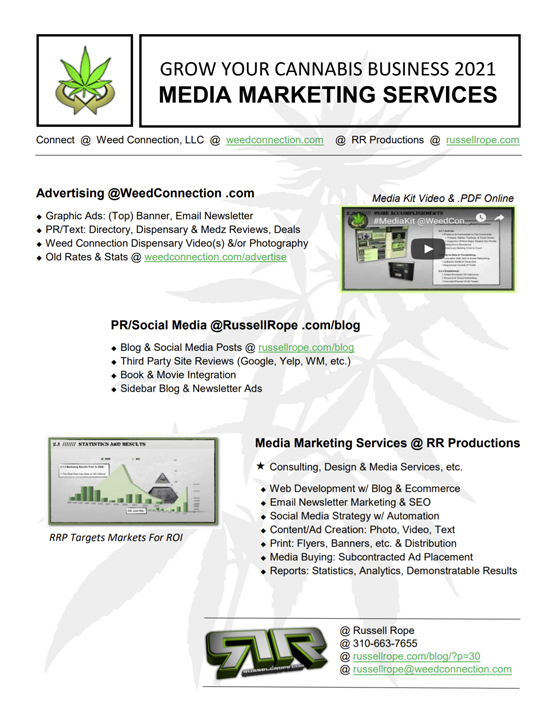
Click Here For The
Cannabis Media Marketing PDF
~~~~~~~~~~~~~~~~~~~~~~~~~
Grow Your Cannabis Business
~~~~~~~~~~~~~~~~~~~~~~~~~~~
Connect | ADVERTISE | Work | Submit
Subscribe | Follow | Share | Like | Support
#FreeTheWeed @WeedConnection
~~~~~~~~~~~~~~~~~~~~~~~~~~~
#FreeTheOG #Fundraiser @ RR
~~~~~~~~~~~~~~~~~~~~~~~~~~~

Media Marketing Services,
& New Deals
@ RRP
 

#Cannabis #Business @WeedConnection

WeedConnection @ Twitter @WeedConnection @ Facebook @WeedConnection @ LinkedIn @WeedConnection @ Foursquare @WeedConnection @ Spotify @WeedConnection @ YouTube @WeedConnection @ Yelp @WeedConnection @ Google+ @WeedConnection @ instaGram

weedconnection.com

#FollowFriday @RussellRope #OG @WeedConnection

Share This
* New Show NQ @TheTrueOGReport *

* READ & Click & READ & Click *

:: Creator @ WC @ RR Productions ::
:: Follow @RussellRope For Updates ::

#OG @RussellRope #Creator @WeedConnection

:: Join The Revolution ::
:: Read & Take Action ::
:: True OG Stories @ RR ::
:: SUPREME #LegalTrillOG ::

----------------------------------

:: Media Marketing Services @ RRP ::

:: Connect | ADVERTISE | Work | Submit ::

:: Subscribe | Follow | Share | Like | Support ::

:: #FreeTheWeed @WeedConnection ::

WeedConnection @ Twitter @WeedConnection @ Facebook @WeedConnection @ LinkedIn @WeedConnection @ Foursquare @WeedConnection @ Spotify @WeedConnection @ YouTube @WeedConnection @ Yelp @WeedConnection @ Google+ @WeedConnection @ instaGram

weedconnection.com

#NORML #News @WeedConnection

Share This

Analysis: Marijuana Seizures by Border Patrol Agents Fall to Historic Lows

Washington, DC: Federal law enforcement agents are intercepting historically low quantities of cannabis at the southern border, according to newly released data provided by the US Department of Homeland Security, US Customs and Border Protection.

Federal statistics reveal that Border Patrol and Field agents confiscated an estimated 155,000 pounds of marijuana at the US/Mexico border in 2022. That is down almost 50 percent from 2021 totals and continues the dramatic decline in seizure volume that began in 2013, when nearly 3 million pounds of cannabis were confiscated at the southern border.

Some experts have previously speculated that licensed retail access to cannabis products, which began in Colorado and Washington in 2014 and is now available in almost half of all states, has significantly undercut demand for imported Mexican cannabis. According to conclusions provided by the US Drug Enforcement Administration, "In US markets, Mexican marijuana has largely been supplanted by domestic-produced marijuana."

Separate data published last year by the Government Accounting Office and elsewhere indicates that interdiction efforts along the US border now typically involve the seizure of small quantities of marijuana and no other controlled substances.

Drug seizure statistics are available online from the US Customs and Border Protection website.

Clinical Trial: CBD Topical More Effective at Treating Skin Ulcers Than Conventional Treatments

Modena, Italy: The administration of a topical extract preparation of CBD effectively mitigates wound-related pain and promotes the healing of skin ulcers in patients with scleroderma, according to randomized trial data published in the journal Advances in Skin & Wound Care. Scleroderma (a/k/a systemic sclerosis) is a rare autoimmune disorder involving the tightening of the skin and the narrowing of blood vessels.

Italian investigators assessed the efficacy of topical CBD oil compared to conventional medications in a group of scleroderma patients with digital ulcers (skin ulcers of the fingertips). Twenty-five patients were randomly selected to use CBD for one month; the other 20 received conventional therapy.

Subjects in the CBD group experienced greater pain relief and wound healing than did those in the control group. Authors reported, "Although mean wound-related pain NRS [numeric rating scale] scores did not differ between CBD-treated patients and control patients at baseline, their mean scores differed significantly after 1 month." Specifically, patients in the treatment group experienced a decrease in pain of 29 percent over the course of the trial, whereas those in the control group only experienced a six percent decrease.

Investigators further acknowledged, "In terms of DU [digital ulcer] healing, 18 of the 25 patients in the CBD-treated group (72 percent) experienced complete healing by the end of the study. In contrast, complete healing was observed in (only) 6 of the 20 control group participants (30 percent)."

Patients receiving CBD treatment reported "no significant adverse effects" during the study.

"The present study is the first to report the effectiveness of local CBD treatment in the management of SSc-DUs [systemic sclerosis digital ulcers]," authors concluded. "Topical administration of CBD is a safe, effective, noninvasive tool that is associated with improved wound-related pain, DU healing, and QoL [quality of life] of patients with SSc."

The topical application of cannabinoids, and of CBD in particular, has demonstrated benefits in the treatment of a variety of skin-related conditions, including psoriasis, erythema, pruritis, and acne. It has also been associated with wound healing in patients with refractory leg ulcers and with the rare skin blistering disease epidermolysis bullosa.

Full text of the study, "Topical cannabidiol in the treatment of digital ulcers in patients with scleroderma: Comparative analysis and literature review," appears in Advances in Skin & Wound Care.

Study: Cannabis Use Associated with Improvements in Depressive Symptoms

London, United Kingdom: The daily consumption of cannabis products is associated with sustained improvements in depressive symptoms, according to observational trial data published in the journal Expert Review of Neurotherapeutics.

British investigators assessed the safety and efficacy of cannabis products in 129 subjects with a primary diagnosis of depression. Study subjects were participants in the UK Medical Cannabis Registry and all possessed a doctor’s authorization to consume cannabis. Study participants consumed either cannabis extracts, THC-dominant flowers, or both for a period of six-months.

Researchers reported: "The results showed that medicinal cannabis was associated with improvements in depression and anxiety symptoms, as well as health-related quality of life, and sleep quality after 1, 3, and 6 months of treatment." While some subjects reported adverse events from cannabis products, almost all side effects were classified as either "mild or moderate."

Authors concluded, "Future studies could focus on conducting controlled observational studies or pilot trials to determine the potential of CBMPs [cannabis-based medicinal products] as a treatment for depression."

Post-traumatic stress patients enrolled in the UK Medical Cannabis Registry have similarly shown sustained symptomatic improvements following cannabis therapy.

Full text of the study, "Assessment of clinical outcomes of medicinal cannabis therapy for depression: Analysis from the UK Medical Cannabis Registry," appears in the Expert Review of Neurotherapeutics.

Analysis: Labor Markets Not Adversely Impacted by Adult-Use Legalization

San Diego, CA: The adoption of adult-use cannabis legalization laws is associated with modest improvements in labor market outcomes, according to an analysis published by the National Bureau of Economic Research.

A team of economists affiliated with San Diego State University in California and with Bentley University in Massachusetts assessed the adoption of state-level adult-use legalization laws on wages and labor market outcomes.

Investigators found "little evidence that RMLs [recreational marijuana laws] adversely affect labor market outcomes among most working-age individuals." By contrast, they reported: "For some demographic sub-groups, we find evidence of modest increases in employment or wages, particularly for individuals over age 30 (in the shorter-run), younger racial/ethnic minorities, and those working in the agriculture sector. These results are consistent with the opening of a new licit industry for marijuana and (especially for older individuals) a substitution away from harder substances such as opioids."

Prior studies have reported an association between cannabis access laws and increased levels of employment among older adults.

According to data compiled in February by Leafly and Whitney Economics, the state-licensed cannabis industry added over 100,000 new jobs in 2021 and now employs over 428,000 full-time workers.

Full text of the study, "The effects of recreational marijuana legalization on employment and earnings," is available from the National Bureau of Economic Research.

Review: Clinical Trial Data Establishes Efficacy of Cannabinoids to Treat Chronic Pain, Aid Sleep

Toronto, Canada: Cannabis compounds are effective at mitigating chronic neuropathic pain and improving sleep, according to a review of randomized controlled trial data published in the journal Regional Anesthesia & Pain Medicine.

A team of Canadian researchers evaluated results from nine trials that compared synthetic and natural cannabinoids to placebo in patients suffering from neuropathic pain syndromes.

They reported: "Meta-analysis of data from six studies showed that cannabinoids were associated with a significant improvement in sleep quality. Meta-analysis of data from eight studies showed a significant reduction in daily pain scores in the cannabinoid group."

Authors concluded: "Cannabinoids have a role in treating chronic neuropathic pain as evidenced by significant improvements in sleep quality, pain intensity, and PGIC [Patients’ Global Impression of Change scale]. More research is needed to comprehensively evaluate the impact of cannabinoids on sleep health and analgesic efficacy."

Survey data consistently reports that patients who use cannabis products typically do so to mitigate chronic pain and improve sleep. Among patients in US states where medical cannabis access is permitted, over 60 percent are qualified to use it to treat pain.

Full text of the study, "Evaluating the impact of cannabinoids on sleep health and pain in patients with chronic neuropathic pain: A systematic review and meta-analysis of randomized controlled trials," appears in Regional Anesthesia & Pain Medicine.

#NORML #News @WeedConnection

WeedConnection @ Twitter @WeedConnection @ Facebook @WeedConnection @ LinkedIn @WeedConnection @ Foursquare @WeedConnection @ Spotify @WeedConnection @ YouTube

#International #Business @WeedConnection

Share This

New WC Franchise in Development @ RRP OG LLC
All Advertising/Media Services Will Be Honored
10-50% DiScOuNt :: Connect / Select You Plan

. . . .

Ask about our current promotion, which is a free listing with purchase of any other service @WeedConnection. Recently started rebuilding our global database and added a new/temp delivery section to our directory. Send us an email to submit any current information. Click here for listing and advertising information. The directory is a huge project that requires maintenance. We still have big plans for future development and production. Join(t) the team as a regional manager, college intern, street team member, or click here for a list of other open positions. Support, subscribe, follow, share, like, and mention growing cannabis business @WeedConnection


#iNTERNATiONAL #Directory

WeedConnection @ Twitter @WeedConnection @ Facebook @WeedConnection @ LinkedIn @WeedConnection @ Foursquare @WeedConnection @ Spotify @WeedConnection @ YouTube @WeedConnection @ Yelp @WeedConnection @ Google+ @WeedConnection @ instaGram

weedconnection.com

#SocialMedia #Revolution @WeedConnection

Share This

* Connect @RussellRope *
* New WC Social Links List NQ *

:: FYi FB/iG Terminated WC Accts Again ::
:: No Just Cause FB iS Run By Sociopaths ::
:: They iNvested iN Criminal Competition ::

:: See Fed RiCO Lawsuit @ RR ::

. . . .

:: Join Us For A Hollyweed Sesh ::
:: Subscribe, Follow, Like, Add, Share ::

@WeedCONNECTiON

#SocialMedia @WeedConnection

SOCIAL:
twitter.com/weedconnection
instagram.com/weedconnection
facebook.com/weedconnection
myspace.com/weedconnection420
youtube.com/weedconnection420

BUSINESS:
weedconnection.com
weedconnection.com/advertise

CREATOR:
@RussellRope @ russellrope.com/blog

#Support Your #OG(s)
#LinkUP @WeedConnection

@WeedConnection .com


Email:

#FreeTheOG
#FreeTheWeed
Fund WC++

Read RR True Story
Connect | ADVERTISE | Work | Submit
Subscribe | Follow | Share | Like | Support

WeedConnection @ Twitter @WeedConnection @ Facebook @WeedConnection @ LinkedIn @WeedConnection @ Foursquare @WeedConnection @ Spotify @WeedConnection @ YouTube @WeedConnection @ Yelp @WeedConnection @ Google+ @WeedConnection @ instaGram

weedconnection.com


#NORML #News @WeedConnection

Share This

Recent Marijuana Milestones
Still Relevant....

2022 Year in Review:
Top Ten Events in Marijuana Policy

#1: THREE MORE STATES ENACT ADULT-USE LEGALIZATION LAWS

Voters and lawmakers in three more states - Maryland, Missouri, and Rhode Island - enacted laws in 2022 legalizing adult-use marijuana possession and regulating retail cannabis markets. Voters in Missouri voted in favor of a constitutional amendment while Maryland voters approved a legislative referendum. Rhode Island's law was enacted by the legislature. In total, 21 states - comprising nearly one-half of the US population - have now adopted laws regulating adult use marijuana production and retail sales.

"Reformers achieved numerous significant legislative victories in 2022," NORML's Executive Director Erik Altieri said. "As more lawmakers recognize that advocating for marijuana policy reforms is a political opportunity, not a political liability, we anticipate future legislative gains in 2023 and beyond."

#2: TENS OF THOUSANDS OF AMERICANS RECEIVE MARIJUANA-SPECIFIC PARDONS AND EXPUNGEMENTS

The President of the United States and several state officials issued mass pardons and expungements in 2022 to those with prior low-level cannabis convictions. In October, President Joe Biden granted pardons to over 6,500 people with federal marijuana possession convictions. In Connecticut, Colorado, Oregon and elsewhere, officials issued over 100,000 marijuana-related pardons and expungements. To date, two dozen states have enacted legislation explicitly facilitating the expungement of prior marijuana-specific convictions. As a result of these laws, NORML estimates that 2 million Americans have had their cannabis-related convictions set aside in recent years.

"Hundreds of thousands of Americans unduly carry the burden and stigma of a past conviction for behavior that most Americans, and a growing number of states, no longer consider a crime," NORML's Deputy Director Paul Armentano said. "Our sense of justice and our principles of fairness demand that public officials and the courts move swiftly to right the past wrongs of cannabis prohibition and criminalization."

#3: SENATE FAILS TO MOVE SAFE BANKING ACT

The 117th Congress adjourned without members of the US Senate holding any hearings or votes on either the Secure and Fair Enforcement (SAFE) Banking Act or other significant pieces of marijuana reform legislation. Since 2019, House members have advanced the legislation on seven separate occasions. The Senate companion bill had 42 co-sponsors, including nine Republicans.

"It is unfortunate that Congress, and members of the US Senate specifically, failed to take this opportunity to affirm the legitimacy of state-legal marijuana markets and instead acted in a way that will continue to deny this emerging legal industry access to basic financial tools and services," said NORML's Political Director Morgan Fox. "Until Congressional action is taken, state-licensed marijuana businesses, the hundreds of thousands of people they employ, and the millions of Americans that patronize them will continue to be at a higher risk of robbery due to the cash-heavy nature of this industry created by outdated federal laws. Furthermore, smaller entrepreneurs who seek to enter this industry will continue to struggle to compete against larger, more well-capitalized interests."

Prior to the 2020 election, Sen. Chuck Schumer – then Minority Leader – pledged on multiple occasions that he would prioritize bringing legislation to repeal the federal criminalization of cannabis to a floor vote.

#4: MORE LAWMAKERS ENACT WORKPLACE PROTECTIONS FOR CANNABIS CONSUMERS

State lawmakers adopted numerous laws in 2022 limiting employers' ability to either fire or refuse to hire employees solely based upon their off-the-job marijuana use. Specifically, lawmakers in California, the District of Columbia, and Rhode Island prohibited employers from discriminating against workers who test positive for carboxy-THC on a drug test, while protections for patients were enacted in several other states (e.g., Louisiana, Missouri, and Utah). In total, eight jurisdictions - California, Connecticut, the District of Columbia, Nevada, New Jersey, New York, Montana, and Rhode Island - have enacted statutes limiting employers' ability to hire/fire workers for their recreational cannabis use in certain circumstances, while more than half of medical marijuana access states have enacted similar workplace protections.

"These decisions reflect today's changing cultural and legal landscape surrounding cannabis," NORML's Deputy Director Paul Armentano said. "It is time for workplace policies to adapt to this new reality and to cease punishing employees for activities they engage in during their off-hours that pose no legitimate threat to either workplace safety or productivity."

#5: HISTORIC PERCENTAGES OF AMERICANS SAY CANNABIS SHOULD BE LEGALIZED

The percentage of Americans who support adult-use cannabis legalization remains at record highs. National survey data compiled by Data for Progress reported that 74 percent of likely voters now "support ending the federal ban on marijuana." For the third consecutive year, polling data compiled by Gallup found that 68 percent of US adults say that "the use of marijuana should be legal." Separate polls released this year by Fox News, Monmouth University, YouGov, Politico, and several others similarly reported that most Americans back legalizing cannabis.

"There is no buyer's remorse on the part of the American people," NORML's Executive Director Erik Altieri said. "In the era of state-level legalization, voters' support for this issue has grown rapidly - an indication that these policy changes have been successful and are comporting with voters' desires and expectations."

#6: FBI FAILS TO PROVIDE COMPREHENSIVE MARIJUANA ARREST FIGURES FOR THE FIRST TIME

Data provided in October by the US Federal Bureau of Investigation reported that in 2021 over 400,000 drug-related seizures involved cannabis; however, for the first time in decades the agency failed to provide national estimates regarding the number of people arrested for marijuana-related violations. Data previously provided by the FBI has allowed NORML to track yearly marijuana-related arrests since 1965.

"At a time when voters and their elected officials nationwide are re-evaluating state and federal marijuana policies, it is inconceivable that government agencies are unable to produce any explicit data on the estimated costs and scope of marijuana prohibition in America," NORML's Deputy Director Paul Armentano said.

#7: POTUS SIGNS LAW FACILITATING CLINICAL CANNABIS TRIALS AND DRUG DEVELOPMENT

President Joe Biden signed legislation into law facilitating the federal approval of cannabis-specific clinical research and drug development. It is the first time in over 50 years that a President has signed a stand-alone piece of legislation loosening federal marijuana prohibitions.

Under the new law, the US Attorney General is provided with a 60-day timeline to either approve or deny applications from scientists wishing to conduct clinical trials involving the use of cannabis by human subjects. The law also mandates the US Attorney General to solicit applications from those seeking to grow cannabis for either research purposes or for potential drug development, and it provides a timeline for the AG to approve those applicants. It also calls upon federal agencies, including HHS, to provide a report on the "potential therapeutic effects of cannabidiol or marijuana on serious medical conditions."

NORML's Political Director Morgan Fox said, "While the significance of POTUS signing the first stand-alone cannabis policy reform bill should not be overlooked, in truth, we don't need more research to know definitively that prohibition is a misguided and disastrous policy." He added: "That said, this legislation is certainly a step in the right direction that shows there can be bipartisan cooperation on this issue."

With advocates facing a divided Congress in 2023, virtually any efforts to advance cannabis-specific reform legislation would require bipartisan support.

#8: ANALYSIS: STATE-LEGAL MARIJUANA INDUSTRY EMPLOYS OVER 428,000 FULL-TIME WORKERS

The state-licensed cannabis industry added over 100,000 new jobs in 2021 and now employs over 428,000 full-time workers, according to data compiled in February by Leafly.com and Whitney Economics.

According to its latest report, the cannabis industry created an average of 280 new jobs per day in 2021. That represents a 33 percent year-over-year increase, and it marks the fifth year in a row of annual jobs growth greater than 27 percent.

"At a time when the rest of the economy is struggling and people are leaving their jobs in droves, the legal cannabis industry is blooming, showing exponential employment growth, and attracting talented and driven individuals from across the workforce," NORML's Political Director Morgan Fox said.

#9: SURVEY: OVER 90% OF PAIN PATIENTS REPORT REDUCING THEIR OPIOID INTAKE FOLLOWING MEDICAL CANNABIS

The overwhelming majority of pain patients provided medical cannabis treatment report either reducing or ceasing their use of opioid medications, according to data published in August in the Journal of Addictive Diseases.

A team of Israeli investigators affiliated with Tel Aviv University assessed the relationship between cannabis and opioids in a cohort of patients with non-cancer specific chronic pain. All of the patients enrolled in the study were prescribed medical cannabis therapy in accordance with Israel's medical cannabis access laws. Among those patients who reported using opioids at baseline, 93 percent either "decreased or stopped [using] opioids following cannabis initiation" – a finding that is consistent with dozens of other studies involving numerous other patient populations.

"The data is clear and consistent," NORML's Deputy Director Paul Armentano said. "Cannabis is effective in treating a variety of forms of chronic pain and, for some patients, it provides a viable alternative to potentially deadly opioids."

#10: MISSISSIPPI BECOMES 37TH STATE TO LEGALIZE MEDICAL CANNABIS ACCESS

State lawmakers passed comprehensive legislation in February regulating the production and dispensing of medical cannabis products. The legislation was enacted 15 months after state voters initially passed a similar medical marijuana legalization initiative. However, the courts later struck down the state's citizens' initiative process – thus nullifying the 2020 election result.

"Marijuana access has been long overdue for Mississippi's patients," NORML's State Policies Manager Jax James said. "The overwhelming majority of voters decided in favor of this policy change two years ago, and while lawmakers cannot make up for lost time, they have an obligation to roll out this program as swiftly as possible so that patients can finally access the medicine they need."

#NORML #News @WeedConnection

WeedConnection @ Twitter @WeedConnection @ Facebook @WeedConnection @ LinkedIn @WeedConnection @ Foursquare @WeedConnection @ Spotify @WeedConnection @ YouTube