#NORML #News @WeedConnection

Share This

Analysis: Growing Percentage of Consumers Obtain Cannabis Products From the Legal Marketplace

Waterloo, Canada: Canadian cannabis consumers are steadily transitioning from the unregulated market to the legal market, according to data published in the Harm Reduction Journal.

Investigators affiliated with the University of Waterloo, School of Public Health surveyed over 15,000 cannabis consumers regarding where they obtained their products. Researchers evaluated data for the years 2019 to 2021. (Canada instituted licensed retail sales of cannabis products in October 2018.)

Authors reported that the percentage of respondents legally sourcing their cannabis products increased year over year. Respondents were most likely to purchase cannabis-infused drinks, oils, and capsules from the legal marketplace. About 55 percent of respondents said they obtained cannabis flower exclusively from legally licensed retailers.

In 2019, fewer than half of consumers acknowledged obtaining their cannabis products from legal sources. According to separate consumer survey data published last year, that percentage rose to nearly 70 percent in 2020.

“Legal sourcing of cannabis was greater in 2021 than 2020 for all ten cannabis products [surveyed]. In 2021, the percentage of consumers sourcing all their products legally in the past 12 months ranged from 49 percent of solid concentrate consumers in 2021 to 82 percent of cannabis drink consumers,” investigators reported. “Transitioning consumers of all cannabis products into the regulated market is important for public health and safety. Future studies should continue to examine cannabis product sourcing in Canada over time, as well as ways to displace the illegal market for all cannabis products without also promoting the use of high-potency cannabis products.”

Full text of the study, “Legal sourcing of ten cannabis products in the Canadian cannabis market, 2019-2021: A repeat cross-sectional study,” appears in the Harm Reduction Journal.

Survey: Cannabis Provides Relief, Less Need for Prescription Medications in Nerve Pain Patients

Scranton, PA: Patients suffering from Charcot-Marie-Tooth (CMT) disease, a genetic nerve pain disorder, frequently report that cannabis use mitigates their pain and decreases their need for prescription medications, according to data published in the American Journal of Hospice and Palliative Medicine.

A team of investigators affiliated with the Geisinger Commonwealth School of Medicine in Pennsylvania surveyed 56 patients with CMT.

Over 90 percent of respondents said that cannabis use reduced their average pain by at least half. Eighty percent of respondents reported using fewer opioids following the initiation of cannabis therapy. Sixty-nine percent of study participants reported reducing their use of sleep aids, and 50 percent reported using fewer anxiety/anti-depressants.

“The findings from this survey indicate that patients with CMT report substantial relief of pain symptoms from the use of cannabis,” the authors concluded. “These data support the need for prospective, randomized, controlled trials using standardized dosing protocols to further delineate and optimize the potential use of cannabis to treat pain related to CMT.”

The survey’s findings are consistent with those of numerous other studies documenting that patients frequently use cannabis for pain mitigation and that many patients either reduce or eliminate their consumption of opioids and other medications following the initiation of cannabis therapy.

Several placebo-controlled trials document the ability of either inhaled or vaporized herbal cannabis to significantly mitigate pain in various patient populations, including those suffering from HIV, diabetes, spinal cord injury, or severe treatment-resistant neuropathy (nerve pain). These positive results have been replicated in clinical trials utilizing relatively low doses of cannabis as well as in trials using plant-derived cannabis extracts.

Full text of the study, “Patient reported outcomes using medical cannabis for managing pain in Charcot-Marie-Tooth disease,” appears in the American Journal of Hospice and Palliative Medicine. Information on cannabis and pain management is available from NORML’s publication, Clinical Applications for Cannabis and Cannabinoids.

Survey: Cannabis Provides Relief, Less Need for Prescription Medications in Nerve Pain Patients

Scranton, PA: Patients suffering from Charcot-Marie-Tooth (CMT) disease, a genetic nerve pain disorder, frequently report that cannabis use mitigates their pain and decreases their need for prescription medications, according to data published in the American Journal of Hospice and Palliative Medicine.

A team of investigators affiliated with the Geisinger Commonwealth School of Medicine in Pennsylvania surveyed 56 patients with CMT.

Over 90 percent of respondents said that cannabis use reduced their average pain by at least half. Eighty percent of respondents reported using fewer opioids following the initiation of cannabis therapy. Sixty-nine percent of study participants reported reducing their use of sleep aids, and 50 percent reported using fewer anxiety/anti-depressants.

“The findings from this survey indicate that patients with CMT report substantial relief of pain symptoms from the use of cannabis,” the authors concluded. “These data support the need for prospective, randomized, controlled trials using standardized dosing protocols to further delineate and optimize the potential use of cannabis to treat pain related to CMT.”

The survey’s findings are consistent with those of numerous other studies documenting that patients frequently use cannabis for pain mitigation and that many patients either reduce or eliminate their consumption of opioids and other medications following the initiation of cannabis therapy.

Several placebo-controlled trials document the ability of either inhaled or vaporized herbal cannabis to significantly mitigate pain in various patient populations, including those suffering from HIV, diabetes, spinal cord injury, or severe treatment-resistant neuropathy (nerve pain). These positive results have been replicated in clinical trials utilizing relatively low doses of cannabis as well as in trials using plant-derived cannabis extracts.

Full text of the study, “Patient reported outcomes using medical cannabis for managing pain in Charcot-Marie-Tooth disease,” appears in the American Journal of Hospice and Palliative Medicine. Information on cannabis and pain management is available from NORML’s publication, Clinical Applications for Cannabis and Cannabinoids.

Clinical Trial: Topical CBD Treatment Accelerates Healing of ‘Canker Sores’

Bangkok, Thailand: The use of a topical agent containing trace levels of plant-derived CBD reduces ulcer size and promotes healing in subjects with recurrent aphthous ulcers (a/k/a canker sores), according to clinical trial data published in the journal BMC Complementary Medicine and Therapies.

A team of Thai researchers compared the use of a topical patch containing 0.1 percent CBD with a placebo in 100 healthy subjects with recurrent aphthous ulcers (RAU). The CBD ointment was applied three times per day for seven days. Ulcer size was measured on days zero, two, five, and seven.

Authors reported that topical CBD “reduced ulcer size and accelerated ulcer healing without side effects.”

They concluded: “This clinical study demonstrated that topical 0.1 percent CBD reduced ulcer size and accelerated ulcer healing without any reported local (signs of allergic and anaphylactic reactions) or systemic (vital sign and blood test alteration) side effects.

Furthermore, in the RCT [randomly controlled trial], topical CBD exerted an anti-inflammatory effect by reducing the erythematous border size in the early stage and decreasing pain intensity in the late stage of RAU. Thus, CBD may be appropriate for RAU patients who choose not to take topical steroids, except for cases where CBD is contraindicated.”

The findings are consistent with those of other trials and case reports finding that the topical application of CBD promotes wound healing in patients with scleroderma, refractory leg ulcers and with the rare skin blistering disease epidermolysis bullosa. The topical application of cannabinoids, and of CBD in particular, has demonstrated benefits in the treatment of a variety of skin-related conditions, including psoriasis, erythema, pruritis, and acne.

#NORML #News @WeedConnection

WeedConnection @ Twitter @WeedConnection @ Facebook @WeedConnection @ LinkedIn @WeedConnection @ Foursquare @WeedConnection @ Spotify @WeedConnection @ YouTube

#Cannabis #Media #MarketinG @WeedConnection

Share This

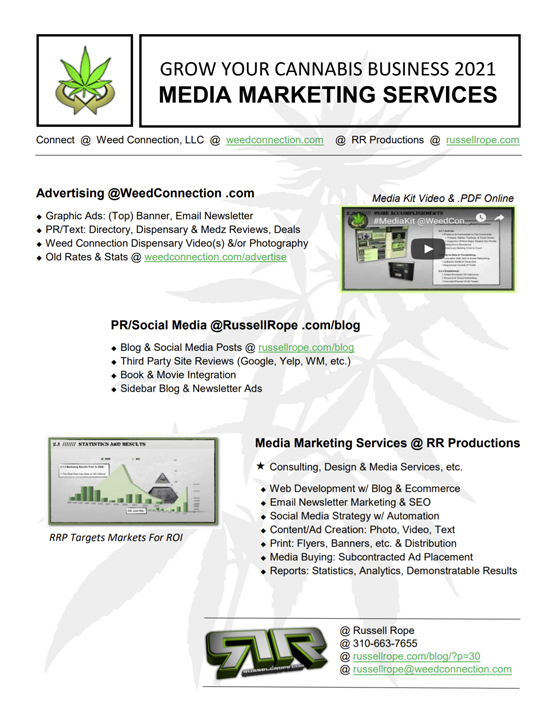
Click Here For The
Cannabis Media Marketing PDF
~~~~~~~~~~~~~~~~~~~~~~~~~
Grow Your Cannabis Business
~~~~~~~~~~~~~~~~~~~~~~~~~~~
Connect | ADVERTISE | Work | Submit
Subscribe | Follow | Share | Like | Support
#FreeTheWeed @WeedConnection
~~~~~~~~~~~~~~~~~~~~~~~~~~~
#FreeTheOG #Fundraiser @ RR
~~~~~~~~~~~~~~~~~~~~~~~~~~~

Media Marketing Services,
& New Deals
@ RRP
 

#Cannabis #Business @WeedConnection

WeedConnection @ Twitter @WeedConnection @ Facebook @WeedConnection @ LinkedIn @WeedConnection @ Foursquare @WeedConnection @ Spotify @WeedConnection @ YouTube @WeedConnection @ Yelp @WeedConnection @ Google+ @WeedConnection @ instaGram

weedconnection.com

#FollowFriday @RussellRope #OG @WeedConnection

Share This
* New Show NQ @TheTrueOGReport *

* READ & Click & READ & Click *

:: Creator @ WC @ RR Productions ::
:: Follow @RussellRope For Updates ::

#OG @RussellRope #Creator @WeedConnection

:: Join The Revolution ::
:: Read & Take Action ::
:: True OG Stories @ RR ::
:: SUPREME #LegalTrillOG ::

----------------------------------

:: Media Marketing Services @ RRP ::

:: Connect | ADVERTISE | Work | Submit ::

:: Subscribe | Follow | Share | Like | Support ::

:: #FreeTheWeed @WeedConnection ::

WeedConnection @ Twitter @WeedConnection @ Facebook @WeedConnection @ LinkedIn @WeedConnection @ Foursquare @WeedConnection @ Spotify @WeedConnection @ YouTube @WeedConnection @ Yelp @WeedConnection @ Google+ @WeedConnection @ instaGram

weedconnection.com

#NORML #News @WeedConnection

Share This

Study: THC/CBD Combination Therapy Reduces Seizure Frequency in Children with Treatment-Resistant Epilepsy

London, United Kingdom: The daily administration of cannabis products is associated with reductions in seizure frequency among children with treatment-resistant epilepsy (TRE), according to observational trial data published in the journal Neuropediatrics.

British investigators assessed the safety and efficacy of cannabis-derived products in 35 patients diagnosed with pediatric epilepsy. Study subjects were participants in the UK Medical Cannabis Registry, and each of them possessed a doctor’s authorization to consume cannabis. Study participants consumed either CBD-dominant extract oils or a combination therapy containing both CBD and THC.

Researchers reported that over 90 percent of subjects treated with the combination therapy experienced a ≥50 percent reduction in seizure frequency at six months, whereas fewer than one-third of patients receiving CBD-only products did so. Investigators said that cannabis products exhibited an acceptable short-term safety profile in this patient cohort.

"The results show a promising signal toward the effectiveness of CBMPs [cannabis-based medicinal products] in children with TRE, particularly in the cohort of patients treated with delta-9-THC," the authors concluded. They added: "The short term adverse effects appear well tolerated, but the long-term effects of CBMPs on neurodevelopment are still unknown. The results from this study could be utilized in the design of future phase II randomized controlled trials, particularly for dosing regimens."

Subjects enrolled in the UK Medical Cannabis Registry who were diagnosed with a variety of other conditions, including post-traumatic stress, depression, and inflammatory bowel disease, have also demonstrated symptomatic improvements following cannabis therapy.

Survey data from Canada estimates that as many as one-third of epileptic patients consume cannabis products therapeutically.

In 2018, regulators with the United States Food and Drug Administration granted market approval for the plant-derived CBD prescription drug Epidiolex in the treatment of two rare forms of pediatric epilepsy, Lennox-Gastaut syndrome, and Dravet syndrome. The drug is categorized as a Schedule V controlled substance. In 2020, FDA regulators expanded the prescription use of Epidiolex to patients with the genetic disorder tuberous sclerosis complex (TSC).

Full text of the study, "Clinical outcomes of children treated with cannabis based medicinal products for treatment resistant epilepsy: Analysis from the UK Medical Cannabis Registry," appears in Neuropediatrics.

Case Series: Cannabis Effective at Treating Borderline Personality Disorder

London, United Kingdom: The use of cannabis products containing THC and CBD are safe and effective in mitigating symptoms in patients diagnosed with emotionally unstable personality disorder (EUPD), according to a case series reported in the journal Brain Sciences. Emotionally unstable personality disorder (a/k/a borderline personality disorder) is a common mental health disorder associated with a range of chronic and debilitating symptoms, including impaired social functioning, unstable mood, and risky, impulsive, or self-injurious behavior.

An international team of researchers assessed the use of cannabis products in a cohort of seven EUPD patients. Subjects consumed products containing both THC and CBD in varying ratios for one month.

Six of the seven participants reported "an improvement in symptoms," and "none of the participants reported any adverse side effects."

The study’s authors concluded: "To our knowledge, this case series represents the first medical evidence of the use of CBMPs [cannabis-based medicinal products] for the clinical management of patients with a diagnosis of EUPD. ... [O]ur results suggest that, when deployed in a rigorously controlled clinical environment, CBMPs can provide substantial improvement in symptoms associated with EUPD thus warranting the need for further research on this therapeutic strategy."

Full text of the study, "Cannabis based medicinal products in the management of emotionally unstable personality disorder: A narrative review and case series," appears in Brain Sciences.

Study: Cannabis Use History Not Associated with Increased Risk of Hypertension

Chicago, IL: Neither current nor past cannabis use is associated with an elevated risk of high blood pressure, according to data published in the Journal of Clinical Hypertension.

Investigators with Northwestern University’s Feinberg School of Medicine in Chicago assessed the relationship between cannabis use and blood pressure in a cohort of 4,565 adults.

They found no correlation between cannabis consumption and the likelihood of receiving a medical diagnosis for hypertension. They reported: "When compared with non-users, respondents who indicated sustained use of cannabis were not found to have an increased likelihood of developing hypertension. Among cannabis users, the frequency of use was not associated with increased odds of hypertension diagnosis. The age that an individual first began regularly using cannabis was also not found to have an association with the odds of hypertension diagnosis. Current users were not more likely than past users to have hypertension."

The authors concluded: "The findings of this study indicate that neither past nor current cannabis use are associated with the likelihood of having clinical hypertension. … Prospective clinical trials are needed to further determine the effects of cannabis on developing or perhaps even mitigating hypertension, particularly regarding long-term outcomes."

The findings are similar to those of a 2021 study, which also reported, "After adjustment for all confounders, neither lifetime cannabis use, 12-month cannabis use nor 12-month cannabis use frequency [at least monthly use and less than monthly use] were associated above chance with the incidence of hypertension."

Cannabinoids may influence blood pressure and other cardiovascular responses, though these effects tend to be short-term in duration and can be inconsistent. Recently, Israeli data reported that elderly subjects with hypertension respond favorably to medical cannabis treatment. Investigators involved with that study concluded, "Cannabis treatment for three months was associated with a reduction in systolic and diastolic blood pressure, as well as heart rate."

Full text of the study, "Sustained cannabis use does not predispose clinical hypertension: Findings from a national survey," appears in the Journal of Clinical Hypertension.

Analysis: Long-Term Cannabis Use Not Significantly Detrimental to Overall Health

Barcelona, Spain: Adults who regularly consume cannabis products do not report significant differences in their overall health as compared to the general public, according to data published in the journal Cannabis and Cannabinoid Research.

Spanish investigators surveyed a representative sample of regular cannabis consumers on a variety of questions specific to their daily activities and perceived overall health. Their responses were compared to previously compiled data provided by the general public.

Cannabis consumers were more likely than members of the general public to report walking at least ten minutes per day (76 percent to 70 percent), and they were more likely to positively perceive their own health (88 percent to 82 percent). Consumers were also less likely to report having issues with their cholesterol and blood pressure. Consumers were more likely than those in the general population to report experiencing problems sleeping.

One in four respondents reported reducing their need for medical interventions since using cannabis, and nearly one-third acknowledged reducing their use of prescription medications -- a finding that is consistent with prior studies.

Authors reported: "In this study, long-term users of cannabis scored in a similar way as the general population on a list of health indicators. These results were obtained using validated health indicators, especially designed and used by several governments to assess population health and compare this information between countries or specific populations. There was only one indicator associated with poorer health among cannabis users: sleep problems."

They concluded: "[T]hese findings suggest that long-term cannabis use might not play a central role in terms of public health. … We suggest inclusion of cannabis-related items in national surveys of health as they would provide valuable data to support the progress of public debates regarding its regulation."

Full text of the study, "Cannabis and public health: A study assessing regular cannabis users through health indicators," appears in Cannabis and Cannabinoid Research.

#NORML #News @WeedConnection

WeedConnection @ Twitter @WeedConnection @ Facebook @WeedConnection @ LinkedIn @WeedConnection @ Foursquare @WeedConnection @ Spotify @WeedConnection @ YouTube

#SocialMedia #Revolution @WeedConnection

Share This

* Connect @RussellRope *
* New WC Social Links List NQ *

:: FYi FB/iG Terminated WC Accts Again ::
:: No Just Cause FB iS Run By Sociopaths ::
:: They iNvested iN Criminal Competition ::

:: See Fed RiCO Lawsuit @ RR ::

. . . .

:: Join Us For A Hollyweed Sesh ::
:: Subscribe, Follow, Like, Add, Share ::

@WeedCONNECTiON

#SocialMedia @WeedConnection

SOCIAL:
twitter.com/weedconnection
instagram.com/weedconnection
facebook.com/weedconnection
myspace.com/weedconnection420
youtube.com/weedconnection420

BUSINESS:
weedconnection.com
weedconnection.com/advertise

CREATOR:
@RussellRope @ russellrope.com/blog

#Support Your #OG(s)
#LinkUP @WeedConnection

@WeedConnection .com


Email:

#FreeTheOG
#FreeTheWeed
Fund WC++

Read RR True Story
Connect | ADVERTISE | Work | Submit
Subscribe | Follow | Share | Like | Support

WeedConnection @ Twitter @WeedConnection @ Facebook @WeedConnection @ LinkedIn @WeedConnection @ Foursquare @WeedConnection @ Spotify @WeedConnection @ YouTube @WeedConnection @ Yelp @WeedConnection @ Google+ @WeedConnection @ instaGram

weedconnection.com


#International #Business @WeedConnection

Share This

New WC Franchise in Development @ RRP OG LLC
All Advertising/Media Services Will Be Honored
10-50% DiScOuNt :: Connect / Select You Plan

. . . .

Ask about our current promotion, which is a free listing with purchase of any other service @WeedConnection. Recently started rebuilding our global database and added a new/temp delivery section to our directory. Send us an email to submit any current information. Click here for listing and advertising information. The directory is a huge project that requires maintenance. We still have big plans for future development and production. Join(t) the team as a regional manager, college intern, street team member, or click here for a list of other open positions. Support, subscribe, follow, share, like, and mention growing cannabis business @WeedConnection


#iNTERNATiONAL #Directory

WeedConnection @ Twitter @WeedConnection @ Facebook @WeedConnection @ LinkedIn @WeedConnection @ Foursquare @WeedConnection @ Spotify @WeedConnection @ YouTube @WeedConnection @ Yelp @WeedConnection @ Google+ @WeedConnection @ instaGram

weedconnection.com

#NORML #News @WeedConnection

Share This

Study: Cannabis Mitigates Symptoms in Patients with Treatment-Resistant Post-Traumatic Stress

Tel Aviv, Israel: The use of cannabis prior to bedtime is associated with improved sleep in patients with treatment-resistant post-traumatic stress (PTS), according to data published in the journal Frontiers in Psychiatry.

Israeli researchers evaluated cannabis use in a cohort of 14 subjects with combat-related traumatic stress. Subjects had previously tried various conventional treatments without success. All of the patients were naïve to cannabis prior to enrolling in the study. Study participants consumed cannabis in the evenings in an outpatient setting for a period of at least six-months.

Investigators reported: "After treatment with cannabis, total sleep score, subjective sleep quality, and sleep duration significantly improved. ... Total PTSD symptom score and its subdomains (intrusiveness, avoidance, and alertness) showed [also] improvement." By contrast, cannabis treatment was not associated with reducing patients' frequency of nightmares.

None of the patients reported any side-effects from cannabis, nor did any elect to cease using cannabis prior to the end of the study period.

"To the best of our knowledge, this is the first published study examining long-term cannabis efficacy in chronic combat treatment-resistant PTSD patients," authors concluded. "The study's findings show an overall improvement in sleep quality and duration, as well as a decrease in PTSD symptoms. ... Future research should clarify the long-term effects of cannabis on different groups of patients suffering from PTSD."

Israelis suffering from post-traumatic stress have been legally able to access cannabis since 2014. Currently, about 10 percent of all Israelis authorized to access medical cannabis use it to treat symptoms of PTS.

Other studies have similarly reported improvements in sleep duration and in insomnia in patients with and without PTS. The enactment of adult-use marijuana legalization has also been correlated with a decrease in the sale of over-the-counter sleep aid medications.

Full text of the study, "Medical cannabis treatment for treatment-resistant combat PTSD," appears in Frontiers in Psychiatry.

Analysis: Cannabis Products Mitigate Need for Other Prescription Medications in Chronic Pain Patients

Saarbrücken, Germany: The use of cannabis-based medicinal products is associated with significant decreases in pain and prescription drug use among patients suffering from chronic pain, according to data published in the German science journal Schmerz.

A team of German researchers assessed the efficacy of cannabis-based medicines in a cohort of 187 pain patients.

Over 88 percent of patients reported experiencing either significant or moderate improvements in their overall condition following the initiation of cannabis therapy. Participating physicians reported that 61 percent of the study's participants achieved "substantial pain relief," 66 percent achieved better sleep, and 34 percent achieved improvements in their mental well-being.

Among those subjects who were taking prescription medications at the onset of the study, 65 percent ceased their use of opioids, 60 percent stopped using antidepressants, and 58 percent ceased their use of anticonvulsants -- a finding that is consistent with numerous other studies.

Authors concluded: "CbMs [cannabis-based medicines] can contribute to a clinically relevant reduction in pain, sleep problems and muscle tension and can improve daily functioning in carefully selected and supervised patients with chronic pain. CbM can contribute to the reduction or complete cessation of other pain medications (antidepressants, anticonvulsants, opioids)."

Data published earlier this month in the journal JAMA Network Open reports that nearly one in four pain patients residing in states where medical cannabis access is legal self-identify as marijuana consumers.

Numerous placebo-controlled trials document the ability of either inhaled or vaporized herbal cannabis to significantly mitigate pain in various patient populations, including those suffering from HIV, diabetes, spinal cord injury, or with severe treatment-resistant neuropathy (nerve pain). These positive results have been replicated in clinical trials utilizing relatively low doses of cannabis as well as in trials using plant-derived cannabis extracts.

A 2017 report by the National Academy of Sciences, Engineering, and Medicine concluded that "conclusive or substantial evidence" exists for cannabis' efficacy in patients suffering from chronic pain, stating, "Patients who [are] treated with cannabis or cannabinoids are more likely to experience a clinically significant reduction in pain symptoms."

Full text of the study, "Benefits and harms of cannabis-based medicines from the viewpoints of patients with chronic pain and their physicians: A cohort study in three pain centers of the German federal state of Saarland," appears in Schmerz.

Study: Cannabis Use Associated with Symptom Improvements in Patients with Headache Disorders

London, United Kingdom: The use of cannabis products is associated with symptomatic improvements in patients with headache disorders, according to observational trail data published in the journal Expert Review of Neurotherapeutics.

British investigators assessed the safety and efficacy of cannabis-derived products in 97 patients diagnosed with migraine and other headache disorders. Study subjects were participants in the UK Medical Cannabis Registry, and each of them possessed a doctor's authorization to access cannabis. Study participants consumed cannabis by either vaporizing marijuana flowers or by ingesting plant-derived extracts containing both THC and CBD. Researchers assessed subjects' symptoms compared to baseline at one, three, and six-months.

Cannabis therapy was associated with sustained improvements in pain, anxiety, sleep, and other health-related outcomes. Fewer than one-in-five patients reported experiencing any adverse events from cannabis. Most events were perceived to be mild.

"[While] these results provide promise with respect to the changes in health-related quality of life experienced by those with primary headache disorders, there is a still a requirement for further RCTs [randomized placebo-controlled trials] to be conducted to understand the true efficacy of CBMPs [cannabis-based medicinal products] for this indication," authors concluded. "However, whilst these are awaited, the present study outcomes with respect to safety and efficacy, provides useful insights to inform current clinical practice."

According to a systematic review of the literature published in December, the inhalation of cannabis flowers is generally effective and well-tolerated among patients with migraine. Authors of the review concluded: "[M]edical marijuana has a significant clinical response by reducing the length and frequency of migraines. No severe adverse effects were noted. Due to its effectiveness and convenience, medical marijuana therapy may be helpful for patients suffering from migraines."

Patients enrolled in the UK Medical Cannabis Registry with diagnoses of post-traumatic stress, depression, refractory epilepsy, and inflammatory bowel disease have also demonstrated symptomatic improvements following cannabis therapy.

Full text of the study, "UK Cannabis Registry: Assessment of clinical outcomes in patients with headache disorders," appears in Expert Review of Neurotherapeutics.

Oklahoma: Voters to Decide on Adult-Use Legalization Initiative Next Month

Oklahoma City, OK: Oklahomans will decide on March 7 whether to approve a citizens' initiated measure (State Question 820) legalizing the adult-use marijuana market.

State Question 820 permits adults to legally possess and home-cultivate personal use qualities of cannabis while also establishing a licensed, retail marketplace. Those with past marijuana convictions, or those who are currently incarcerated for certain cannabis-related crimes, would be able to petition the courts for either record expungement or re-sentencing consideration.

According to a just published economic analysis, excise taxes from retail cannabis sales in Oklahoma could yield $434 million in new tax revenue over four years.

Advocates for SQ 820 in July turned in nearly twice the total of signatures necessary to qualify the initiative for the 2022 ballot. However, the Secretary of State's office took an excessive amount of time to ultimately verify proponents' signatures. Opponents of the measure then filed a series of questionable legal challenges litigating various facets of the campaign, including challenges to the initiative's summary language. Although justices ultimately dismissed those challenges, they did so after time had elapsed for state officials to include SQ 820 on that year's printed ballots.

In October, Republican Gov. Kevin Stitt issued the executive proclamation calling for a special election to be held on Tuesday, March 7, 2023. State Question 820 will be the only item on the ballot.

Oklahomans who are not yet registered to vote have until Friday, February 10, to do so. Residents can check their voters registration status or register to vote online via the Oklahoma State Election Board's OK Voter Portal.

The deadline for voters to request an absentee ballot is Monday, February 20th. Early voting begins on Thursday, March 2nd. Polling location information is available from the OK Voter Portal.

Oklahomans previously voted in a special election in 2018 to legalize the cultivation and dispensing of marijuana for medical purposes.

Additional campaign information is available from Yes on 820.

Hawaii: Analysis Projects Adult-Use Cannabis Sales Could Create 3000+ New Jobs, Raise Over $80 Million in Annual Tax Revenue

Honolulu, Hawaii: Licensing Hawaiian businesses to engage in cultivating and selling cannabis to adults will create thousands of jobs and raise tens of millions of dollars in new tax revenue, according to an economic assessment provided by the Hawai'i Cannabis Industry Association.

Authors of the report estimated that legalization will create 3,375 new jobs and will yield nearly $82 million in annual tax revenue.

Several bills are pending in the state legislature to legalize the adult-use cannabis market. Newly elected Governor, Democrat Josh Green pledged as a candidate that he would sign legalization legislation if such a bill was advanced by the legislature.

Although the dispensing of medical cannabis has been legal in Hawaii since 2000, criminal penalties remain in place for the adult possession of more than three grams of marijuana.

Full text of the analysis, "HICIA 2023 Adult Use Market and Tax Projection Report," is available from the Hawai'i Cannabis Industry Association.

#NORML #News @WeedConnection

WeedConnection @ Twitter @WeedConnection @ Facebook @WeedConnection @ LinkedIn @WeedConnection @ Foursquare @WeedConnection @ Spotify @WeedConnection @ YouTube

#FollowFriday @RussellRope #OG @WeedConnection

Share This
* New Show NQ @TheTrueOGReport *

* READ & Click & READ & Click *

:: Creator @ WC @ RR Productions ::
:: Follow @RussellRope For Updates ::

#OG @RussellRope #Creator @WeedConnection

:: Join The Revolution ::
:: Read & Take Action ::
:: True OG Stories @ RR ::
:: SUPREME #LegalTrillOG ::

----------------------------------

:: Media Marketing Services @ RRP ::

:: Connect | ADVERTISE | Work | Submit ::

:: Subscribe | Follow | Share | Like | Support ::

:: #FreeTheWeed @WeedConnection ::

WeedConnection @ Twitter @WeedConnection @ Facebook @WeedConnection @ LinkedIn @WeedConnection @ Foursquare @WeedConnection @ Spotify @WeedConnection @ YouTube @WeedConnection @ Yelp @WeedConnection @ Google+ @WeedConnection @ instaGram

weedconnection.com