#International #Business @WeedConnection

Share This

New WC Franchise in Development @ RRP OG LLC
All Advertising/Media Services Will Be Honored
10-50% DiScOuNt :: Connect / Select You Plan

. . . .

Ask about our current promotion, which is a free listing with purchase of any other service @WeedConnection. Recently started rebuilding our global database and added a new/temp delivery section to our directory. Send us an email to submit any current information. Click here for listing and advertising information. The directory is a huge project that requires maintenance. We still have big plans for future development and production. Join(t) the team as a regional manager, college intern, street team member, or click here for a list of other open positions. Support, subscribe, follow, share, like, and mention growing cannabis business @WeedConnection


#iNTERNATiONAL #Directory

WeedConnection @ Twitter @WeedConnection @ Facebook @WeedConnection @ LinkedIn @WeedConnection @ Foursquare @WeedConnection @ Spotify @WeedConnection @ YouTube @WeedConnection @ Yelp @WeedConnection @ Google+ @WeedConnection @ instaGram

weedconnection.com

#NORML #News @WeedConnection

Share This

Gallup: Half of US Adults Acknowledge Having Tried Cannabis

Washington, DC: One half of all Americans ages 18 and older acknowledge having tried cannabis, according to survey data compiled by Gallup.

Fifty percent of respondents said that they had consumed cannabis – up from approximately one-in-three Americans two decades ago. Seventeen percent of respondents identified themselves as current marijuana smokers, up from seven percent a decade ago.

Young adult respondents (those between the ages of 18 and 34) and those who identified as Democrats were most likely to acknowledge having had prior experience with cannabis. Men (19 percent) were more likely than women (14 percent) to identify as current marijuana consumers.

Gallup’s polling is consistent with those of other surveys. For example, data compiled in 2022 by YouGov.com reported that 52 percent of US adults have tried marijuana at least once during their lifetimes. Survey data compiled by the US government in 2021 estimated that 46 percent of people age 12 or older have used the substance.

Prior polling by Gallup reports that 70 percent of Americans perceive smoking marijuana to be morally acceptable, and 68 percent say that its use should be legal for adults.

Detailed poll results are available from Gallup.

Analysis: Health Care Insurance Premiums Decline Following Adoption of Medical Cannabis Legalization

Bowling Green, OH: Medical cannabis legalization is associated with reductions in the average cost of individual health care premiums, according to data published in the International Journal of Drug Policy.

A team of researchers affiliated with Bowling Green State University in Ohio and Illinois State University assessed the impact of state-specific medical cannabis legalization laws on individual health insurance premiums. Investigators compared trends in premium costs in states with and without legalization over an eleven-year period (2010 to 2021).

They reported that prices for individual premiums fell in medical cannabis states as compared to jurisdictions where marijuana is illegal. “Initial concerns about medical cannabis legalization leading to increases in medical care costs, which would be reflected in higher insurance premiums, appear to be unfounded,” authors determined. “Starting seven years after MCL [medical cannabis legalization] implementation, we estimate a sizeable and statistically significant reduction in annual per-enrollee premiums of about $1600.”

The study’s authors further estimated, “If MCLs were enacted nationally, conservatively, we expect to see a savings of at least $16.8 billion.”

Investigators concluded: “In this study, we provide evidence of a statistically significant reduction in individual market premiums starting seven years after the implementation of medicinal cannabis laws. Because of the pooled nature of insurance, the lower premiums benefit cannabis users and non-users alike in medical cannabis states. Our results are important as health care expenses, including health insurance premiums, have been growing faster than inflation and comprise an increasing share of a household’s budget.”

The study’s findings are consistent with prior analyses showing that medical cannabis implementation is associated with a reduction in Medicaid costs. Other studies have shown that legalizing medical marijuana access is associated with significant reductions in patients’ use of opioids and other prescription medications.

Full text of the study, “Medical cannabis laws lower individual market health insurance premiums,” appears in the International Journal of Drug Policy.

Analysis: Marijuana Use Not Associated with Elevated Risk of Heart Attack

San Diego, CA: A history of cannabis use within the past year is not associated with an increased risk of heart attack among middle-aged adults, according to data published in the American Journal of Cardiology.

Compared to non-users, current consumers of cannabis (those who had used marijuana monthly for the past year) did not possess a higher risk of heart attack after researchers adjusted potential confounders (e.g., physical activity, BMI, alcohol and cigarette use). Those who reported consistent monthly cannabis use for the past decade also possessed no greater risk.

By contrast, researchers did identify an increased risk among a portion of former consumers who had recently ceased using cannabis. Investigators called this latter finding “unexpected.”

Authors concluded: “In a representative sample of middle-aged US adults, a history of monthly cannabis use for more than a year before a myocardial infarction was not linked to a subsequent physician-diagnosed MI, after accounting for cardiovascular risk factors. However, when considering recent use, the odds were three times greater if no use was reported in the past month. The length of monthly use before the MI, including use >10 years, also showed no association. The evidence base for cardiovascular harms is conflicting and limited by the ability to accurately quantify use, especially the method of use, dose, and potency. Given the expanding access to cannabis products in the United States and around the world, more research, particularly longitudinal and experimental studies, is needed.”

Cannabinoids have long been known to influence cardiovascular function, though data regarding the degree of these effects are inconsistent. According to the results of a 2021 literature review of 67 studies published in the American Journal of Medicine, “[M]arijuana itself does not appear to be independently associated with excessive cardiovascular risk factors,” although authors did caution that “it can be associated with other unhealthy behaviors such as alcohol use and tobacco smoking that can be detrimental” to cardiovascular health.

Full text of the study, “Associations between monthly cannabis use and myocardial infarction in middle-aged adults: NHANES 2009 to 2018,” appears in the American Journal of Cardiology.

New Hampshire: Governor Signs Law Establishing Marijuana Legalization Study Group, Expanding Medical Access for Pain Patients

Concord, NH: Republican Gov. Chris Sununu has signed legislation (House Bill 611) into law expanding medical cannabis access and creating an adult-use legalization task force.

The new law removes the requirement that those in severe pain may only access medical cannabis products as a treatment of last resort. Approximately 20,000 residents are registered in the state’s medical marijuana access program.

Separate provisions in the law establish an 18-member commission to study the feasibility of regulating adult-use cannabis sales in state-owned stores.

State law mandates that retail sales of wine and spirits take place exclusively in state-owned (a/k/a ABC) outlets. In May, Gov. Sununu for the first time voiced his support for the creation of a similar regulatory framework to govern the distribution of cannabis products to adults. The Governor had previously been an outspoken critic of legalization.

In accordance with the new law, “The commission shall issue a final report of its findings and any recommendations for proposed legislation to the president of the senate, the speaker of the house of representatives, the senate clerk, the house clerk, [and] the governor” prior to December 1, 2023.

Statewide polling compiled by the University of New Hampshire in May reported that 60 percent of residents favor the sale of adult-use marijuana products in state-operated stores.

#NORML #News @WeedConnection

WeedConnection @ Twitter @WeedConnection @ Facebook @WeedConnection @ LinkedIn @WeedConnection @ Foursquare @WeedConnection @ Spotify @WeedConnection @ YouTube

#FollowFriday @RussellRope #OG @WeedConnection

Share This
* New Show NQ @TheTrueOGReport *

* READ & Click & READ & Click *

:: Creator @ WC @ RR Productions ::
:: Follow @RussellRope For Updates ::

#OG @RussellRope #Creator @WeedConnection

:: Join The Revolution ::
:: Read & Take Action ::
:: True OG Stories @ RR ::
:: SUPREME #LegalTrillOG ::

----------------------------------

:: Media Marketing Services @ RRP ::

:: Connect | ADVERTISE | Work | Submit ::

:: Subscribe | Follow | Share | Like | Support ::

:: #FreeTheWeed @WeedConnection ::

WeedConnection @ Twitter @WeedConnection @ Facebook @WeedConnection @ LinkedIn @WeedConnection @ Foursquare @WeedConnection @ Spotify @WeedConnection @ YouTube @WeedConnection @ Yelp @WeedConnection @ Google+ @WeedConnection @ instaGram

weedconnection.com

#SocialMedia #Revolution @WeedConnection

Share This

* Connect @RussellRope *
* New WC Social Links List NQ *

:: FYi FB/iG Terminated WC Accts Again ::
:: No Just Cause FB iS Run By Sociopaths ::
:: They iNvested iN Criminal Competition ::

:: See Fed RiCO Lawsuit @ RR ::

. . . .

:: Join Us For A Hollyweed Sesh ::
:: Subscribe, Follow, Like, Add, Share ::

@WeedCONNECTiON

#SocialMedia @WeedConnection

SOCIAL:
twitter.com/weedconnection
instagram.com/weedconnection
facebook.com/weedconnection
myspace.com/weedconnection420
youtube.com/weedconnection420

BUSINESS:
weedconnection.com
weedconnection.com/advertise

CREATOR:
@RussellRope @ russellrope.com/blog

#Support Your #OG(s)
#LinkUP @WeedConnection

@WeedConnection .com


Email:

#FreeTheOG
#FreeTheWeed
Fund WC++

Read RR True Story
Connect | ADVERTISE | Work | Submit
Subscribe | Follow | Share | Like | Support

WeedConnection @ Twitter @WeedConnection @ Facebook @WeedConnection @ LinkedIn @WeedConnection @ Foursquare @WeedConnection @ Spotify @WeedConnection @ YouTube @WeedConnection @ Yelp @WeedConnection @ Google+ @WeedConnection @ instaGram

weedconnection.com


#NORML #News @WeedConnection

Share This

Study: Plant-Derived Cannabinoids Effective for Anxiety, Post-Traumatic Stress

Sydney, Australia: Patients diagnosed with anxiety and/or post-traumatic stress respond favorably to medical cannabis treatment, according to observational study data published in the Journal of Pharmacy Technology.

A team of Australian investigators assessed the safety and efficacy of oral cannabinoid formulations (either tinctures or capsules) containing various ratios of THC and CBD in 198 patients with anxiety disorders. The median doses consumed by study participants were 50.0 mg/day for CBD and 4.4 mg/day for THC. (Australian law permits physicians to authorize cannabis products to patients unresponsive to conventional prescription treatments.)

Researchers reported, “The total participant sample reported significantly improved anxiety, depression, fatigue, and ability to take part in social roles and activities.”

Among the subset of subjects diagnosed specifically with post-traumatic stress, cannabis therapy similarly “improved anxiety, depression, fatigue, and social abilities,” with CBD-dominant formulations exhibiting the greatest efficacy.

The most common adverse events experienced by participants were dry mouth, somnolence, and fatigue.

The findings are consistent with those of recent observational studies from the United Kingdom which similarly showed that cannabis therapy was safe and effective for patients with generalized anxiety and post-traumatic stress.

Full text of the study, “The effectiveness and the adverse events of cannabidiol and tetrahydrocannabinol used in the treatment of anxiety disorders in a PTSD population: An interim analysis of an observational study,” appears in the Journal of Pharmacy Technology.

Study: Police Unable to Accurately Determine THC-Induced Impairment via Field Sobriety Tests

San Diego, CA: Trained police officers are frequently unable to discriminate between those who are under the influence of THC and those who are not based upon subjects’ performance on field sobriety tests, according to data published in the journal JAMA Psychiatry.

Researchers affiliated with the University of California at San Diego performed a double-blind, placebo-controlled randomized clinical trial to evaluate whether the use of field sobriety tests (FSTs) are valid measurements for determining if drivers are under the influence of THC.

Consistent with prior analyses, police officers frequently misinterpreted subjects’ FST performance so that they deemed unimpaired participants (those who had smoked placebo cigarettes) to be under the influence. Overall, officers incorrectly classified 49.2 percent of the placebo group as impaired based upon their FST performance.

Investigators concluded, “The findings of this study suggest that (1) FSTs are useful adjuncts but do not provide strong objective evidence of THC-specific impairment and (2) additional efforts to validate existing methods and provide law enforcement with new, effective tools for identifying impairment are needed.”

Authors of an accompanying editorial in the journal added: “Field sobriety tests as administered by highly trained police officers are insufficient to detect cannabis-induced impairment. ... The legal implication of these findings can be major given that FSTs are currently part of the evaluation protocol in North America to detect drivers who are cannabis impaired.”

Some of the study’s findings had initially been published in May in the journal Clinical Chemistry.
The results of a 2021 study by investigators with John Hopkins University similarly reported that subjects’ performance on key elements of the field sobriety test, such as the ‘walk-and-turn’ test and the one leg stand, “showed little sensitivity to cannabis-induced impairment.” By contrast, that study’s authors acknowledged that the use of the mobile device performance application, DRUID, was adequately sensitive to cannabis-induced changes in subjects’ performance. NORML has frequently opined in favor of the use of performance testing technology as a more reliable indicator of cannabis-induced impairment.

In 2017, justices on the Massachusetts Supreme Judicial Court ruled in Commonwealth v. Gerhardt that standard roadside field sobriety tests cannot “be treated as scientific tests establishing impairment as a result of marijuana consumption.” They added, “Likewise, an officer may not testify that a defendant ‘passed’ or ‘failed’ any FST, as this language improperly implies that the FST is a definitive test of marijuana use or impairment.”

Full text of the study, “Evaluation of Field Sobriety Tests for identifying drivers under the influence of cannabis: A randomized clinical trial,” appears in JAMA Psychiatry.

Survey: Dystonia Patients Report Benefits from Inhaled Cannabis

Tel Aviv, Israel: Patients diagnosed with dystonia (involuntary muscle contractions) report experiencing therapeutic benefits from smoking cannabis, according to data published in the journal Frontiers in Neurology.

Israeli researchers surveyed 23 dystonia patients authorized to use medical cannabis products. (Cannabis is legal in certain circumstances in Israel under a doctor’s supervision.) Participants in the study had used cannabis for, on average, a period of nearly three years. Patients provided numerical ratings commensurate with their symptoms.

Patients reported that inhaled cannabis was associated with a reduction in dystonia symptoms and with improvements in their overall quality of life.

Those patients diagnosed with generalized dystonia perceived greater benefits than did those with more focal dystonia patterns. Patients reported smoking cannabis to be far more effective than consuming oil extracts. The most commonly reported side effects from cannabis were dry mouth, sedation, and dizziness.

“Our real-life observational single-center study suggests that MC [medical cannabis] may provide benefits for some patients with dystonia, particularly those with more widespread or generalized forms of the condition,” researchers concluded. “THC-containing MC products may be a promising starting point for further research into the therapeutic benefits of CBM [cannabis-based medicines] for dystonia in patients with widespread symptoms."

Separate data has shown that cannabis inhalation improves pain and movement control in patients with Parkinson’s disease.

Full text of the study, “A single-center real-life study on the use of cannabis in patients with dystonia,” appears in Frontiers in Neurology.

Israel: Regulatory Changes Will Expand Patients’ Access to Medical Cannabis

Jerusalem, Israel: Regulators are further easing restrictions on patients’ access to medical cannabis products.

Regulatory reforms approved by the Ministry of Health will allow physicians to prescribe cannabis to patients as a first-line treatment rather than as an option of last resort. (Under current law, doctors must attest that their patients have been unresponsive to other conventional treatments, including opioids, prior to granting them access to medical cannabis products.)

About 100,000 Israelis are currently authorized to use medical cannabis.

Another regulatory change eases legal restrictions on patients’ access to hemp-derived CBD products.

Regulators are also seeking to further facilitate clinical trial research involving cannabis products.

The regulatory changes are anticipated to go into effect this December.

#NORML #News @WeedConnection

WeedConnection @ Twitter @WeedConnection @ Facebook @WeedConnection @ LinkedIn @WeedConnection @ Foursquare @WeedConnection @ Spotify @WeedConnection @ YouTube

#Cannabis #Media #MarketinG @WeedConnection

Share This

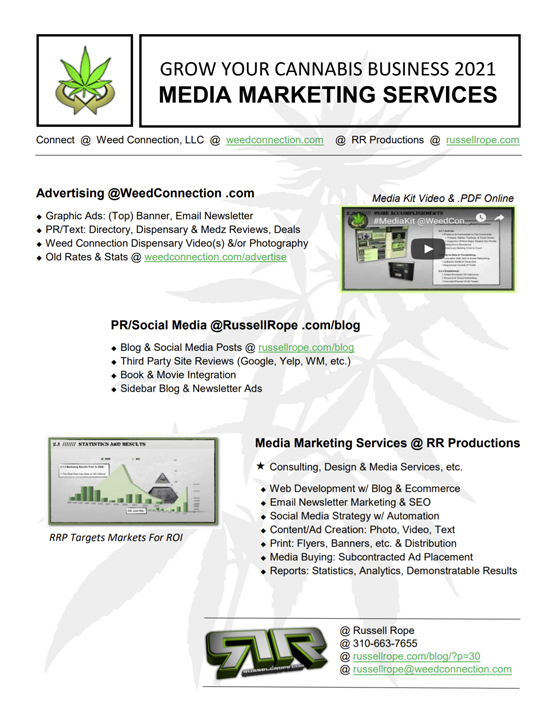
Click Here For The
Cannabis Media Marketing PDF
~~~~~~~~~~~~~~~~~~~~~~~~~
Grow Your Cannabis Business
~~~~~~~~~~~~~~~~~~~~~~~~~~~
Connect | ADVERTISE | Work | Submit
Subscribe | Follow | Share | Like | Support
#FreeTheWeed @WeedConnection
~~~~~~~~~~~~~~~~~~~~~~~~~~~
#FreeTheOG #Fundraiser @ RR
~~~~~~~~~~~~~~~~~~~~~~~~~~~

Media Marketing Services,
& New Deals
@ RRP
 

#Cannabis #Business @WeedConnection

WeedConnection @ Twitter @WeedConnection @ Facebook @WeedConnection @ LinkedIn @WeedConnection @ Foursquare @WeedConnection @ Spotify @WeedConnection @ YouTube @WeedConnection @ Yelp @WeedConnection @ Google+ @WeedConnection @ instaGram

weedconnection.com

#NORML #News @WeedConnection

Share This

Analysis: Cannabis Consumers Possess Reduced Risk of Type 2 Diabetes

Tabriz, Iran: Adults with a history of cannabis use are less likely than non-consumers to develop type 2 diabetes, according to data published in the journal Phytotherapy Research. A team of Iranian investigators performed a meta-analysis of the relevant literature, including 11 surveys and four cohorts consisting of more than 478,000 subjects. They reported, “[T]he odds of developing T2DM [type 2 diabetes] in individuals exposed to cannabis was 0.48 times lower than in those without cannabis exposure.”

Authors speculated that cannabis may possess “protective effects” against the development of diabetes, but they cautioned against drawing any definitive conclusions absent additional studies.

“To our knowledge, our meta-analysis presents the … most up-to-date evidence on the association between cannabis consumption and T2DM,” they concluded. “Given the rising trend of cannabis consumption, and legalization of cannabis consumption there is an increasing need to design prospective longitudinal randomized studies investigating the honest effects of cannabis consumption and providing practical guidelines to manage cannabis usage.”

Several prior observational studies have identified a correlation between cannabis use and lower odds of obesity and adult-onset diabetes, while clinical trial data has shown that the administration of THCV is associated with improved glycemic control in type 2 diabetics. Placebo-controlled trial data published earlier this year reported that the use of plant-derived cannabinoid extracts significantly improves blood sugar and cholesterol levels in diabetic subjects.

Full text of the study, “Association between cannabis use and risk of diabetes mellitus type 2: A systematic review and meta-analysis,” appears in Phytotherapy Research. Additional information on cannabinoids and diabetes is available from NORML’s publication, Clinical Applications for Cannabis and Cannabinoids.

Study: Users of Non-Prescription Opioids Frequently Turn to Cannabis to Reduce Drug Cravings

Vancouver, Canada: Those who consume unregulated opioids frequently report using cannabis to mitigate their drug cravings, according to data published in the International Journal of Drug Policy.

Canadian investigators assessed cannabis use trends among a cohort of 205 consumers of non-prescription opioids. Many of the cohort were IV drug users and at-risk youth.

Nearly half of the study’s participants (45 percent) acknowledged using cannabis to manage opioid cravings. Of those, 62 percent “reported self-assessed decreases in opioid use during periods of cannabis use.” Subjects suffering from chronic pain were most likely to engage in opioid substitution.

Authors concluded: “In the present study, we observed that cannabis use to manage opioid cravings was significantly associated with self-assessed decreases in opioid use during periods of cannabis use among a structurally marginalized population of PWUD [people who use unregulated opioids]. The sub-analysis indicated that this association was mainly driven by those living with moderate to severe pain. … This suggests that future studies of cannabis substitution for opioid use should measure and analyze the impact of pain, as not doing so may lead to equivocal findings when the effects of cannabis substitution may vary based on the prevalence of chronic pain.”

Although numerous studies indicate that patients typically decrease their use of prescription opioids after initiating cannabis therapy, data regarding the relationship between cannabis use and non-prescription opioids is less consistent. According to a 2020 review paper: “Growing pre-clinical and clinical evidence appears to support the use of cannabis … to combat OUD [opioid use disorder]. The evidence summarized in this article demonstrates the potential cannabis has to ease opioid withdrawal symptoms, reduce opioid consumption, ameliorate opioid cravings, prevent opioid relapse, improve OUD treatment retention, and reduce overdose deaths. … The compelling nature of these data and the relative safety profile of cannabis warrant further exploration of cannabis as an adjunct or alternative treatment for OUD.”

Full text of the study, “Cannabis use to manage opioid cravings among people who use unregulated opioids during a drug toxicity crisis,” appears in the International Journal of Drug Policy. Additional information is available from the NORML Fact Sheet, ‘Relationship Between Marijuana and Opioids.’

Analysis: Cannabis Use Doesn’t Negatively Impact Survival Outcomes in Liver Transplant Patients

Ottawa, Canada: A history of cannabis use is not negatively associated with survival rates among patients receiving liver transplants, according to data published in the Canadian Liver Journal.

Canadian researchers reviewed the relevant literature on cannabis use and transplantation survival rates. Eight studies involving over 5,500 subjects were included in the review.

Authors determined, “[C]annabis use has not been associated with poor patient outcomes in terms of 1-, 3-, and 5-year patient survivals. Therefore, liver transplant candidates who use cannabis should not be denied access to transplantation.”

Their findings are consistent with those of several other studies concluding that marijuana use is not contraindicated in patients receiving organ transplants. Nonetheless, in several states – including some states that permit medical cannabis access – those with a history of marijuana use are ineligible to receive organ transplants.

Full text of the study, “Review of liver transplantation candidacy and outcomes among patients who use cannabis,” appears in the Canadian Liver Journal.

Missouri: County Officials Expunge Over 70,000 Marijuana Convictions

Columbia, MO: County officials have expunged over 70,000 marijuana-related convictions, including more than 10,000 felonies, since December, according to an update provided by NORML Board of Directors Member Dan Viets.

Viets is a co-author of Missouri’s citizens-initiated adult-use marijuana law and he served as Advisory Board Chair to the successful Legal Missouri 2022 campaign.

Provisions in the law, which took effect on December 8, 2022, required officials to expunge all eligible marijuana-related misdemeanor convictions by June 8, 2023.

Viets said that some counties had failed to make a “good faith effort” to meet the June deadline. He indicated that advocates may seek an order from the Missouri Supreme Court to compel certain counties to comply with the mandate.

Twenty-four states and the District of Columbia have enacted laws providing explicit pathways to either expunge (or otherwise set aside) the records of those with low-level marijuana convictions. This month, officials in Minnesota are beginning the process of reviewing and expunging an estimated 66,000 low-level cannabis convictions. According to publicly available data compiled by NORML, state and local officials have issued over 100,000 pardons and more than 1.7 million marijuana-related expungements since 2018.

The full text of NORML’s report, Marijuana Pardons and Expungements: By the Numbers, is available online. Additional information is available from Missouri NORML. Dan Viets may be contacted directly at danviets@gmail.com or by phone at (573) 819-2669.

Clinical Trial: Plant-Derived CBD Effective in Patients with Gastroparesis

Rochester, MN: Patients with gastroparesis (partial stomach paralysis) respond favorably to a proprietary spray (Epidiolex) containing plant-derived CBD, according to placebo-controlled data published in the journal Clinical Gastroenterology and Hepatology.

Investigators affiliated with the Mayo Clinic in Minnesota compared Epidiolex versus a placebo in 44 patients with gastroparesis. Subjects consumed either CBD or a placebo for a period of four weeks.

Researchers reported, “Our study shows that pharmaceutical grade CBD provides symptom relief in patients with idiopathic or diabetic gastroparesis with reduced total GCSI-DD [Gastroparesis Cardinal Symptom Index Daily Diary] scores and severity of symptoms, including reduced inability to finish a normal meal, number of vomiting episodes, in addition to greater tolerance of food intake at comfortable fullness.”

Authors concluded: “In summary, in patients with well documented idiopathic or diabetic gastroparesis, pharmaceutical-grade CBD can be administered safely for a period of four weeks and results in significant improvements in symptoms of gastroparesis. … These encouraging results suggest that further multicenter, larger, randomized, controlled trials of longer term in both idiopathic and diabetic gastroparesis are warranted.”

Studies have previously reported that cannabis can reduce gastroparesis-related abdominal pain, and that gastroparesis patients with a history of marijuana use possess “better hospitalization outcomes, including decreased length of stay and improved in-hospital mortality” as compared to those with no history of recent use.

Epidiolex has been FDA-approved since 2018 for the treatment of two rare forms of severe epilepsy: Lennox-Gastaut syndrome and Dravet syndrome.

Full text of the study, “A randomized, controlled trial of efficacy and safety of cannabidiol in idiopathic and diabetic gastroparesis,” appears in Clinical Gastroenterology and Hepatology. Additional information on cannabis and gastrointestinal disorders is available from NORML’s publication, Clinical Applications for Cannabis & Cannabinoids.

Study: THC/CBD Spray Effective for Patients with Refractory Back and Neck Pain

Sydney, Australia: The oral administration of a cannabinoid spray containing standardized ratios of THC and CBD produces clinically significant reductions in pain among patients with chronic back and neck pain, according to open-label trial data published in the journal Medical Cannabis and Cannabinoids.

Australian researchers assessed the safety and efficacy of an oromucosal spray containing 10 mg of THC and 25 mg of CBD in a cohort of 28 patients with moderate to severe back or neck pain. Participants in the study were unresponsive to over-the-counter non-opioid analgesics. Patients administered escalating doses of the spray daily for four weeks.

Investigators documented decreases in patients’ pain at even the lowest doses. Patients experienced further reductions in pain and improvements in mood in a dose-dependent manner over the course of the trial. Overall, side-effects from the spray were mild and well-tolerated.

“There were significant reductions in pain [at] all doses,” authors concluded. “There was also a reduction in pain interference in all domains including general activity, mood, walking ability, normal work, relationships, sleep, and enjoyment of life by dose.”

Australian law permits physicians to authorize cannabis products to patients unresponsive to conventional prescription treatments.

Full text of the study, “Tolerability and efficacy of a 10:25 preparation of delta-9-tetrahydrocannabinol and cannabidiol for treatment of chronic back or neck pain: A multiple-dose escalation study,” appears in Medical Cannabis and Cannabinoids. Additional information on cannabis and chronic pain is available from NORML’s publication, Clinical Applications for Cannabis & Cannabinoids.

Luxembourg: Law Permitting Adult-Use Cannabis Cultivation, Possession Takes Effect

Luxembourg City, Luxembourg: Legislation permitting the limited possession and cultivation of cannabis in private took effect late last week in the European nation of Luxembourg.

Under the new law, those 18 or older may legally cultivate up to four cannabis plants in a private household. Home grows may not be visible to the public.

By contrast, consuming cannabis in public remains criminalized, as does the public possession of more than three grams of marijuana. Home grows of more than four plants are also subject to criminal penalties.

Officials say that the new policy is the first step in what they anticipate will be additional future reforms loosening the nation’s marijuana laws.

In 2021, the European nation of Malta similarly approved legislation permitting the possession and home cultivation of personal use quantities of cannabis.

Analysis: Cannabis Use Not Associated with Increased Risk of Either High Blood Pressure or Hypertension

San Diego, CA: A history of marijuana use is not associated with an increased risk of either high blood pressure or hypertension, according to data published in the American Journal of Hypertension.

Researchers affiliated with the University of California at San Diego assessed the relationship between cannabis consumption and blood pressure/hypertension in a nationally representative sample of nearly 10,000 middle-aged adults.

They determined that those with a history of using cannabis for the past year had no higher risk of either high blood pressure or hypertension as compared to non-users.

The study’s authors concluded: “A history of monthly cannabis use for more than one year was not independently associated with either increased blood pressure or prevalent hypertension in a study using a nationally representative sample of middle-aged US adults. Moreover, no significant associations were observed for duration of monthly use, recency, or frequency of recent use. The lack of association found in the present study contributes to the observational evidence suggesting frequent cannabis use over decades may not be associated with increased blood pressure or hypertension in middle aged US adults.”

A prior analysis of over 91,000 French subjects, published in February in the journal Nature: Scientific Reports, reported that both current and lifetime cannabis use is associated with lower blood pressure. Israeli data, published in the European Journal of Internal Medicine, reported that the use of medical cannabis products was associated with decreases in hypertension among elderly subjects.

Full text of the study, “Trends in cannabis use, blood pressure and hypertension in middle-aged adults: Findings from NHANES: 2009-2018,” appears in the American Journal of Hypertension. Additional information on cannabis and hypertension is available from NORML’s publication, Clinical Applications for Cannabis & Cannabinoids.

#NORML #News @WeedConnection

WeedConnection @ Twitter @WeedConnection @ Facebook @WeedConnection @ LinkedIn @WeedConnection @ Foursquare @WeedConnection @ Spotify @WeedConnection @ YouTube