#FollowFriday @RussellRope #OG @WeedConnection

Share This
* New Show NQ @TheTrueOGReport *

* READ & Click & READ & Click *

:: Creator @ WC @ RR Productions ::
:: Follow @RussellRope For Updates ::

#OG @RussellRope #Creator @WeedConnection

:: Join The Revolution ::
:: Read & Take Action ::
:: True OG Stories @ RR ::
:: SUPREME #LegalTrillOG ::

----------------------------------

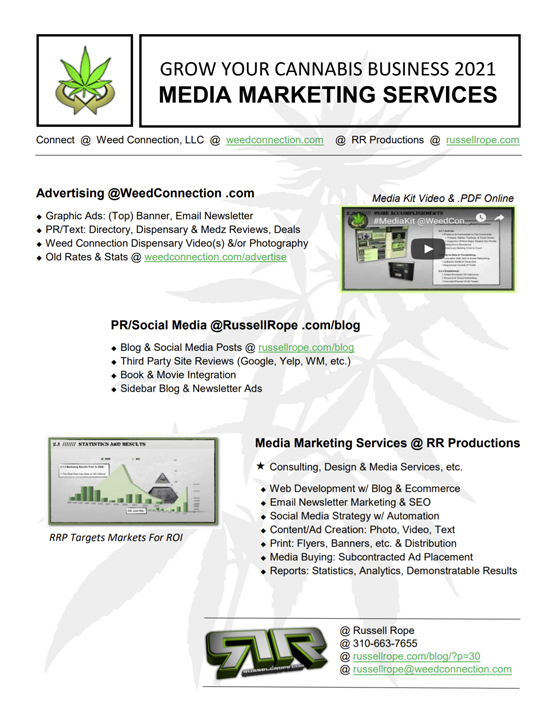
:: Media Marketing Services @ RRP ::

:: Connect | ADVERTISE | Work | Submit ::

:: Subscribe | Follow | Share | Like | Support ::

:: #FreeTheWeed @WeedConnection ::

WeedConnection @ Twitter @WeedConnection @ Facebook @WeedConnection @ LinkedIn @WeedConnection @ Foursquare @WeedConnection @ Spotify @WeedConnection @ YouTube @WeedConnection @ Yelp @WeedConnection @ Google+ @WeedConnection @ instaGram

weedconnection.com

#International #Business @WeedConnection

Share This

New WC Franchise in Development @ RRP OG LLC
All Advertising/Media Services Will Be Honored
10-50% DiScOuNt :: Connect / Select You Plan

. . . .

Ask about our current promotion, which is a free listing with purchase of any other service @WeedConnection. Recently started rebuilding our global database and added a new/temp delivery section to our directory. Send us an email to submit any current information. Click here for listing and advertising information. The directory is a huge project that requires maintenance. We still have big plans for future development and production. Join(t) the team as a regional manager, college intern, street team member, or click here for a list of other open positions. Support, subscribe, follow, share, like, and mention growing cannabis business @WeedConnection


#iNTERNATiONAL #Directory

WeedConnection @ Twitter @WeedConnection @ Facebook @WeedConnection @ LinkedIn @WeedConnection @ Foursquare @WeedConnection @ Spotify @WeedConnection @ YouTube @WeedConnection @ Yelp @WeedConnection @ Google+ @WeedConnection @ instaGram

weedconnection.com

#NORML #News @WeedConnection

Share This

Study: Cannabis Extracts Associated with Quality of Life Improvements in Autism Patients

Brasilia, Brazil: Autistic patients who use plant-derived cannabis extracts perceive benefits in their symptoms and reduce their use of prescription medications, according to data published in the journal Frontiers in Psychiatry.

A team of Brazilian researchers assessed the use of individually tailored doses of cannabis extracts in 20 subjects with autism spectrum disorder (ASD). Most patients (80 percent) consumed cannabis extracts for at least six months. Patients used extracts dominant in either CBD or THC. All extracts were administered orally via drops.

Cannabis treatment was associated with perceived symptom improvements as well as with reductions in patients’ use of neuropsychiatric medications. Reported side effects from cannabis treatment were mostly “mild and temporary.”

Investigators reported: “In this manuscript we present the perceived improvements of ASD patients and their families over the course of 3 to 21 months of treatment with FCE [full-spectrum cannabis extracts], using a titration protocol that resulted in personalized CBD and THC dosages, resulting in individually tailored CBD to THC proportions. … Parents reported improvement in all aspects evaluated. Side effects observed during FCE treatment were mild. … As treatment evolved, most other medications had their doses reduced or were completely removed during FCE treatment, which is consistent with the subjective perception of general improvement after FCE treatment. Patients’ and their families’ quality of life improved in 19 out of the 20 cases.”

They concluded: “Our study expands the scientific data demonstrating that clinical use of cannabis extracts is a safe intervention with promising and valuable effects over many core and comorbid aspects of autism that are not achieved by conventional medications. … Based on our findings, we propose guidelines for individually tailored dosage regimens that may be adapted to locally available qualified FCEs and guide further clinical trials.”

Numerous other studies have also identified improvements in autism patients who consume either plant-derived extracts or cannabis flower. Survey data published in 2021 by the publication Autism Parenting Magazine reported that 22 percent of US caregivers or parents have provided CBD to an autistic child.

Full text of the study, “Individually tailored dosage regimen of full-spectrum cannabis extracts for autistic core and comorbid symptoms: A real-life report of multi-symptomatic benefits,” appears in Frontiers in Psychiatry.

Analysis: Unregulated Cannabis Products Far More Likely to Contain Pesticides

Ottawa, Canada: Cannabis flower provided by Canadian-licensed marijuana cultivators are far less likely to test positive for the presence of pesticide residues than are similar products obtained from unregulated sources, according to data published in the Journal of Cannabis Research.

Researchers affiliated with Health Canada analyzed samples of cannabis flower obtained from the legal and unregulated market. (Canada legalized the adult-use marijuana market in 2018.)

They reported that only six percent of the samples obtained from the licensed marketplace contained trace levels of pesticide residues. By contrast, 92 percent of unregulated flower products tested positive for the residual presence of pesticides.

“Pesticides were detected in 92 percent of Canadian illicit cannabis inflorescence samples with 23 unique pesticide active ingredients quantified,” investigators determined. “Illicit cannabis contained on average 3.7 different pesticides per sample, and 87 percent of positive samples contained more than one different pesticide.”

They concluded: “To the authors’ knowledge, this study is the only extensive pesticide multiresidue analysis that compares pesticides in the licensed and illicit cannabis markets in a nationwide jurisdiction where cannabis has been legalized. Albeit being a small study, our results do support the government of Canada’s messaging where ‘Consuming illegal products could lead to adverse effects and other serious harms.’”

Since Canada legalized the adult-use cannabis market, the percentage of consumers who say that they obtain marijuana products exclusively from legally licensed retailers has risen steadily every year.

Data from the United States estimates that 43 percent of cannabis consumers nationwide now obtain their products from state-licensed retailers. Among those residing in legal marijuana states, only six percent of respondents say that they obtain their cannabis primarily from the unregulated market.

Full text of the study, “High levels of pesticides found in illicit cannabis inflorescence compared to licensed samples in Canadian study using expanded 327 pesticides multiresidue method,” appears in the Journal of Cannabis Research.

Survey: Nearly One-Third of Cancer Patients Acknowledge Using Cannabis Post-Diagnosis, Most Don’t Tell Their Doctors

New York, NY: Patients diagnosed with cancer frequently turn to cannabis for symptom management, according to survey data published in the journal Supportive Care in Cancer.

Researchers affiliated with the Memorial Sloan Kettering Cancer Center in New York City surveyed 1,258 cancer patients. Thirty-one percent of respondents said that they used cannabis products following their diagnosis. (All respondents resided in states where the medical use of cannabis for cancer is legal.)

Respondents were most likely to report consuming cannabis products to improve sleep, reduce pain, and relieve stress and depression. Those who used cannabis for palliative care “overwhelmingly reported improvements in their symptoms.” Only one in four consumers discussed their cannabis use with their healthcare providers – a result that is consistent with other studies finding that most patients are reluctant to speak with their doctors about cannabis-specific health issues.

Authors concluded: “Our study found that cannabis use among cancer patients is common across sociodemographic and clinical populations, with cannabis often obtained without oncologist involvement. Oncologists and other members of the oncology team are uniquely positioned to provide education about the harms and benefits of cannabis use specifically for cancer patients, which is especially important in the context of inconclusive and often conflicting evidence. Interventions to improve cannabis education and communication need not target oncologists who treat specific cancers, as cannabis use appears consistent across multiple patient characteristics.”

According to survey data compiled earlier this year by researchers at the University of Michigan, a majority of physicians say that they lack the skills to adequately counsel patients on the use of medical cannabis.

Full text of the study, “Cannabis use among recently treated cancer patients: Perceptions and experiences,” appears in Supportive Care in Cancer.

Analysis: Court-Mandated Marijuana Treatment Admissions for Young People Decline Significantly Following Legalization

Philadelphia, PA: Far fewer young people are referred by the criminal courts to attend marijuana-specific treatment programs following the adoption of statewide adult-use legalization laws, according to data published in the journal Addiction Medicine.

Researchers with Temple University in Philadelphia analyzed ten years (2008 to 2019) of admissions data from the US government’s Treatment Episode Data Sets (TEDS). They reported that the total number of marijuana-related drug treatment admissions declined significantly among adolescents (ages 12 to 17) and young adults (ages 18 to 24) during this time period. Much of this decline was the result of fewer court-mandated admissions.

“Our results indicate that the proportion of referrals to CUD [cannabis use disorder] treatment from the criminal justice system fell following recreational legalization in the United States among young adults, likely due to post-legalization declines in cannabis-related arrests,” the study’s authors concluded.

In 2010, courts ordered nearly 60,000 teens and another 70,000 young adults to attend marijuana treatment. Those totals fell to fewer than 20,000 adolescents and approximately 30,000 young adults in 2019.

NORML’s Deputy Director Paul Armentano commented on the trend, stating: “In addition to ending tens of thousands of needless low-level marijuana arrests, cannabis legalization is also freeing up space in drug treatment centers for those people who truly need it. Most people arrested for violating marijuana possession laws do not require mandatory drug treatment, and historically, these referrals were provided primarily to divert people away from the criminal justice system.”

Numerous state and federal surveys have failed to identify an uptick in adolescents’ use of cannabis following the adoption of state-level legalization policies.

Full text of the study, “Criminal justice referrals to cannabis use disorder treatment among adolescents and young adults following cannabis legalization in the United States,” appears in Addiction Medicine.

#NORML #News @WeedConnection

WeedConnection @ Twitter @WeedConnection @ Facebook @WeedConnection @ LinkedIn @WeedConnection @ Foursquare @WeedConnection @ Spotify @WeedConnection @ YouTube

#Cannabis #Media #MarketinG @WeedConnection

Share This

Click Here For The
Cannabis Media Marketing PDF
~~~~~~~~~~~~~~~~~~~~~~~~~
Grow Your Cannabis Business
~~~~~~~~~~~~~~~~~~~~~~~~~~~
Connect | ADVERTISE | Work | Submit
Subscribe | Follow | Share | Like | Support
#FreeTheWeed @WeedConnection
~~~~~~~~~~~~~~~~~~~~~~~~~~~
#FreeTheOG #Fundraiser @ RR
~~~~~~~~~~~~~~~~~~~~~~~~~~~

Media Marketing Services,
& New Deals
@ RRP
 

#Cannabis #Business @WeedConnection

WeedConnection @ Twitter @WeedConnection @ Facebook @WeedConnection @ LinkedIn @WeedConnection @ Foursquare @WeedConnection @ Spotify @WeedConnection @ YouTube @WeedConnection @ Yelp @WeedConnection @ Google+ @WeedConnection @ instaGram

weedconnection.com

#SocialMedia #Revolution @WeedConnection

Share This

* Connect @RussellRope *
* New WC Social Links List NQ *

:: FYi FB/iG Terminated WC Accts Again ::
:: No Just Cause FB iS Run By Sociopaths ::
:: They iNvested iN Criminal Competition ::

:: See Fed RiCO Lawsuit @ RR ::

. . . .

:: Join Us For A Hollyweed Sesh ::
:: Subscribe, Follow, Like, Add, Share ::

@WeedCONNECTiON

#SocialMedia @WeedConnection

SOCIAL:
twitter.com/weedconnection
instagram.com/weedconnection
facebook.com/weedconnection
myspace.com/weedconnection420
youtube.com/weedconnection420

BUSINESS:
weedconnection.com
weedconnection.com/advertise

CREATOR:
@RussellRope @ russellrope.com/blog

#Support Your #OG(s)
#LinkUP @WeedConnection

@WeedConnection .com


Email:

#FreeTheOG
#FreeTheWeed
Fund WC++

Read RR True Story
Connect | ADVERTISE | Work | Submit
Subscribe | Follow | Share | Like | Support

WeedConnection @ Twitter @WeedConnection @ Facebook @WeedConnection @ LinkedIn @WeedConnection @ Foursquare @WeedConnection @ Spotify @WeedConnection @ YouTube @WeedConnection @ Yelp @WeedConnection @ Google+ @WeedConnection @ instaGram

weedconnection.com


#NORML #News @WeedConnection

Share This

Study: Herbal Cannabis Provides Sustained Relief to Patients Suffering from Neuropathic Pain

Hamburg, Germany: Cannabis inhalation is associated with sustained improvements in pain and sleep in patients with chronic neuropathy, according to data published in the journal Medical Cannabis and Cannabinoids.

German investigators assessed the use of herbal cannabis in a cohort of 99 patients suffering from neuropathic pain. Participants in the study inhaled cannabis containing moderate levels of THC (12 to 22 percent) for six weeks.

Researchers reported: “Within six weeks on the therapy, median pain scores decreased significantly from 7.5 to 4.0. The proportion of patients with severe pain (score >6) decreased from 96 percent to 16 percent. Sleep disturbance was significantly improved with the median of the scores decreased from 8.0 to 2.0. These improvements were sustained over a period of up to six months. There were no severe adverse events reported.”

Other surveys have identified similar pain decreases in neuropathy patients following their initiation of cannabis therapy.

The study’s authors concluded, “The results ... demonstrated that chronic neuropathic pain can be effectively, sustainably, and safely treated with medical cannabis.”

Data published earlier this year in the Journal of the American Medical Association (JAMA) Network Open reported that nearly one in three patients with chronic pain use cannabis as an analgesic agent and that many of them substitute it in place of opioids.

Full text of the study, “Medical cannabis alleviates chronic neuropathic pain effectively and sustainably without severe adverse effects: A retrospective study on 99 cases,” appears in Medical Cannabis and Cannabinoids. Additional information on cannabis and chronic pain is available from NORML’s publication, Clinical Applications for Cannabis and Cannabinoids.

Clinical Trial: Adjunctive Use of CBD Effective in Patients with Focal Dystonia

San Francisco, CA: The adjunctive use of a proprietary plant-derived CBD oral solution (Epidiolex) improves symptoms of adult-onset blepharospasm (BPS), according to placebo-controlled trial data published in the journal Translational Vision Science & Technology. BPS is a form of focal dystonia associated with uncontrollable eyelid twitching, among other symptoms.

A team of investigators affiliated with the University of California, San Francisco assessed the adjunctive use of either Epidiolex or placebo over a six-month period in 12 patients with the disorder.

Researchers reported, “Daily 200 mg of sublingual CBD was found to be well-tolerated, without adverse events, and provided statistically significant improvements in several BPS parameters.”

They concluded: “CBD may be a useful adjunct to traditional BTX [botulinum toxins a/k/a Botox] injections for the treatment and symptom abatement of idiopathic adult-onset BPS. Further study with higher dosing is warranted.”

The findings are consistent with a pair of prior studies similarly determining that the use of cannabis formulations is beneficial for BPS patients. Israeli data published in August also reported that the long-term use of herbal cannabis is associated with sustained reductions in generalized dystonia symptoms and with improvements in patients’ overall quality of life.

Full text of the study, “Cannabidiol as an adjunct to botulinum toxin in blepharospasm: A randomized pilot study,” appears in Translational Vision Science & Technology.

Survey: Cannabis Treatment Improves Quality of Life in Patients with Neurological Disorders

Athens, Greece: Patients diagnosed with neurological disorders (e.g., epilepsy, Parkinson’s disease, etc.) experience improvements in their symptoms following medical cannabis treatment, according to data published in the journal Advances in Experimental Medicine and Biology.

A team of Greek scientists assessed cannabis use in a cohort of 100 patients. Patients’ quality of life was assessed via the use of a 36-item health survey.

Researchers reported: “The majority of our patients who received medical cannabis to treat their neurological disorders (58 percent) reported decrease in their symptoms, [including] better energy and vitality ... and an improvement in sleeping and appetite after receiving medical cannabis. ... Participants, who reported a longer period of receiving medical cannabis, reported statistically significant more energy and vitality, but also better mental and general health status.”

Data published earlier this year similarly reported that the use of plant-derived cannabis oils containing balanced ratios of THC and CBD is safe and effective for older patients suffering from certain treatment-resistant neurological diseases, including Parkinson’s, multiple sclerosis, and peripheral neuropathy.

Full text of the study, “Quality of life in patients receiving medical cannabis,” appears in Advances in Experimental Medicine and Biology.

Study: Inhalation of CBD-Rich Cannabis Doesn’t Negatively Impact Simulated Driving Performance

Basel, Switzerland: The inhalation of high-CBD/low-THC cannabis doesn’t adversely impact driving abilities, according to clinical trial data published in the International Journal of Legal Medicine.

A team of Swiss researchers assessed the impact of CBD-dominant (< 1 percent THC) cannabis on simulated driving abilities. Consistent with other studies assessing the influence of CBD on psychomotor skills, investigators acknowledged, “No significant differences regarding driving ability were found between the CBD-cannabis products and placebo.” However, researchers reported that participants nonetheless tested positive for trace levels of THC in their blood in the hours immediately following their use of low-THC herbal cannabis. As a result, they cautioned that some consumers could potentially run afoul of traffic safety laws that impose per se limits for the presence of THC in blood despite having never been impaired. Five states -- Illinois, Montana, Ohio, Pennsylvania, and Washington -- impose various per se limits for the detection of trace amounts of THC in blood while ten states (Arizona, Delaware, Georgia, Indiana, Iowa, Michigan, Oklahoma, Rhode Island, Utah, and Wisconsin) impose zero tolerant per se standards. In these states, it is a criminal violation of the traffic safety laws to operate a vehicle with detectable levels of THC in blood -- even absent any demonstrable evidence of psychomotor impairment. NORML has long opposed the imposition of THC per se thresholds for cannabinoids in traffic safety legislation, opining: “The sole presence of THC and/or its metabolites in blood, particularly at low levels, is an inconsistent and largely inappropriate indicator of psychomotor impairment in cannabis consuming subjects. … Lawmakers would be advised to consider alternative legislative approaches to address concerns over DUI cannabis behavior that do not rely solely on the presence of THC or its metabolites in blood or urine as determinants of guilt in a court of law. Otherwise, the imposition of traffic safety laws may inadvertently become a criminal mechanism for law enforcement and prosecutors to punish those who have engaged in legally protected behavior and who have not posed any actionable traffic safety threat.” Full text of the study, “Effect of vaporizing cannabis rich in cannabidiol on cannabinoid levels in blood and on driving ability -- A randomized clinical trial,” appears in the International Journal of Legal Medicine.

#NORML #News @WeedConnection

WeedConnection @ Twitter @WeedConnection @ Facebook @WeedConnection @ LinkedIn @WeedConnection @ Foursquare @WeedConnection @ Spotify @WeedConnection @ YouTube

#FollowFriday @RussellRope #OG @WeedConnection

Share This
* New Show NQ @TheTrueOGReport *

* READ & Click & READ & Click *

:: Creator @ WC @ RR Productions ::
:: Follow @RussellRope For Updates ::

#OG @RussellRope #Creator @WeedConnection

:: Join The Revolution ::
:: Read & Take Action ::
:: True OG Stories @ RR ::
:: SUPREME #LegalTrillOG ::

----------------------------------

:: Media Marketing Services @ RRP ::

:: Connect | ADVERTISE | Work | Submit ::

:: Subscribe | Follow | Share | Like | Support ::

:: #FreeTheWeed @WeedConnection ::

WeedConnection @ Twitter @WeedConnection @ Facebook @WeedConnection @ LinkedIn @WeedConnection @ Foursquare @WeedConnection @ Spotify @WeedConnection @ YouTube @WeedConnection @ Yelp @WeedConnection @ Google+ @WeedConnection @ instaGram

weedconnection.com

#NORML #News @WeedConnection

Share This

Analysis: Cannabis Consumers Possess Reduced Risk of Type 2 Diabetes

Tabriz, Iran: Adults with a history of cannabis use are less likely than non-consumers to develop type 2 diabetes, according to data published in the journal Phytotherapy Research. A team of Iranian investigators performed a meta-analysis of the relevant literature, including 11 surveys and four cohorts consisting of more than 478,000 subjects. They reported, “[T]he odds of developing T2DM [type 2 diabetes] in individuals exposed to cannabis was 0.48 times lower than in those without cannabis exposure.”

Authors speculated that cannabis may possess “protective effects” against the development of diabetes, but they cautioned against drawing any definitive conclusions absent additional studies.

“To our knowledge, our meta-analysis presents the … most up-to-date evidence on the association between cannabis consumption and T2DM,” they concluded. “Given the rising trend of cannabis consumption, and legalization of cannabis consumption there is an increasing need to design prospective longitudinal randomized studies investigating the honest effects of cannabis consumption and providing practical guidelines to manage cannabis usage.”

Gallup: Americans Perceive Cannabis to Be Less Harmful than Either Alcohol or Cigarettes

Washington, DC: Most US adults believe that marijuana use poses fewer risks to health than does either the use of alcohol or cigarettes, according to nationwide polling data compiled by Gallup.

According to the survey, 95 percent of adults perceive smoking cigarettes to be either “very harmful or somewhat harmful” to health. Eighty percent of adults say that consuming alcohol is harmful.

By contrast, only 58 percent of respondents described marijuana cannabis as either “very harmful or somewhat harmful.”

Gallup’s poll comes just days after survey data published in the journal JAMA (Journal of the American Medical Association) Network Open reported that a plurality of Americans perceive tobacco smoke exposure to be more hazardous than marijuana.

Gallup’s findings are consistent with those of other recent polls, including data published earlier this year reporting that most Americans consider marijuana to be significantly less harmful than cigarettes, alcohol, and opioids.

Several scientific analyses – such as those here and here – comparing the health burdens associated with the consumption of alcohol, tobacco, and cannabis have concluded that marijuana poses far fewer hazards to health. Specifically, a paper published in the British Columbia Mental Health and Addictions Journal estimated that health-related costs per user are eight times higher for drinkers of alcoholic beverages than they are for those who use cannabis, and that they are more than 40 times higher for tobacco smokers. The paper’s authors concluded, “In terms of [health-related] costs per user: Tobacco-related health costs are over $800 per user, alcohol-related health costs are much lower at $165 per user, and cannabis-related health costs are the lowest at $20 per user.”

Detailed poll results are available from Gallup.

Study: Cannabis Exposure Not Associated with Increased Psychosis Risk Among High-Risk Youth

Hempstead, NY: The use of cannabis doesn’t raise one’s risk of psychosis or other adverse health outcomes, even among adolescents who are at high risk for the disorder, according to longitudinal data published in the journal Psychiatry Research.

A team of researchers affiliated with Hofstra University in New York and with Stanford University in California assessed the relationship between cannabis use and health outcomes in a cohort of adolescents at clinical high risk for psychosis. Study participants were tracked for two years.

Investigators reported that those subjects who consumed cannabis were no more likely than non-users to become psychotic.

Authors concluded: [C]ontinuous cannabis use over 2-years of follow-up was not associated with an increased psychosis transition rate, and did not worsen clinical symptoms, functioning levels, or overall neurocognition … indicating that CHR [clinical high risk] youngsters are not negatively impacted by cannabis. … These findings should be confirmed in future clinical trials with larger samples of cannabis using individuals.”

The findings are similar to those published in April in the journal Psychiatry and Clinical Neurosciences. That study also failed to identify cannabis use as a risk factor for psychosis in clinically at-risk subjects. The study’s authors concluded: “Our primary hypothesis was that cannabis use in CHR [clinically high risk] subjects would be associated with an increased rate of later transition to psychosis. However, there was no significant association with any measure of cannabis use. … These findings are not consistent with epidemiological data linking cannabis use to an increased risk of developing psychosis.”

By contrast, a recent Spanish study identified an increased risk of the development of a mental health disorder among youth admitted to treatment for cannabis use disorder.

Although the use of cannabis and other controlled substances tends to be more common among those with psychotic disorders, studies indicate that lifetime incidences of acute marijuana-induced psychosis are relatively rare among the general population. To date, the adoption of adult-use legalization laws in the United States has not been shown to be correlated with any increase in “overall rates of psychosis-related diagnoses or prescribed antipsychotics.”

Full text of the study, “Recreational cannabis use over time in individuals at clinical high risk for psychosis: Lack of associations with symptoms, neurocognitive, functioning, and treatment patterns,” appears in Psychiatry Research.

Study: Cannabis Inhalation Leads to Symptom Improvements in Patients with Chronic Pouchitis

Tel Aviv, Israel: The daily use of herbal cannabis provides sustained relief to patients diagnosed with chronic pouchitis, according to data published in the journal ACG Case Reports. (Pouchitis is an inflammatory condition that frequently occurs in patients following surgery to treat ulcerative colitis.)

Israeli researchers assessed the use of cannabis in nine patients with treatment-resistant pouchitis. Patients inhaled one gram of herbal cannabis (16 percent THC) daily in addition to their regular medications. Patients were monitored for one year.

Investigators reported: “Symptom improvement was reported by eight of nine patients, including improvements in abdominal pain and swelling, nausea, appetite, and general well-being. Mood, memory, concentration, sleep, alertness, and daily function were also improved. Patients reported no events of hallucinations, negative behavioral effects, restlessness, or confusion. None reported IBD [inflammatory bowel disease] exacerbation.”

They concluded: “To the best of our knowledge, this is the first report on the effect of cannabis consumption among patients with chronic pouchitis. ... Cannabis use led to significant symptomatic improvement and better quality of life in this group of patients with refractory pouchitis. Larger, controlled studies are needed to further evaluate the role of cannabis in the treatment of chronic pouchitis.”

Prior studies have shown that cannabis can mitigate symptoms associated with a variety of gastrointestinal disorders, including inflammatory bowel disease, ulcerative colitis, Crohn’s disease, and gastroparesis.

Full text of the study, “Cannabis improves clinical outcomes and quality of life in patients with chronic pouchitis,” appears in ACG Case Reports.

Case Report: Oral CBD Treatment Associated with Alleviation of Refractory Pain in Sickle Cell Disease Patient

Paris, France: The daily consumption of oral CBD is associated with dramatic improvements in chronic pain due to sickle cell disease (SCD), according to a case report published in the American Journal of Hematology.

French researchers reported on the use of synthetic CBD in a 15-year-old SCD patient suffering from chronic refractory pain in his spine, thorax, and knee. Prior to CBD treatment, the patient had required prolonged hospitalizations due to chronic pain.

Following two weeks of CBD treatment, the patient experienced “a complete regression of pain.” During 10 months of treatment, the patient did not require any further hospitalizations.

Authors concluded: “We report here for the first time a case of refractory chronic pain with dramatic improvement after CBD treatment in an adolescent with SCD. … As it seems to be a well-tolerated drug, CBD could represent a promising therapeutic perspective for patients with SCD suffering from chronic pain.”

Survey data indicates that patients with SCD often consume cannabis for symptom management. Clinical trial data published in the Journal of the American Medical Association reported that the short-term use of vaporized cannabis in SCD patients is associated with improved mood and may also mitigate symptoms of SCD-related pain. Other studies have reported that SCD patients who consume cannabis are less likely to require hospitalization as compared to those who do not.

Full text of the study, “Dramatic efficacy of cannabidiol on refractory chronic pain in an adolescent with sickle cell disease,” appears in the American Journal of Hematology.

Colorado: Marijuana Tax Revenue Surpasses That of Alcohol, Cigarettes

Denver, CO: State tax revenues derived from the retail sale of cannabis products continue to surpass those gained from the sale of alcohol and cigarettes, according to data provided by the Colorado government.

For fiscal year 2022-2023, marijuana tax revenue totaled over $282 million dollars. By comparison, taxes generated by alcohol totaled just over $56 million; taxes generated by the sale of cigarettes totaled approximately $234 million. (Cannabis products are subject to a higher excise tax rate than are either alcohol and cigarettes, and they are also subject to an additional 15 percent “special” sales tax rate.)

According to the report, about $60 million of marijuana-related tax revenue was directed toward public school construction, while another $25 million went toward the State Public School Fund.

The report excluded revenue generated from the imposition of locally imposed taxes.

According to calculations provided earlier this year by the Marijuana Policy Project, tax revenues derived from licensed retail sales of state-legal, adult-use cannabis products totaled approximately $3.8 billion in 2022. Since 2014, retail sales of adult-use cannabis products have generated $15.1 billion dollars.

Full text of the report, “Marijuana Revenue in the State Budget,” is available from the Colorado General Assembly.


#NORML #News @WeedConnection

WeedConnection @ Twitter @WeedConnection @ Facebook @WeedConnection @ LinkedIn @WeedConnection @ Foursquare @WeedConnection @ Spotify @WeedConnection @ YouTube