#NORML #News @WeedConnection

Share This

Clinical Trial: Oral CBD Administration Provides Relief From Dental Pain

San Antonio, TX: A single oral dose of plant-derived CBD provides short-term relief from acute dental pain, according to randomized, placebo-controlled trial data published in the Journal of Dental Research.

Investigators affiliated with the University of Texas at San Antonio assessed the efficacy of CBD (in the form of Epidiolex) versus placebo in a cohort of 61 patients with severe dental pain. Subjects received a dose of either 10 mg, 20 mg, or placebo CBD. A visual analog scale assessed patients’ pain levels before and after treatment.

Researchers reported, “Both CBD groups resulted in significant VAS pain reduction compared to their baseline and the placebo group, with a maximum median VAS pain reduction of 73 percent from baseline pain at the 180-min time point.” Side-effects associated with CBD were “minimal.”

Authors concluded: “This randomized trial provides the first clinical evidence that oral CBD can be an effective and safe analgesic for dental pain. … This novel study can catalyze the use of CBD as an alternative analgesic to opioids for acute inflammatory pain conditions, which could ultimately help to address the opioid epidemic.”

Epidiolex is a proprietary CBD product derived from cannabis plants manufactured by the British biotechnology firm GW Pharmaceuticals. The FDA approved it in 2018 as a prescription-only treatment for rare seizure disorders. The DEA descheduled it in April 2020.
Full text of the study, “Cannabidiol as an alternative analgesic for acute dental pain,” appears in theJournal of Dental Research.

Meta-Analysis: Cannabis Use Associated With Weight Loss, Lower BMI

Belo Horizonte, Brazil: Subjects who consume cannabis or cannabis-related products in clinical trials typically experience weight loss, according to a meta-analysis published in the International Journal of Obesity.

Brazilian researchers reviewed results from randomized controlled trials involving subjects’ use of cannabis or cannabis-related products.

They reported: “In general, cannabis use reduced weight ... and WC [waist circumference]. When examining subgroups, longer follow-up periods were associated with a more pronounced BMI [body mass index] reduction.”

The study’s authors concluded, “These findings suggest that cannabis and sub-products could be considered adjuncts in obesity treatment by helping to reduce relevant anthropometric measurements.”

A 2022 ecological analysis published in the journal Health Economics reported that the adoption of state-licensed marijuana sales is associated with a decrease in state-level obesity rates.

Case-control studies have consistently reported that those with a history of marijuana use are less likely than abstainers to be obese or to suffer from type 2 diabetes. Studies have also previously linked cannabis use to greater rates of physical activity.

Full text of the study, “Effects of cannabis and sub-products on anthropometric measures: A systematic review and meta-analysis,” appears in the International Journal of Obesity.

Study: Subjects Report That CBD Products Provide Stress Relief

Detroit, MI: CBD oil products provide stress relief, according to data published in the journal Medical Cannabis and Cannabinoids.

Investigators affiliated with Wayne State University’s School of Medicine assessed the short-term use of CBD products in a cohort of 374 participants. Study subjects were instructed to use a 1,000mg hemp-derived CBD isolate product ad libitum for the first half of the trial period. They were then instructed to switch to a 1,000mg broad-spectrum hemp-derived product for the remainder of the study.

Third-party testing confirmed that the isolate product contained CBD and no other cannabinoids. By contrast, the broad-spectrum product contained CBD, CBG, and other cannabinoids, as well as various terpenes.

Researchers reported, “Overall, both products were rated to be highly effective and able to assist with stress management.” However, they added, “Ratings were higher for the broad spectrum as compared to the isolate product, which is consistent with prior data suggesting that cannabinoids can work synergistically to maximize benefits.”

There were no differences in adverse effect ratings for the two products.

The study’s authors concluded: “This quasi-experimental study of nearly 400 adult volunteers compared self-reported effectiveness of two THC-free CBD products -- an isolate and a broad spectrum -- for stress reduction. Overall, participants reported both CBD products to be effective and able to assist with stress management, and that ratings were higher for the broad spectrum as compared to the isolate product. … Together, these data fit with prior studies, suggesting anti-stress effects of CBD. Nonetheless, more controlled studies are needed to explore these effects in both nonclinical and clinical populations.”

Full text of the study, “Effects of two cannabidiol oil products on self-reported stress relief: A quasi-experimental study,” appears in Medical Cannabis and Cannabinoids.

Study: Subjects Report That CBD Products Provide Stress Relief

Detroit, MI: CBD oil products provide stress relief, according to data published in the journal Medical Cannabis and Cannabinoids.

Investigators affiliated with Wayne State University’s School of Medicine assessed the short-term use of CBD products in a cohort of 374 participants. Study subjects were instructed to use a 1,000mg hemp-derived CBD isolate product ad libitum for the first half of the trial period. They were then instructed to switch to a 1,000mg broad-spectrum hemp-derived product for the remainder of the study.

Third-party testing confirmed that the isolate product contained CBD and no other cannabinoids. By contrast, the broad-spectrum product contained CBD, CBG, and other cannabinoids, as well as various terpenes.

Researchers reported, “Overall, both products were rated to be highly effective and able to assist with stress management.” However, they added, “Ratings were higher for the broad spectrum as compared to the isolate product, which is consistent with prior data suggesting that cannabinoids can work synergistically to maximize benefits.”

There were no differences in adverse effect ratings for the two products.

The study’s authors concluded: “This quasi-experimental study of nearly 400 adult volunteers compared self-reported effectiveness of two THC-free CBD products -- an isolate and a broad spectrum -- for stress reduction. Overall, participants reported both CBD products to be effective and able to assist with stress management, and that ratings were higher for the broad spectrum as compared to the isolate product. ... Together, these data fit with prior studies, suggesting anti-stress effects of CBD. Nonetheless, more controlled studies are needed to explore these effects in both nonclinical and clinical populations.”

Full text of the study, “Effects of two cannabidiol oil products on self-reported stress relief: A quasi-experimental study,” appears in Medical Cannabis and Cannabinoids.

#NORML #News @WeedConnection

WeedConnection @ Twitter @WeedConnection @ Facebook @WeedConnection @ LinkedIn @WeedConnection @ Foursquare @WeedConnection @ Spotify @WeedConnection @ YouTube

#International #Business @WeedConnection

Share This

New WC Franchise in Development @ RRP OG LLC
All Advertising/Media Services Will Be Honored
10-50% DiScOuNt :: Connect / Select You Plan

. . . .

Ask about our current promotion, which is a free listing with purchase of any other service @WeedConnection. Recently started rebuilding our global database and added a new/temp delivery section to our directory. Send us an email to submit any current information. Click here for listing and advertising information. The directory is a huge project that requires maintenance. We still have big plans for future development and production. Join(t) the team as a regional manager, college intern, street team member, or click here for a list of other open positions. Support, subscribe, follow, share, like, and mention growing cannabis business @WeedConnection


#iNTERNATiONAL #Directory

WeedConnection @ Twitter @WeedConnection @ Facebook @WeedConnection @ LinkedIn @WeedConnection @ Foursquare @WeedConnection @ Spotify @WeedConnection @ YouTube @WeedConnection @ Yelp @WeedConnection @ Google+ @WeedConnection @ instaGram

weedconnection.com

#NORML #News @WeedConnection

Share This

Analysis: States with Legal Marijuana Sales Experience Big Boost in Home Values

St. Louis, MO: Home values have appreciated to a greater degree in states where cannabis is legal as compared to those jurisdictions where it is not, according to an analysis published by the online service Clever Real Estate.

“Home values in states with recreational cannabis have outpaced home values in other states by $48,983 over the past decade,” the study found. “Of the ten states with the largest increases in home values, seven have legalized recreational cannabis. Meanwhile, of the ten states with the smallest increases in home values, nine have not legalized recreational cannabis.”

At the local level, authors reported: “There’s a notion that dispensaries hurt property values, but the data shows cities in recreational states that have dispensaries report better home-value growth than cities without dispensaries in legal states. … Cities in recreational states with dispensaries have seen home values grow $168,292 since 2014, $67,359 more than the $100,933 growth in cities with legal recreational cannabis but no dispensaries.”

Authors of the analysis concluded, “States that haven’t legalized recreational cannabis are missing out on a range of economic benefits, with one of the biggest being a rapid appreciation in home values.”

The report’s findings are consistent with those of other analyses reporting an association between the establishment of legal marijuana businesses and elevated home values.

Full text of the report, “States with Legal Cannabis See $49,000 Boost on Home Appreciation,” is available online.

Study: Consumers of CBD Products Reduce Their Use of Other Medications

Chicago, IL: The short-term use of oral CBD products is associated with a decrease in patients’ use of prescription and over-the-counter medications, according to data published in the journal Medical Cannabis and Cannabinoids.

Researchers assessed the use of various oral CBD products in a cohort of 1,160 subjects between the ages of 18 and 75. All CBD products were lab-tested for potency and purity before being provided to study subjects. Participants consumed CBD products ad libitum for four weeks.

Participants were most likely to report using CBD for purposes of pain management, reducing stress/anxiety, and improving sleep. Most subjects reported symptom improvements and better overall health following CBD treatment. Thirty-one percent of study participants “decreased or stopped their use of OTC drugs, and 19.2 percent decreased or stopped the use of Rx drugs” during the study – a finding that is consistent with other data.

Patients using CBD for pain relief were most likely to either reduce or eliminate their use of other medications.

Authors concluded, “CBD self-administration significantly improves self-perception of general health and decreases symptom severity, and as these improve, fewer OTC and Rx drugs are used.”

Data published last year in the journal Drugs & Aging reported that between 20 percent and one-third of older adults who consume CBD-dominant cannabis products for medical purposes reduce their use of prescription opioids and benzodiazepines.

Numerous other studies have similarly documented reductions in patients’ consumption of prescription and over-the-counter medicines following their use of medical cannabis.

Full text of the study, “Long-term, self-dosing CBD users: Indications, dosage, and self-perceptions on general health/symptoms and drug use,” appears in Medical Cannabis and Cannabinoids.

Study: Cannabis Associated With Reduced Use of Prescription Opioids Following Shoulder Surgery

Farmington, CT: Patients who use cannabis immediately following shoulder surgery are less likely to consume prescription opioids as compared to those who do not, according to data published in the journal Orthopedics.

Researchers affiliated with the University of Connecticut’s Department of Orthopedic Surgery compared opioid use patterns during the three days immediately following shoulder surgery in a cohort of more than 67,000 patients.

They concluded: “Patients in the cannabis group filled fewer opioid prescriptions and were prescribed fewer total MMEs [morphine milligram equivalents] in the first three days postoperatively. Results of this study indicate that patients who use cannabis products may use fewer opioids after proximal humerus open reduction and internal fixation.”

The study’s findings are consistent with those of other case-control studies reporting reduced opioid use among cannabis consumers following neck fusion surgery, wrist surgery, hip surgery, and knee surgery.

Full text of the study, “Cannabis use is associated with fewer filled opioid prescriptions after treatment of proximal humerus fractures,” appears in Orthopedics.

Connecticut: Regulators Amend Marijuana Purchasing Limits

Hartford, CT: Beginning December 1st, adult consumers will be able to obtain greater quantities of cannabis products in a single retail purchase, according to regulatory changes recently approved by the state Department of Consumer Protection.

The new rules increase transaction limits for adult consumers from one-quarter ounce of cannabis flower (or its equivalent) to one-half ounce.

Regulators initially limited consumers’ purchase amounts in order to ensure that retailers would maintain sufficient inventory to meet the needs of state-registered medical patients. Licensed regulators in the states dually serve both the adult-use and the medical cannabis market. About 48,000 patients in Connecticut are registered in the state’s marijuana access program.

Currently, there are 27 licensed dispensaries operating in the state.

Under the law, adults ages 21 and older may possess up to five ounces of cannabis in their home.

#NORML #News @WeedConnection

WeedConnection @ Twitter @WeedConnection @ Facebook @WeedConnection @ LinkedIn @WeedConnection @ Foursquare @WeedConnection @ Spotify @WeedConnection @ YouTube

#Cannabis #Media #MarketinG @WeedConnection

Share This

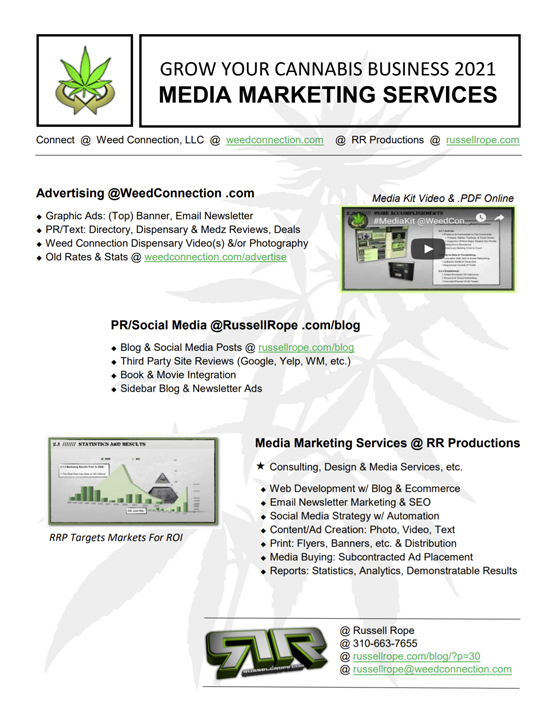
Click Here For The
Cannabis Media Marketing PDF
~~~~~~~~~~~~~~~~~~~~~~~~~
Grow Your Cannabis Business
~~~~~~~~~~~~~~~~~~~~~~~~~~~
Connect | ADVERTISE | Work | Submit
Subscribe | Follow | Share | Like | Support
#FreeTheWeed @WeedConnection
~~~~~~~~~~~~~~~~~~~~~~~~~~~
#FreeTheOG #Fundraiser @ RR
~~~~~~~~~~~~~~~~~~~~~~~~~~~

Media Marketing Services,
& New Deals
@ RRP
 

#Cannabis #Business @WeedConnection

WeedConnection @ Twitter @WeedConnection @ Facebook @WeedConnection @ LinkedIn @WeedConnection @ Foursquare @WeedConnection @ Spotify @WeedConnection @ YouTube @WeedConnection @ Yelp @WeedConnection @ Google+ @WeedConnection @ instaGram

weedconnection.com

#FollowFriday @RussellRope #OG @WeedConnection

Share This
* New Show NQ @TheTrueOGReport *

* READ & Click & READ & Click *

:: Creator @ WC @ RR Productions ::
:: Follow @RussellRope For Updates ::

#OG @RussellRope #Creator @WeedConnection

:: Join The Revolution ::
:: Read & Take Action ::
:: True OG Stories @ RR ::
:: SUPREME #LegalTrillOG ::

----------------------------------

:: Media Marketing Services @ RRP ::

:: Connect | ADVERTISE | Work | Submit ::

:: Subscribe | Follow | Share | Like | Support ::

:: #FreeTheWeed @WeedConnection ::

WeedConnection @ Twitter @WeedConnection @ Facebook @WeedConnection @ LinkedIn @WeedConnection @ Foursquare @WeedConnection @ Spotify @WeedConnection @ YouTube @WeedConnection @ Yelp @WeedConnection @ Google+ @WeedConnection @ instaGram

weedconnection.com

#NORML #News @WeedConnection

Share This

House Members Reintroduce Legislation Repealing Federal Marijuana Prohibition

Washington, DC: A bipartisan group of lawmakers in the US House of Representatives, led by Rep. Nancy Mace of South Carolina, have reintroduced legislation repealing the federal prohibition of cannabis and providing resources to assist in regulating the state-licensed cannabis industry.

House Bill 6028, The States Reform Act, removes cannabis from the US Controlled Substances Act, facilitates record expungement for those previously convicted of certain marijuana-related offenses, and provides regulatory oversight for state-legal cannabis markets.

The bill’s reintroduction comes just weeks after Democratic Rep. Jerrold Nadler reintroduced legislation, the Marijuana Opportunity, Reinvestment and Expungement (MORE) Act, that also seeks to repeal federal marijuana prohibition. House members have twice passed The MORE Act, but members of the Senate have never considered the bill.

It is unlikely that newly elected House Speaker Mike Johnson (R-LA) will prioritize either measure. Representative Johnson has repeatedly voted against proposed legislative changes in federal marijuana policy, and he has criticized Democratic leadership for advancing similar measures, particularly The MORE Act.

Last November, NORML’s Deputy Director Paul Armentano testified before the House Oversight and Reform Subcommittee on Civil Rights and Civil Liberties, previously chaired by Rep. Mace, in support of ending federal cannabis prohibition.

Survey: Cannabis Commonly Used as a Sleep Aid by Cancer Survivors

Halifax, Canada: Nearly a quarter of Canadian cancer survivors acknowledge consuming cannabis as a sleep aid, according to data published in the Journal of Cancer Survivorship: Research and Practice.

Investigators surveyed over 1,400 cancer survivors. Twenty-four percent of respondents said that they used cannabis prior to bedtime, “with reported benefits including relaxation, reduced time to fall asleep, fewer nocturnal awakenings and improved sleep quality.” (Cannabis is legal for both medical and adult use in Canada.)

Over two-thirds of consumers said that they initiated cannabis use following their cancer diagnosis. Over one-third of consumers said that they used marijuana daily.

Adults frequently report using cannabis and CBD products as sleep aids. Data published in the journal Complementary Therapies in Medicine reported that the enactment of adult-use marijuana legalization laws is associated with a significant reduction in the sales of over-the-counter sleep aids among the general public.

Full text of the survey, “A cross-sectional survey of the prevalence and patterns of using cannabis as a sleep aid in Canadian cancer survivors,” appears in the Journal of Cancer Survivorship: Research and Practice.

Review: CBD Administration Not Linked To Cognitive Deficits, May Provide Potential Improvements

São Paulo, Brazil: The therapeutic use of CBD doesn’t adversely impact cognitive performance and may potentially improve it in certain subjects, according to a literature review published in the journal Cannabis and Cannabinoid Research.

Brazilian investigators reviewed 59 studies, including 23 clinical trials, assessing the cognitive safety of CBD. They reported a lack of cognitive deficits associated with CBD dosing. They further reported that CBD administration in animal models may be associated with cognitive improvements.

Authors concluded: “The results demonstrate that the chronic and acute administration of CBD seems not to impair cognition in humans without neuropsychiatric disorders. In addition, preclinical studies report promising results regarding the effects of CBD on the cognitive processing of animals. Future double-blind, placebo-controlled, randomized clinical trials with larger, less selective samples, with standardized tests, and using different doses of CBD in outpatients are of particular interest to elucidate the cognitive effects of CBD.”

A 2022 open-label trial performed by doctors at Harvard Medical School reported that patients with moderate-to-severe anxiety experience symptom improvements and better cognitive performance following the daily administration of full spectrum CBD extracts. Data published earlier this year reported that cancer patients taking CBD-infused edible products report subjective improvements in their cognitive functioning.

Full text of the study, “Effects of the acute and chronic administration of cannabidiol on cognition in humans and animals: A systemic review,” appears in Cannabis and Cannabinoid Research.

Georgia: Select Pharmacies Begin Selling State-Licensed Cannabis Tinctures

Glennville, GA: Select pharmacies have begun providing state-licensed cannabis products to qualified patients.

An independent pharmacy in Warner Robins, Georgia and another independent pharmacy in Tifton were reported to have been among the first in the state to engage in the sale of cannabis-specific products. About 130 independent pharmacies have entered partnerships to provide plant-derived low-THC products.

Low-THC/high CBD products have been legal to possess under state law since 2015. However, regulators failed to approve any licensed providers or dispensaries until earlier this year. In October, the state’s Board of Pharmacy began accepting applications from licensed pharmacies wishing to stock the products.

Chain drug stores will not be providing cannabis products.

About 14,000 Georgians are registered to access cannabis products for a variety of ailments, including autism, cancer, Crohn’s disease, seizure disorders, and Tourette syndrome.

Qualified patients can view a full list of participating independent pharmacies and locations at botanicalsciences.com/locations.

#NORML #News @WeedConnection

WeedConnection @ Twitter @WeedConnection @ Facebook @WeedConnection @ LinkedIn @WeedConnection @ Foursquare @WeedConnection @ Spotify @WeedConnection @ YouTube

#SocialMedia #Revolution @WeedConnection

Share This

* Connect @RussellRope *
* New WC Social Links List NQ *

:: FYi FB/iG Terminated WC Accts Again ::
:: No Just Cause FB iS Run By Sociopaths ::
:: They iNvested iN Criminal Competition ::

:: See Fed RiCO Lawsuit @ RR ::

. . . .

:: Join Us For A Hollyweed Sesh ::
:: Subscribe, Follow, Like, Add, Share ::

@WeedCONNECTiON

#SocialMedia @WeedConnection

SOCIAL:
twitter.com/weedconnection
instagram.com/weedconnection
facebook.com/weedconnection
myspace.com/weedconnection420
youtube.com/weedconnection420

BUSINESS:
weedconnection.com
weedconnection.com/advertise

CREATOR:
@RussellRope @ russellrope.com/blog

#Support Your #OG(s)
#LinkUP @WeedConnection

@WeedConnection .com


Email:

#FreeTheOG
#FreeTheWeed
Fund WC++

Read RR True Story
Connect | ADVERTISE | Work | Submit
Subscribe | Follow | Share | Like | Support

WeedConnection @ Twitter @WeedConnection @ Facebook @WeedConnection @ LinkedIn @WeedConnection @ Foursquare @WeedConnection @ Spotify @WeedConnection @ YouTube @WeedConnection @ Yelp @WeedConnection @ Google+ @WeedConnection @ instaGram

weedconnection.com


#NORML #News @WeedConnection

Share This

Study: Cannabis Associated With Reduced Use of Anxiolytic Medications in Patients With Post-Traumatic Stress

Philadelphia, PA: Patients with anxiety disorders experience symptom improvements and many of them reduce their intake of prescription anti-anxiety medications following the use of medical cannabis, according to observational data published in the Journal of Affective Disorders Reports.

Researchers affiliated with the Philadelphia College of Osteopathic Medicine assessed outcomes in a cohort of nearly 100 patients with either anxiety-related disorders or post-traumatic stress. All of the study’s participants had recently obtained a recommendation from a physician to participate in the state’s medical cannabis access program. Investigators assessed participants’ symptoms at baseline and again after three months.

Consistent with other studies, patients displayed significant reductions in generalized anxiety over the course of the trial. Among those individuals who were prescribed anxiety medications, 32 percent reported decreasing their use of anxiolytic drugs by month three. Reductions in patients’ prescription drug use was most frequently reported among those prescribed benzodiazepines.

The study’s findings are similar to those of numerous others reporting patients’ decreased use of prescription medications, including opioids, anxiolytics, and sleep aids, following their use of medical marijuana products.

“Overall, findings from this observational study are consistent with those observed in the literature and [they] provide additional preliminary evidence to support the use of MM [medical marijuana] to address anxiety and PTSD [post-traumatic stress disorder],” authors concluded.

Full text of the study, “Anxiety severity and prescription medication utilization in first-time marijuana users,” appears in the Journal of Affective Disorders Reports.

Study: No Association Between Marijuana Use and Elevated Cardiovascular Risk

Pittsburgh, PA: Middle-aged adults who consume cannabis do not possess an elevated risk of atherosclerosis (hardening of the arteries) as compared to never users, according to data published in the journal Circulation, Cardiovascular Quality and Outcomes.

A team of investigators affiliated with the University of Pittsburgh Medical Center assessed the relationship between marijuana use and the risk of adverse atherosclerotic cardiovascular disease (ASCVD) in a nationally representative sample of nearly 14,000 adults between the ages of 18 and 59.

Compared to never users, cannabis consumers were more likely to report smoking tobacco – a known risk factor for atherosclerosis. Nevertheless, marijuana consumers did not possess a higher disease risk as compared to nonusers -- a finding that is consistent with those of other longitudinal trials.

Researchers also reported that subjects with a history of cannabis consumption were less likely than controls to suffer from either diabetes or obesity -- a finding that is also consistent with prior research.

They concluded, “This cross-sectional study found no association between self-reported marijuana use and increased burden of traditional ASCVD risk factors, estimated long-term ASCVD risk, or cardiometabolic profiles”

Full text of the study, “Comparison of atherosclerotic cardiovascular risk factors and cardiometabolic profiles between current and never users of marijuana,” appears in Circulation, Cardiovascular Quality and Outcomes.

Clinical Trial: Oral CBD Dosing Improves Sleep Quality

Greeley, CO: CBD administration is associated with improvements in sleep quality and immune cell function, according to placebo-controlled data published in the journal Nutrients.

Investigators affiliated with the University of Northern Colorado compared CBD versus placebo in a cohort of 28 healthy, college-aged individuals. Study participants consumed either 50 mg of CBD or placebo prior to bedtime for eight weeks.

Investigators reported that subjects demonstrated both subjective and objective improvements in sleep quality following CBD treatment.

Authors concluded: “We demonstrate that the daily ingestion of 50 mg CBD, 1–1.5 hours before sleep onset, leads to significantly improved perceived sleep quality compared with a placebo control. Additionally, … we provide evidence that daily CBD supplementation for eight weeks enhances NK [Natural Killer] cell cytotoxicity against a malignant human leukemic cancer cell line. Collectively, these data suggest that eight weeks of CBD supplementation enhances perceived sleep and improves systemic immunosurveillance through the enhancement of NK cell cytotoxic function.”

Prior studies have shown that cannabinoids, including THC and CBD, possess potent anti-cancer properties in cellular models. A review of 34 human trials assessing the use of CBD in patients with sleep disorders concluded, “CBD alone or with equal quantities of THC may be beneficial in alleviating the symptoms of insomnia.”

Full text of the study, “Eight weeks of daily cannabidiol supplementation improved sleep quality and immune cell toxicity,” appears in Nutrients.

#NORML #News @WeedConnection

WeedConnection @ Twitter @WeedConnection @ Facebook @WeedConnection @ LinkedIn @WeedConnection @ Foursquare @WeedConnection @ Spotify @WeedConnection @ YouTube