
NORML News @WeedConnection

NORML News

Share This
NORML News @WeedConnection

Weekly Stories, Studies, Surveys, Poll Results, Laws, etc.

Study: Cannabis Inhalation Associated With Symptomatic Improvements in Adults With Autism Spectrum Disorder


Pullman, WA: Adults with ASD (autism spectrum disorder) report significant improvements in their symptoms following cannabis inhalation, according to data published in the journal Nature: Scientific Reports.

Researchers affiliated with Washington State University and the University of New Orleans reviewed data from 111 self-identified ASD patients (ages 19 to 70). Study participants self-medicated with cannabis and reported their results in real-time on the mobile technology platform Strainprint. Investigators assessed nearly 6,000 separate Strainprint entries compiled over 74 months.

They reported: “Using a large dataset from self-identified autistic adults self-medicating with cannabis, we found that ratings of the severity of Negative Affect (anxiety and irritability) were reduced by 75.78 percent, ratings of the severity of Repetitive Behaviors (compulsive behaviors) were reduced by 70.41 percent, ratings of the severity of problems with Mental Control (difficulty concentrating) were reduced by 68.59 percent, and ratings of Sensitivity (skin and sound sensitivity, sensory overload) severity were reduced by 68.09 percent, from immediately before to shortly after inhaling cannabis. Moreover, these symptoms were reduced (rather than exacerbated or unchanged) in 98.33 percent of the cannabis use sessions. These findings are among the first to indicate that cannabis is perceived to improve highly prevalent symptoms associated with ASD in adults using cannabis for symptom management.”

Study participants acknowledged experiencing symptomatic improvements from cannabis regardless of its potency or its cannabinoid ratios.

“These findings indicate that well-powered placebo-controlled trials are warranted to examine the acute effects of various cannabinoids and manipulations of the endocannabinoid system on ASD symptoms,” the study’s authors concluded.

The findings are consistent with observational studies involving patients enrolled in the United Kingdom’s Medical Cannabis Registry, which similarly report that adults with ASD experience improved symptoms and reduce their use of prescription medications following their use of medical cannabis products.

Full text of the study, “Acute effects on cannabis on core and co-occurring features associated with autism spectrum disorder in adults,” appears in Nature: Scientific Reports.


Analysis: Cannabis Use Associated With Lower Rates of Obesity, Metabolic Syndrome


Adelaide, Australia: Adults with a history of recent cannabis use are less likely to suffer from metabolic syndrome (aka MetS, a cluster of biochemical and physiological markers associated with the development of cardiovascular disease and type 2 diabetes) as compared to similarly matched controls, according to data published in the journal Schizophrenia Research.

Australian researchers assessed MetS prevalence in a cohort of schizophrenic patients with and without a history of cannabis consumption.

They reported that THC-positive subjects “exhibited a significantly lower prevalence of MetS (adjusted OR = 0.61),” even after researchers adjusted for potential confounders. Cannabis use was also associated with lower weight, BMI, and cholesterol levels – findings that are consistent with prior studies.

“Our findings demonstrate a significant association between cannabis use and a lower prevalence of metabolic syndrome in individuals with schizophrenia,” the study’s authors concluded. However, they cautioned: “Given the well-established adverse psychosis-related outcomes of cannabis use in this population, our findings underscore the need for cautious interpretation. The relationship between cannabis use and cardiometabolic health in schizophrenia is likely multifactorial, influenced by biological, pharmacological and behavioral traits that remain poorly understood. … Future research should investigate the long-term cardiometabolic effects of both cannabis use and cessation and assess the potential for targeted metabolic interventions during this critical period.”

Full text of the study, “Cannabis use and cardiometabolic risk in schizophrenia,” appears in Schizophrenia Research.


Clinical Trial: CBD Dosing Reduces Dementia Symptoms in Older Adults


São Paulo, Brazil: The daily use of CBD reduces dementia symptoms, according to placebo-controlled clinical trial data published in the Journal of Psychopharmacology.

Brazilian researchers assessed the efficacy of CBD versus a placebo in 30 older patients with vascular dementia (VaD). Study participants consumed either 300mg doses of CBD or the placebo for four weeks.

CBD administration significantly reduced patients’ behavioral and psychiatric symptoms compared to placebo. CBD dosing did not adversely impact patients’ cognitive functioning, nor was it associated with any other significant side effects.

“CBD was well tolerated and effectively reduced BPSD [behavioral and psychological symptoms of dementia] in VaD without cognitive or functional impairment,” the study’s authors concluded. “These findings warrant further trials with larger samples, extended durations, and dose-optimization strategies to confirm its therapeutic potential.”

According to the conclusions of a review paper published previously this year in the same journal, “Cannabinoids show promising potential in managing symptoms such as agitation and aggression in people with dementia, with an overall favorable safety and tolerability profile.”

Full text of the study, “Effects of cannabidiol on behavioral and psychological symptoms of vascular dementia: A randomized, double-blind, placebo-controlled clinical trial,” appears in the Journal of Psychopharmacology.


California: No Significant Uptick in Marijuana Use by Adults Following Legalization


Berkeley, CA: The percentage of adults in California reporting current cannabis use has remained stable following legalization, according to findings published in the journal Substance Use & Misuse.

Researchers affiliated with the Prevention Research Center in Berkeley assessed trends in past 30-day cannabis use from 2018 to 2023 using data compiled by the California Health Interview Survey – a representative sample of tens of thousands of Californians.

Contrary to investigators’ expectations, they identified no significant overall increase in self-reported cannabis use by adults.

“In summary, the overall trend for cannabis use in the past 30-day in California remained unchanged from 2018 to 2023, eight years after legalization and six years after cannabis retail became available,” the study’s authors concluded. “Future research should focus on identifying trends among gender, age, and ethnic groups.”

The findings are consistent with national trends reporting no significant uptick in marijuana use by adolescents post-legalization, but they are inconsistent with several surveys finding increased cannabis use among young adults and seniors.

Full text of the study, “Trends in pot-legalization cannabis use among ethnic groups in California: 2018-2023,” appears in Substance Use & Misuse.



Green Monday

Share This

The calm between chaos and celebration.

Shopping Sustainably

Green Monday—coined by eBay in 2007—has evolved into a symbol of eco-conscious commerce. Positioned two weeks before Christmas, it encourages people to shop early and thoughtfully, choosing brands that prioritize sustainability, ethics, and long-term value.

In contrast to the fast-fashion frenzy of Black Friday, Green Monday celebrates mindful spending. Digital platforms promote carbon-neutral shipping, recycled materials, and ethical labor. It’s the pivot from impulse to intention—a new era where profit and planet align. By turning transactions into conscious choices, consumers rewrite retail’s role in responsibility.

Vibes

Smart, sustainable, modern—commerce with conscience.

How to Celebrate

  • Support sustainable or carbon-neutral brands
  • Choose gifts with purpose and long lifespan
  • Offset your shipping emissions through donation
  • Promote green shopping tips on social media

Pulse Check

What if every purchase planted a seed instead of waste?

The greenest deal is the one that gives back.

Interesting Facts

  1. “Green Monday” was originally eBay’s top sales day in December.
  2. The term now refers to sustainable shopping initiatives worldwide.
  3. Eco-conscious spending grew over 200% in the past decade.

Verified Links

Popular Hashtags

#GreenMonday #EcoShopping #SustainableStyle #BuyBetter #DecemberHoliday

“We don’t need a handful of people doing sustainability perfectly; we need millions doing it imperfectly.” – Anne-Marie Bonneau

“The greatest threat to our planet is the belief that someone else will save it.” – Robert Swan

“Every dollar you spend is a vote for the world you want.” – L.N. Smith

Shop slow, live large, and let your wallet reflect your wisdom.

Full Moon

Share This

The final full moon of the year—clarity before closure.

Lunar Reflection

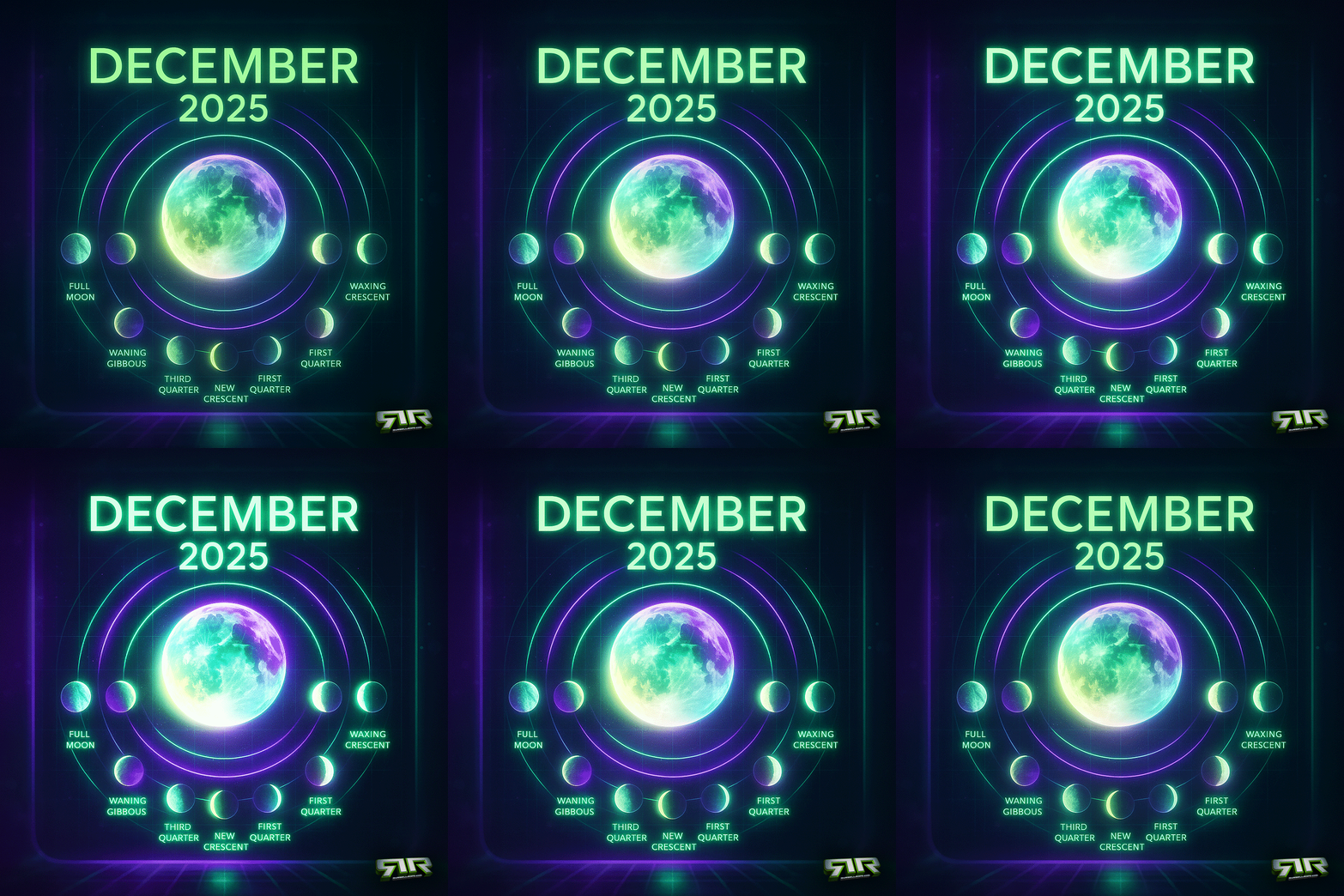
The Cold Moon rises each December, marking the onset of winter and a moment of stillness before renewal. Its pale glow reminds humanity to pause—to breathe, to reflect, to reset.

Historically, Native American tribes named it for the season’s frost and long nights, when survival required wisdom and preparation. Today, it’s a symbol of resilience—an invitation to evaluate the year’s lessons and align with what endures. Under its glow, cities shimmer, oceans still, and minds quiet. Whether you’re meditating, manifesting, or simply moon-gazing, the Cold Moon invites introspection wrapped in celestial elegance.

Vibes

Calm, reflective, powerful—luminous stillness in motion.

How to Celebrate

  • Watch the full moon rise and journal your reflections
  • Practice stillness through meditation or night walks
  • Capture lunar photos or create moon-inspired art
  • Release what no longer serves as the year winds down

Pulse Check

What do you need to let go of before the new year begins?

Stillness is strength disguised as silence.

Interesting Facts

  1. The Cold Moon is often the highest full moon of the year.
  2. Its name stems from traditional Northern Hemisphere winters.
  3. December 2025’s Cold Moon will appear near perigee, brighter than usual.

Verified Links

Popular Hashtags

#ColdMoon #FullMoonEnergy #LunarVibes #WinterNights #DecemberHoliday

“The moon is the reflection of your heart and the light of your soul.” – Debasish Mridha

“Yours is the light by which my spirit’s born.” – E.E. Cummings

“Even the darkest night will end and the moon will rise.” – Victor Hugo

Endings glow brightest before they fade—just like the last full moon of the year.

NORML News @WeedConnection

NORML News

Share This
NORML News @WeedConnection

Weekly Stories, Studies, Surveys, Poll Results, Laws, etc.

Meta-Analysis: Cannabis Use Not Linked To Elevated Risk of Oral Cancer


Zarqa, Jordan: Cannabis use is associated with a reduced risk of oral cancer, according to the results of a systematic review and meta-analysis published in the Journal of Ethnicity in Substance Abuse.

An international team of investigators from Jordan, Iraq, and Uzbekistan reviewed data from six case-control studies involving over 15,000 subjects.

Researchers identified no dose-response relationship between cannabis use and a heightened risk of oral cancers, regardless of subjects’ duration of use. Instead, investigators suggested that cannabis may provide “significant protective effects” against cancer. They caution, however, that their findings may be influenced by confounders, particularly researchers’ failure to identify subjects’ HPV (human papillomavirus) status. (HPV infection is linked to elevated cancer risk.)

“The pooled odds ratio demonstrated a statistically significant inverse association between marijuana use and oral cancer risk (OR = 0.66),” the study’s authors concluded. “However, given methodological limitations, heterogeneity in exposure assessment, and conflicting recent evidence, these findings require cautious interpretation. Future large-scale prospective cohort studies with standardized exposure measurements are essential for definitive conclusions.”

While cannabinoids have demonstrated well-established anti-cancer activities in preclinical models, their efficacy as an anti-cancer agent has rarely been assessed in clinical trials.

Full text of the study, “The association between marijuana use and oral cancer risk: A systematic review and meta-analysis of case-control studies,” appears in the Journal of Ethnicity in Substance Abuse.


Study: Low Levels of THC in Blood Not Associated With Significant Changes in Simulated Driving Performance


San Diego, CA: Subjects who have not recently consumed cannabis but still have residual levels of THC in their blood perform no differently on a driving simulator than do those who are THC-negative, according to data published in the journal Clinical Chemistry.

Researchers affiliated with the University of California at San Diego assessed THC blood levels and simulated driving performance in a cohort of 190 regular cannabis consumers. Study subjects were required to have abstained from cannabis for 48 hours prior to participating in the study.

Post-abstinence, nearly half of the study participants had detectable levels of THC (above 0.5ng/ml) at baseline, with one-quarter of participants testing positive for more than 2ng/ml of THC in blood. However, those testing positive for THC showed no significant differences in their baseline driving scores as compared to those with no quantifiable THC concentrations.

“Our data argue that the concentrations we measured at baseline likely reflect steady state THC concentrations in this population, several days after last use,” the study’s authors concluded. “We also show, using quantitative data from the driving simulator, that participants who exceeded the zero-tolerance and per se cutpoints (2 and 5 ng/mL) performed in a similar manner as those below these arbitrary values. These results add to a growing body of evidence that per se THC blood statutes lack scientific credibility as prima facie evidence of impairment.”

The findings are consistent with those of other studies reporting no correlation between the detection of either THC or its metabolites in blood, urine, saliva, and breath and impaired driving performance. Nevertheless, several states have enacted laws criminalizing drivers who operate a motor vehicle with trace levels of THC or THC metabolites, regardless of whether the driver is impaired.

In an accompanying editorial, authors said that the study’s conclusions “raise serious doubts about the scientific validity of using measures of delta-9-tetrahydrocannabinol in blood to identify cannabis-impaired drivers.”

NORML has consistently argued that law enforcement should not presume that the detection of either THC or its metabolites in bodily fluids is evidence of impairment because their presence is not predictive of diminished performance. Alternatively, NORML has called for the expanded use of performance-based tests, like DRUID or Predictive Safety’s AlertMeter, which compare subjects’ cognitive skills to either their own prior performance or an aggregate baseline.

Full text of the study, “Per se driving under the influence of cannabis statutes and blood delta-9-tetrahydrocannabinol concentrations following short-term cannabis abstinence,” appears in Clinical Chemistry. Additional information on cannabis and driving is available from the NORML Fact Sheet, ‘Marijuana and Psychomotor Performance.’


Analysis: Cannabis Terpenes Act as Agonists on Endogenous Cannabinoid Receptors


Ra’anana, Israel: Terpenes in the cannabis plant activate endogenous cannabinoid receptors in a dose-dependent manner, according to the preclinical data published in the journal Biochemical Pharmacology.

Israeli researchers assessed the modulatory ability of sixteen cannabis terpenes: α-pinene, β-pinene, limonene, myrcene, ocimene, sabinene, terpinolene, borneol, eucalyptol, geraniol, linalool, terpineol, β-caryophyllene, humulene, bisabolol, and nerolidol. Researchers reported “significant dose-dependent responses at both CB1 and CB2 receptors, … reaching a maximal response of about 10-60 percent the activation elicited by THC.” The study is among the first to characterize terpene interactions with CB2 receptors.

Activating the CB2 receptors is believed to provide cardioprotective, neuroprotective, and anti-inflammatory effects, but it does not elicit mood-altering effects.

“This study provides evidence suggesting that multiple cannabis-derived terpenes, when tested in the absence of cannabinoids, act as partial agonists at CB1R and CB2R, with significant variability in apparent potency, efficacy, and receptor selectivity,” the study’s authors concluded. “Collectively, these findings suggest a pharmacological basis for incorporating specific terpenes into ECS-focused product design and warrant further research into their tissue-specific activity, and synergistic potential when used in combination with cannabinoids or other therapeutic agents. The broad availability and favorable safety profiles of many terpenes further support their potential as accessible, scalable, and customizable tools in the modulation of endocannabinoid signaling.”

Prior studies have established that low doses of cannabis terpenes can amplify THC’s activity upon CB1 receptors. A 2023 research paper published in the Journal of Cannabis Research reported that cannabis flower with elevated levels of the terpenes myrcene and terpinolene is associated with greater perceived symptom relief among patients.

Full text of the study, “Selective activation of cannabinoid receptors by cannabis terpenes,” appears in Biochemical Pharmacology.


Ohio: Legislative Conference Committee Advances Bill Repealing Key Provisions of Voter-Approved Marijuana Law


Columbus, OH: Members of a legislative conference committee approved and advanced a negotiated version of Senate Bill 56, which makes numerous changes to the state’s voter-approved adult-use marijuana legalization law.

The Republican-spearheaded bill amends existing law in several ways. It stipulates that consumers cannot legally possess cannabis products sourced from out of state, including products legally purchased at licensed dispensaries in neighboring jurisdictions. No other legalization state imposes such restrictions.

It also repeals provisions that currently protect adult-use consumers from facing either workplace or professional disciplinary action, as well as other forms of discrimination based solely upon their private marijuana use. It imposes new arbitrary limits on the percentages of THC permitted in adult-use and medical cannabis concentrates and it caps the total number of retail licenses permitted statewide.

Other provisions in the legislation create a pathway for those seeking to expunge past marijuana-related convictions, limit the sale of certain hemp-derived products solely to state-licensed dispensaries, clarify that adults can legally consume cannabis on their private property (rather than solely inside their own private residence), and redirect a portion of tax revenues from marijuana sales to individual municipalities that license cannabis retailers.

NORML has vociferously lobbied against many of the proposed changes to Ohio’s adult-use marijuana law, which was approved in 2023 by 57 percent of voters. NORML’s action alert opposing SB 56 has been shared with lawmakers over 22,000 times. It states: “This bill is a slap in the face to the millions of Ohioans who voted in favor of Issue 2. Once again, politicians are arrogantly trying to claim that the public didn’t know what they were voting for.”

Members of the House approved the revised bill late Wednesday, with all Democrats voting against it. The legislation now awaits a final vote by members of the Senate, who are expected to reconvene in December. Once approved by the Senate, it will head to the desk of Republican Gov. Mike DeWine, who is expected to sign the bill into law.