The Pink Moon marks April’s full moon and takes its name from early spring wildflowers that bloom across North America—not from the moon’s appearance itself. Traditionally associated with renewal, growth, and seasonal shifts, this lunar moment has long served as a natural checkpoint between winter’s closure and spring’s acceleration.
In modern culture, the Pink Moon has become a pause button. It’s a reminder that cycles matter—rest, growth, release, repeat. While the moon itself keeps perfect time, how we align with it is optional, intentional, and personal. For many, this full moon represents momentum with awareness.
Vibes
Reset energy. Clean transitions. Forward motion.
How to Observe
• Reflect on what’s beginning to grow in your life • Release habits that no longer align • Spend time outdoors after sunset • Set intentions rooted in consistency
Pulse Check
What’s quietly growing in your life right now?
Progress doesn’t always announce itself. Sometimes it shows up gradually, like spring itself.
Interesting Facts
• The Pink Moon often coincides with early spring blooms • It’s one of the earliest full moons of the year • Lunar cycles have guided agriculture for centuries
Cesar Chavez Day: Honoring a Legacy of Justice and Change
Every year on March 31st, we observe Cesar Chavez Day, a time to reflect on the incredible contributions of Cesar Chavez, a civil rights leader and labor activist who dedicated his life to improving conditions for farmworkers. This day serves as an opportunity to honor his legacy, promote social justice, and recognize the ongoing fight for workers’ rights.
Who Was Cesar Chavez?
Cesar Chavez was born in 1927 in Yuma, Arizona. As a farmworker himself, he witnessed firsthand the harsh working conditions, low wages, and lack of protections in agricultural labor. In response, he co-founded the United Farm Workers (UFW) alongside Dolores Huerta, advocating for fair wages, better conditions, and dignity for farmworkers through nonviolent activism and organized strikes.
The Importance of Cesar Chavez’s Work
Chavez’s leadership and perseverance led to historic changes in labor rights. His work emphasized:
Nonviolent Protest: Inspired by figures like Mahatma Gandhi and Dr. Martin Luther King Jr., Chavez championed peaceful methods, including boycotts, strikes, and marches.
Worker Protections: His advocacy led to improved wages, benefits, and protections for farmworkers.
Social Justice and Equality: Chavez’s efforts extended beyond farmworkers, inspiring broader movements for labor rights and social equity.
How to Celebrate Cesar Chavez Day
There are many ways to honor Cesar Chavez’s legacy and continue his mission:
Educate Yourself and Others: Learn about Chavez’s work and its impact on labor movements.
Support Farmworkers and Fair Labor Practices: Purchase fair-trade products and advocate for policies that protect workers.
Volunteer and Give Back: Participate in community service activities that support workers and underserved communities.
Attend Events and Commemorations: Join discussions, film screenings, and marches held in his honor.
Fun Facts About Cesar Chavez
He led the historic Delano Grape Strike in 1965, which lasted over five years and resulted in better wages for farmworkers.
Chavez fasted multiple times as a form of peaceful protest, once going 25 days without food.
In 1994, he was posthumously awarded the Presidential Medal of Freedom, the highest civilian honor in the United States.
Continuing the Legacy
Cesar Chavez’s fight for dignity and justice lives on today. His unwavering commitment to nonviolence, workers’ rights, and social justice serves as an inspiration for current and future generations.
On this Cesar Chavez Day, take a moment to reflect, educate, and take action in honor of his remarkable contributions. ¡Sí, se puede! (Yes, it can be done!)
The Vernal Equinox: Welcoming the First Day of Spring
As winter fades away and nature begins to awaken, the Vernal Equinox marks the official arrival of spring. Occurring around March 20th or 21st in the Northern Hemisphere, this celestial event represents a time of balance, renewal, and transformation.
What is the Vernal Equinox?
The Vernal Equinox occurs when the sun crosses the celestial equator, resulting in nearly equal daylight and nighttime hours across the globe. The word “equinox” comes from the Latin words aequus (equal) and nox (night), signifying this harmonious balance of light and dark.
Cultural and Historical Significance
Throughout history, civilizations have honored the Vernal Equinox with festivals and rituals. Ancient cultures, such as the Egyptians, Mayans, and Persians, built monuments and structures aligned with the equinox. Today, it remains a sacred time for many spiritual traditions, symbolizing rebirth and new beginnings.
Ways to Celebrate the Vernal Equinox
Spend Time in Nature: Take a walk, plant flowers, or enjoy the blooming landscape.
Spring Cleaning: Clear out old energy and welcome the fresh, revitalizing spirit of spring.
Practice Mindfulness and Reflection: Set new intentions and embrace personal growth.
Enjoy Seasonal Foods: Celebrate with fresh fruits, vegetables, and herbs that mark the changing season.
Fun Facts About the Vernal Equinox
The Great Sphinx of Giza aligns with the rising sun on the equinox.
Many cultures celebrate New Year’s festivals around the equinox, such as Nowruz in Iran.
The equinox occurs simultaneously worldwide, though local time zones differ.
Embracing the Energy of Spring
The Vernal Equinox is a reminder of nature’s cycles and our connection to the changing seasons. Whether you take part in cultural traditions, enjoy outdoor activities, or simply embrace the renewed energy of spring, this equinox is a time to welcome new possibilities and fresh beginnings.
Let the warmth of the sun and the beauty of blossoming nature inspire you to embrace growth and transformation. Happy Vernal Equinox!
Celebrate Green Drink Day: A Fresh Twist on March 17th
Welcome to Green Drink Day—a quirky, vibrant celebration that’s all about sipping something green and having a good time. Mark your calendars for March 17th, because this is your chance to raise a glass (or a blender bottle) to creativity, fun, and a little bit of silliness. No complicated backstory, no strict traditions—just a day to enjoy the absurdity of a green-themed toast.
What Is Green Drink Day?
Green Drink Day is a lighthearted excuse to gather friends, mix up some wild beverages, and embrace the unexpected. The only guideline? Your drink has to be green. Whether it’s a lime-infused cocktail, a cannabis-spiked tincture, or a fizzy emerald concoction, this day is all about keeping it colorful and carefree.
Think of it as a blank canvas of a holiday—one you can paint with whatever flavors, vibes, or ridiculous garnishes you like. It’s a chance to step outside the usual and celebrate for no reason other than it feels good.
Why Green Drink Day Matters
In a world that can sometimes feel overly serious, Green Drink Day is a breath of fresh air. It’s about letting loose, laughing at the oddity of it all, and maybe even inventing a new favorite drink. Plus, it’s a perfect way to shake up your routine and spark some joy with the people around you.
How to Celebrate
Ready to dive in? Here’s how to make Green Drink Day your own:
Choose Your Green Goodness: Go bold with a boozy absinthe sour or a cannabis-infused matcha shot. Feeling mellow? Try a cucumber-lime spritzer or a kiwi smoothie. Add a glow stick or some edible glitter if you’re feeling extra.
Look the Part: Throw on some green shades, a funky hat, or anything that screams “I’m here for the vibes.” The weirder, the better.
Throw a Tasting Bash: Get your crew together and have everyone bring their greenest drink creation—alcoholic, infused, or otherwise. Crown a winner—or just toast to the chaos.
Share the Fun: Snap a photo of your masterpiece and post it with #GreenDrinkDay. Let’s see how many shades of green we can flood the internet with.
Enjoy the Silliness: This isn’t about grand meaning—it’s about sipping something green and grinning about it.
Green Drink Ideas to Kick Things Off
Mint Zinger Cocktail: Muddle fresh mint with 1.5 oz vodka, 1 oz lime juice, and 0.5 oz simple syrup. Shake with ice, strain into a glass, and top with soda water for a crisp kick.
Emerald Sparkler: Mix 1 oz green apple schnapps, 4 oz sparkling water, and a sprig of rosemary. Fizzy, sweet, and subtly boozy.
Swamp Monster Punch: Blend 2 oz rum, 4 oz pineapple juice, a handful of spinach, and a splash of ginger beer. It’s a tropical mess that hits just right.
Absinthe Dream: Stir 1 oz absinthe, 0.5 oz elderflower liqueur, and 3 oz tonic water over ice. Garnish with a lime wheel for a hazy green glow.
Cannabis Matcha Shot: Whisk 1 tsp matcha powder with 2 oz hot water, then add 1-2 droppers of cannabis tincture (dose to your preference) and a drizzle of honey. Bold and buzzworthy.
Green Ganja Gimlet: Shake 1.5 oz gin, 1 oz lime juice, 0.5 oz simple syrup, and 1 dropper of cannabis tincture with ice. Strain into a chilled glass for a mellow twist.
Tequila Verde Sunrise: Pour 2 oz tequila and 4 oz orange juice over ice, then drizzle 0.5 oz crème de menthe and a dropper of cannabis tincture for a layered, trippy sip.
Quick Fix: Spike a green citrus soda with 1 oz vodka and call it “liquid sunshine.” Effortless and effective.
Note: For cannabis tinctures, always check local laws, dose responsibly, and know your tolerance. Safety first, fun second!
A Toast to Whatever You Want
Green Drink Day is yours to shape. Whether you’re clinking glasses with friends, experimenting with a shaker or tincture bottle, or just sipping solo with a smirk, it’s all about keeping it easy and enjoyable. On March 17th, grab something green, raise it high, and cheers to a day that’s as fun as you make it. Happy Green Drink Day!
As winter begins to wane and the days grow longer, March welcomes the Full Worm Moon, a celestial event that signals the transition into spring. This unique lunar occurrence holds deep historical, agricultural, and spiritual significance, making it an event worth observing and celebrating.
Why Is It Called the Worm Moon?
The name “Worm Moon” originates from Native American and colonial-era traditions. It refers to the time when the ground begins to thaw, allowing earthworms to emerge, which in turn attracts birds and other wildlife. This natural cycle marks the renewal of life and the shift from the cold grip of winter to the warmth of spring.
The Significance of the Full Worm Moon
Beyond its poetic name, the Full Worm Moon has served as a seasonal marker for farmers and nature enthusiasts for centuries. It aligns with the equinox, reminding us of the Earth’s cycles of renewal and growth. Many cultures have linked this moon with themes of transformation, fertility, and new beginnings.
How to Celebrate the Full Worm Moon
Embracing the Full Worm Moon can be a simple yet meaningful experience. Here are some ways to make the most of this lunar event:
Moon Gazing: Take a moment to step outside and admire the bright, glowing moon in the night sky.
Journaling and Reflection: The changing season makes this a perfect time to set new intentions and reflect on personal growth.
Gardening and Nature Walks: As the soil warms, consider starting a garden or simply enjoying a walk in nature.
Lunar Rituals: Many people use full moons as an opportunity for meditation, gratitude practices, or even moonlit yoga sessions.
Fun Facts About the Full Worm Moon
The Full Worm Moon is the last full moon of winter.
Other names for this moon include the Crow Moon, Sap Moon, and Lenten Moon.
It often coincides with the vernal equinox, emphasizing balance and renewal.
Looking Ahead
The Full Worm Moon reminds us that change is inevitable, but with it comes the promise of new growth and opportunities. As we transition into spring, let’s take inspiration from nature and embrace the fresh start that this season offers.
So, whether you’re watching the moonrise, starting a new project, or simply appreciating the shift in seasons, the Full Worm Moon is a beautiful reminder that brighter days are
Mardi Gras, but with a Chill, Cannabis-Infused Twist
Where indulgence goes green and the party slows down just enough to enjoy it.
A Laid-Back Take on The Celebration
Get ready for Mardis Grass—a laid-back, green-tinged celebration that lights up early with a vibe all its own. Mark your calendars for the Tuesday before Ash Wednesday (February 18th in 2026), because this is your chance to spark up, sip something bold, and revel in a hazy, carefree alternative to the usual festivities. No beads or floats required—just good company, cannabis flair, and a nod to indulgence.
This isn’t about excess for excess’ sake. It’s about choosing your own pace, your own rituals, and your own shade of green. Whether you’re surrounded by friends or enjoying a quiet moment to yourself, Mardis Grass invites you to indulge intentionally.
What Is Mardis Grass?
Mardis Grass is the ultimate chill-out holiday, swapping chaos for calm and infusing the day with a cannabis twist. It’s about kicking back with friends, crafting some ganja-inspired drinks or treats, and letting the good times roll at your own pace. The only rule? Keep it green—whether that’s in your glass, your bowl, or your mindset.
This is a holiday you can mold however you like. Mix up a THC-tinged cocktail, bake some infused goodies, or just enjoy a slow smoke session under the stars. It’s all about relaxation, creativity, and a little bit of mischief.
Why Mardis Grass Matters
When life gets hectic, Mardis Grass offers a breather—a chance to unwind, laugh, and savor the moment without any fuss. It’s a DIY celebration that invites you to make it your own, whether you’re a cannabis connoisseur or just along for the ride. Plus, it’s a perfect way to shake off late winter’s chill with something warm, weird, and wonderful.
How to Celebrate
Ready to blaze your own trail? Here’s how to make Mardis Grass a hit:
Pick Your Green Vibe: Stir up a cannabis cocktail, whip up an infused snack, or roll something special. Keep it mellow or go full party mode—your call.
Set the Scene: Throw on some green gear—think tie-dye tees, emerald shades, or a weed-leaf bandana. Comfort is king.
Host a Chill Sesh: Gather your crew and have everyone bring their favorite cannabis creation—edibles, drinks, or otherwise. Share, sample, and vibe out.
Spread the Haze: Snap a pic of your greenest moment and tag it with #MardisGrass. Let’s spark some curiosity online.
Lean Into the Chill: This isn’t about hustle—it’s about sinking into the groove and grinning at the absurdity of it all.
Mardis Grass Recipes to Get You Started
Ganja Gumbo Shot Mix 1 oz dark rum, 3 oz ginger beer, and 1–2 droppers of cannabis tincture. Garnish with a lime wedge for a spicy, buzzy kick.
Emerald Kush Cooler Stir 1.5 oz vodka, 4 oz cucumber-lime seltzer, and a dropper of THC tincture over ice. Refreshing and relaxed.
Toke-a-Lada Blend 2 oz tequila, 1 oz lime juice, 0.5 oz agave syrup, and a cannabis tincture dropper with ice. Salt the rim for a mellow fiesta.
Hazy Honey Bourbon Shake 1.5 oz bourbon, 1 oz honey syrup, and 1 dropper of cannabis tincture with ice. Strain into a glass with a green sugar rim.
Weed-Infused Mint Julep Muddle mint with 2 oz whiskey, 0.5 oz simple syrup, and a THC tincture dropper. Serve over crushed ice for a slow Southern buzz.
Quick Fix Spike a green apple soda with 1 oz gin and a tincture dropper. Call it “lazy haze” and sip away.
Note: Cannabis laws vary—check your local regs, dose wisely, and keep it safe. Good vibes only!
Vibes
Low pressure. Green indulgence. Let the good times roll slowly.
A Toast to Your Own Rules
Mardis Grass is whatever you make it. Whether you’re toasting with a tincture-laced drink, passing around infused treats, or just kicking back with a joint and a playlist, it’s all about ease and enjoyment.
On February 17th, light up your way, raise a glass (or a lighter), and cheers to a day that’s as chill as you want it to be.
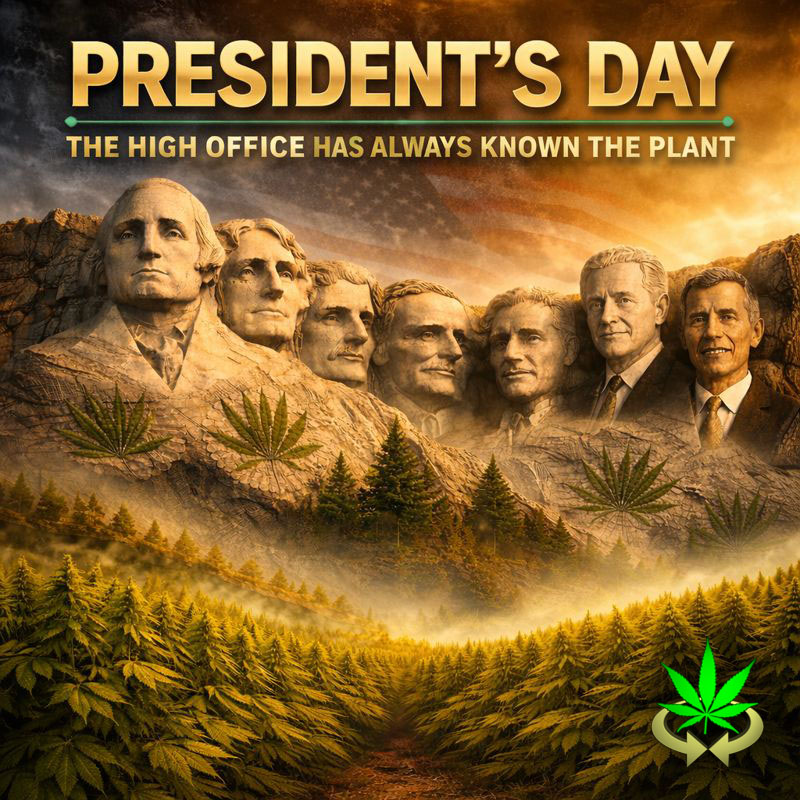
Power, policy, and perspective—America’s leadership has never been as disconnected from cannabis as history is often taught.
A Presidential Reality Check
President’s Day is usually wrapped in cherry trees, marble monuments, and sanitized legends. But the real history of American leadership is far more grounded—literally. From hemp fields and paper mills to pain remedies and candid modern admissions, cannabis has moved through the lives of U.S. Presidents and Founding Fathers since the country’s beginning.
Not as rebellion. Not as scandal. As agriculture, medicine, curiosity, and—eventually—honest reflection.
This isn’t about glorifying use. It’s about correcting the record.
Hemp Was the Backbone Before It Was a Battleground
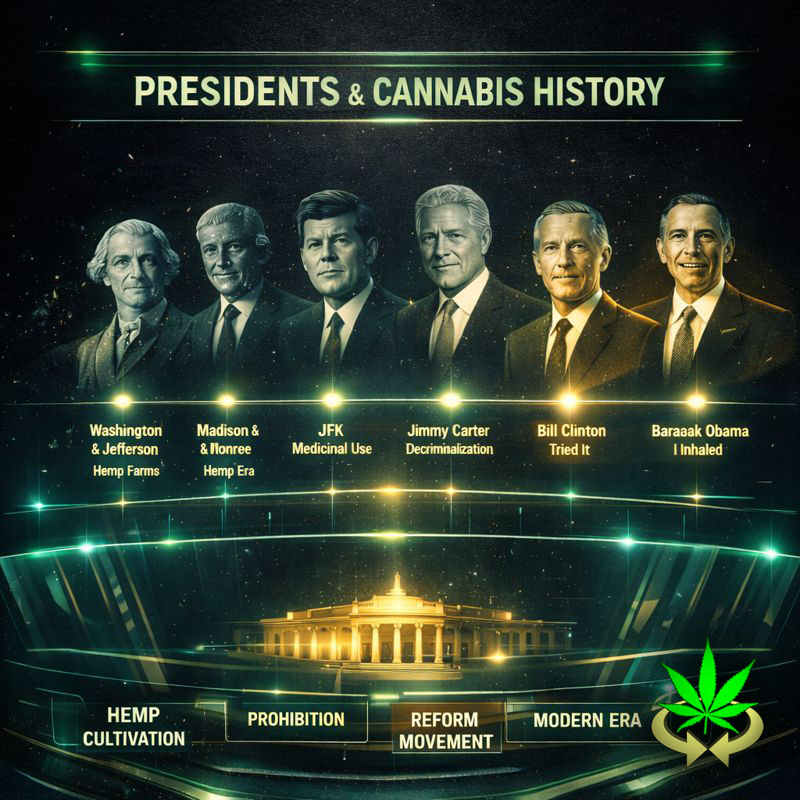
George Washington didn’t just tolerate hemp—he cultivated it. At Mount Vernon, Washington grew cannabis as a strategic crop for rope, sails, and textiles. His personal farm journals include notes about separating male and female plants, indicating hands-on agricultural knowledge. In Washington’s America, cannabis wasn’t political. It was practical.
Thomas Jefferson followed suit at Monticello, advocating for hemp as a domestic alternative to imported materials. Jefferson used hemp paper, promoted self-sufficiency, and lived in a time when cannabis tinctures were common in medical practice. The plant represented independence, not controversy.
James Madison and James Monroe governed during an era where hemp was embedded in infrastructure. Cannabis supported naval power, commerce, and medicine. There was no stigma—only utility. Laws criminalizing the plant wouldn’t appear for another century.
And while not a President, Benjamin Franklin belongs in this conversation. Franklin ran one of America’s earliest paper mills, using hemp to print pamphlets and books. Cannabis helped carry revolutionary ideas through ink and paper. Free speech, quite literally, rode on hemp.
Frontier America: Normalized Use, No Panic
During the 19th century, cannabis extracts were standard medicine.
Andrew Jackson, Zachary Taylor, Franklin Pierce, and Abraham Lincoln all lived in a United States where cannabis tinctures were legally prescribed for pain, anxiety, sleep, and inflammation. Patent medicines frequently contained cannabis. Hemp rope, clothing, and paper were part of daily life.
Lincoln—often mythologized into purity—grew up in a frontier culture where hemp farming was routine. There is no evidence of criminalization, moral panic, or political outrage around cannabis during his lifetime. That reaction came later, driven by fear, not fact.
The Shift: Silence, Then Cautious Honesty
By the 20th century, cannabis had been politicized. Presidents didn’t suddenly stop encountering it— they stopped talking about it.
That changed with Bill Clinton, who publicly admitted experimenting with marijuana. His infamous “didn’t inhale” comment became a cultural punchline, but the admission itself mattered. It cracked a door that had been sealed shut.
George W. Bush acknowledged past marijuana use in interviews, choosing discretion over detail. The admission reflected reality without inviting political warfare—an unspoken normalization behind closed doors.
Then came Barack Obama, who spoke openly about cannabis use in his youth in both interviews and his memoirs. Obama framed it as a common experience, not a defining flaw. As President, he presided over the most significant shift toward state-level legalization in U.S. history, acknowledging that cannabis policy had failed communities and logic alike.
Vibes
Cannabis didn’t suddenly appear—it was always here. What changed was who felt safe telling the truth.
How to Observe President’s Day — Weed Connection Style
Respect history before repeating slogans
Separate hemp facts from prohibition fiction
Consume responsibly, intentionally, and informed
Support brands and policies aligned with equity and reform
Remember: honesty moves culture faster than denial
Cannabis didn’t weaken leadership. Silence did.
Presidents navigated war, economy, and culture while living in a nation where cannabis was once normal, then demonized, and now rediscovered. The arc isn’t about indulgence—it’s about realism.
Pulse Check
If cannabis has been part of American leadership since the beginning, what exactly are we still pretending not to know?
The plant didn’t change. The story did. And now that story is finally catching up with itself.
Interesting Facts
Hemp was once encouraged—and sometimes required—to be grown by American farmers
Cannabis medicines were sold legally in U.S. pharmacies until the early 1900s
Prohibition-era cannabis laws were driven more by fear and politics than science
“Honesty is the first chapter in the book of wisdom.” — Thomas Jefferson
“Facts are stubborn things.” — John Adams
“Progress is impossible without change.” — George Bernard Shaw
President’s Day isn’t about pretending leaders were perfect. It’s about understanding they were human—working, thinking, healing, and evolving in the same world we inherited.
Cannabis was there then. It’s here now. And the future looks a lot more honest 🌿🇺🇸